
Views: 255 Author: Long Win Display Publish Time: 2026-07-05 Origin: Site


Content Menu
● Understanding Packaging Coatings: Function Before Finish
>> What A Coating Actually Does
>> Core Coating Families You Should Know
● Aqueous Coating: The Workhorse For Everyday Packaging
>> When To Use Aqueous Coating
>> Pros And Cons From An Industry Perspective
● UV Coating: High Gloss And High Durability
>> When UV Coatings Make Sense
>> Practical Considerations And Trade‑Offs
● Soft Touch And Specialty Coatings: Elevating Brand Perception
>> Soft Touch For Premium Unboxing
>> Barrier And Functional Coatings For Food
● Matching Coatings To Packaging Types: A Practical Matrix
>> Coating Recommendations By Use Case
● Why Coatings Are Becoming A Strategic Decision
● Three Advanced Mistakes To Avoid
>> 1. Ignoring Substrate–Coating Compatibility
>> 2. Over‑specifying Premium Coatings For Low‑Margin Products
>> 3. Underestimating Sustainability And Regulatory Implications
● Practical Steps To Select The Right Coating
● Where An OEM Partner Like Long Win Display Adds Value
● FAQ
When you are responsible for packaging decisions, coatings are often treated as a cosmetic detail—yet they directly influence durability, shelf appeal, sustainability, and unit cost. As someone who has reviewed hundreds of packaging projects in retail, cosmetics, food and DTC ecommerce, I have seen more launches delayed by wrong coating choices than by structural design. [gwpg]
This guide explains what coating to use for what type of packaging box, moving from fundamentals to real‑world scenarios, updated market data, and practical checklists you can use with your converter or OEM partner. It is written from a practitioner's perspective, combining industry expertise with the kind of questions brand owners and procurement teams ask every week. [pcimag]
A packaging coating is a thin protective layer applied on top of your printed board or substrate to improve resistance, appearance, and handling. Depending on the chemistry, coatings can provide: [pcimag]
- Protection against scuffs, scratches and moisture during shipping and handling. [gwpg]
- Improved print gloss or matte aesthetics in line with brand positioning. [gwpg]
- Enhanced barrier performance for food and sensitive products (aroma, grease, oxygen). [capitalresin]
In other words, coatings manage the tension between visual impact, functional protection and cost per unit—and the right balance is different for every packaging project. [greatnorthernpackaging]
Most carton and box projects you will encounter fall into a few practical coating families: [pcimag]
- Aqueous (AQ) coating – Water‑based, fast‑drying, widely used default option.
- UV coating – Cured under ultraviolet light, extremely durable and high‑gloss. [pcimag]
- Soft touch coating – Creates a velvety, premium feel, popular in beauty and electronics. [gwpg]
- Specialty barrier coatings for food and high‑grease applications. [capitalresin]
As a rule of thumb: start with AQ coating if you care above all about cost, sustainability and everyday protection; consider UV or soft touch when your product is premium and shelf impact is a core sales driver. [greatnorthernpackaging]
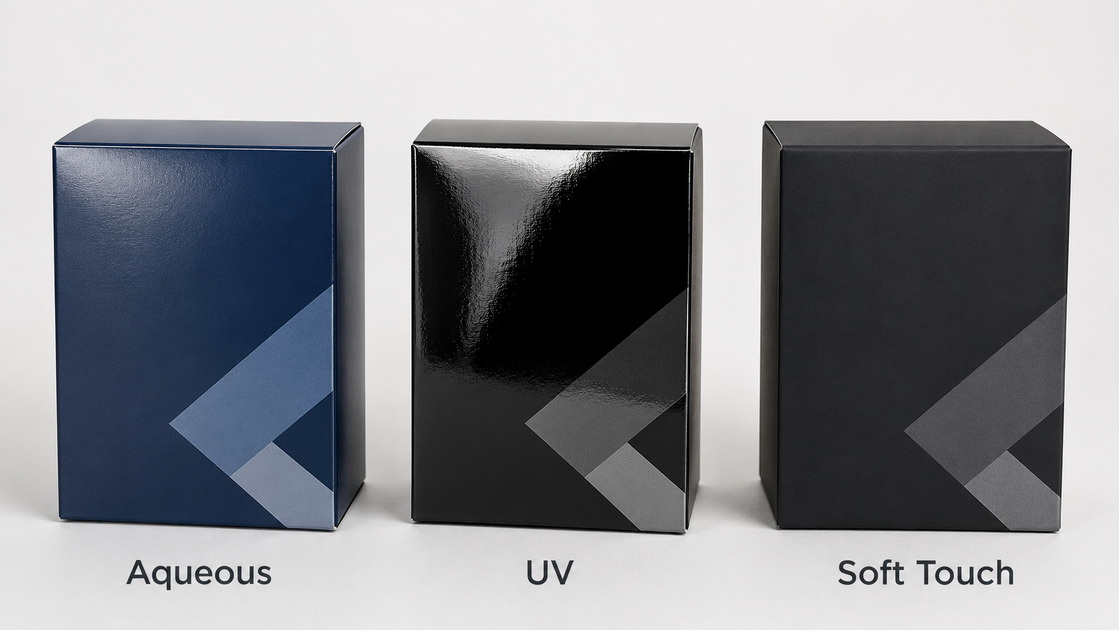
Aqueous (AQ) coating is the default choice for many folding cartons and packaging boxes because it balances protection, appearance and sustainability at a relatively low cost. It is typically used for: [gwpg]
- Mass‑market FMCG cartons (personal care, household, OTC). [greatnorthernpackaging]
- E‑commerce shippers and subscription boxes that need scuff resistance, not luxury feel.
- Retail POP packaging where budget and recyclability are more important than high gloss.
AQ coatings are water‑based, which means they tend to have lower VOC emissions and are more compatible with recycling streams than many solvent‑based alternatives. [pcimag]
Advantages: [greatnorthernpackaging]
- Cost‑effective per square meter.
- Good protection against fingerprints and light abrasion.
- Fast drying and compatible with high‑speed printing and converting.
- Generally more environmentally friendly than many legacy solvent coatings.
Limitations: [capitalresin]
- Lower chemical and grease resistance than specialized barrier coatings.
- Less dramatic gloss or depth compared to UV coatings on certain boards.
- Not the best choice when you require ultra‑premium tactile finishes.
If your project is "standard box, standard retail," AQ coating is often the right starting point—and you should only upgrade if your product or brand positioning demands it. [greatnorthernpackaging]

UV coating is cured under ultraviolet light, forming a hard, cross‑linked surface with excellent scratch and chemical resistance. It is particularly suitable for: [pcimag]
- High‑end cosmetics and fragrance cartons, where deep gloss is part of the brand story.
- Tech and consumer electronics packaging, especially for dark, high‑density prints. [gwpg]
- Retail boxes that face heavy shelf handling or repeated contact (for example, demo units).
Because UV coatings deliver intense gloss and durability, they are often the go‑to choice when your packaging is expected to act as a long‑term brand billboard, not just a shipping container. [greatnorthernpackaging]
From a buyer's perspective, UV coating comes with a few realities: [pcimag]
- Higher cost per unit than basic AQ, especially at small volumes.
- More complex curing and handling requirements on press.
- Potential recyclability and regulatory considerations depending on region and substrate.
In practice, many brands reserve UV coating for top panels, logos or key visual areas, while using simpler finishes on non‑visible surfaces to control cost. This split‑approach is often negotiable with experienced converters or OEM packaging partners. [gwpg]
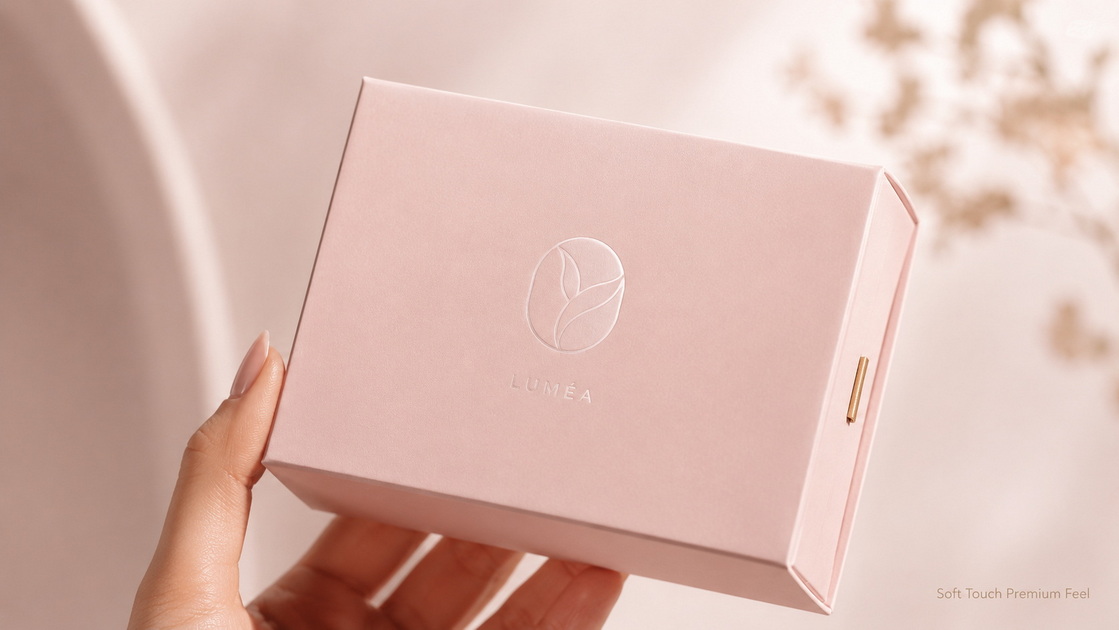
Soft touch coatings create a velvety, matte feel that consumers instantly associate with premium and luxury. They are widely used in: [gwpg]
- High‑end cosmetics and skincare boxes.
- Premium electronics, accessories and lifestyle products.
- Gift packaging and limited‑edition runs.
While soft touch coatings are not always as abrasion‑resistant as hard gloss UV, they win on perception: the tactile experience of picking up a soft‑touch box often justifies the added cost for high‑margin products. [greatnorthernpackaging]
For food packaging, internal functional coatings such as epoxy‑based resins or other barrier systems are used to keep out oxygen, water vapor and grease, while preserving aroma. These coatings extend shelf life and maintain the visual and sensory quality of the food. [capitalresin]
Examples include:
- Grease‑resistant coatings for fast food and bakery boxes.
- Oxygen scavenger coatings inside certain rigid packages. [capitalresin]
- Specialty barrier layers on board used for chilled or frozen food.
These choices are driven less by aesthetics and more by regulatory compliance, product safety and shelf life requirements. [capitalresin]

The table below summarizes typical coating choices for common packaging scenarios, based on real projects and industry norms. [greatnorthernpackaging]
| Packaging Type | Typical Product Category | Recommended Coating | Why It Works |
|---|---|---|---|
| Everyday folding carton | Personal care, household | Aqueous coating | Cost‑effective, good protection, recyclable (gwpg) |
| Premium rigid or gift box | Cosmetics, fragrance, luxury items | Soft touch plus spot UV on logos | Tactile premium feel with highlighted branding (gwpg) |
| High‑handling retail carton | Electronics, accessories | UV coating (overall or key panels) | Strong scratch resistance and high gloss (gwpg) |
| Food service and takeaway box | Fast food, bakery | Barrier/grease‑resistant functional coating | Protects against oils, moisture and staining (capitalresin) |
| E‑commerce mailer or subscription box | DTC brands, fashion, lifestyle | Aqueous coating with optional soft touch areas | Balanced cost and durability; selective premium touch (gwpg) |
This matrix is a starting point, not a rulebook: your converter or OEM partner should test combinations on your exact board grade and printing method. [gwpg]
The packaging coatings market has grown strongly and is projected to reach around USD 5.37 billion by 2029, with a CAGR of about 5% between 2024 and 2029. Growth is driven by stricter sustainability regulations, increased demand for high‑impact retail packaging, and advances in coating chemistries. [marketsandmarkets]
Major global players such as PPG, AkzoNobel, Sherwin‑Williams and Axalta invest heavily in new coating technologies to balance performance, regulatory compliance and cost. For brand owners and packaging buyers, this means coating choices are no longer just a style decision—they are part of broader risk management and ESG strategies. [marketsandmarkets]
From reviewing many failed or delayed packaging projects, these are three under‑discussed pitfalls you should watch for:
Not every board or substrate behaves the same under a given coating. A design approved on premium SBS board may look very different when you shift to recycled board with higher porosity. Always: [greatnorthernpackaging]
1. Lock your substrate spec before finalizing coating choice.
2. Request press‑run samples on the actual board, not just lab swatches.
3. Validate both gloss/matte effect and resistance to edge cracking and cracking on folds.
It is easy to fall in love with soft touch or full‑coverage UV, but if your product margin cannot support it, the coating becomes a silent profit killer. A practical approach: [gwpg]
- Use premium coatings selectively (logo, front panel, gift sets).
- Keep inner flaps and non‑visible areas on AQ coating or even no coating where possible.
- Model the cost impact per unit and at full annual volume before approving creative.
Many brands now face retailer and regulatory pressure on recyclability and chemical usage. Some coatings can complicate recycling or raise VOC concerns. Work with suppliers who: [marketsandmarkets]
- Provide clear compliance documentation for regions you ship into.
- Understand your retailer's packaging policies and audit expectations.
- Can propose lower‑impact alternatives with similar visual performance.
As a packaging buyer or brand manager, you can systematize coating decisions with a simple checklist:
1. Clarify the packaging role
- Shipping only, retail shelf, or premium gift experience?
2. Define performance requirements
- Scratch resistance, moisture/grease protection, tactile feel, gloss level. [greatnorthernpackaging]
3. Align on substrate and print method
- Board grade, printing process (offset, digital), and color density.
4. Shortlist coating options
- Start with AQ; consider UV or soft touch if justified by brand and margin. [gwpg]
5. Run controlled samples and tests
- Drop tests, abrasion tests, handling simulations and customer‑facing mockups. [greatnorthernpackaging]
6. Evaluate cost, sustainability and scalability
- Per‑unit cost, recyclability, supply chain availability and lead times. [marketsandmarkets]
Working closely with a converter or OEM packaging partner that understands both coatings and retail behavior dramatically reduces risk and rework.
For brands that need both packaging boxes and POP displays, working with a partner experienced in structure, graphics and coating selection can simplify decision‑making. Long Win Display, for example, focuses on custom cardboard display stands, pallet displays and packaging boxes, supported by more than 20 years of POP manufacturing experience. [longwindisplay]
An OEM partner with this profile can help you:
- Match coating choices to both packaging boxes and display structures for a cohesive brand look. [longwindisplay]
- Run integrated tests on durability and handling, including pre‑loaded displays shipped directly to retail.
- Optimize cost by combining standard coatings on volume items with premium finishes on hero SKUs.
The goal is not to sell you the most expensive finish, but to design a coating strategy that supports your brand promise, budget and operational realities.
1. Is UV coating always better than aqueous coating for retail packaging?
Not always. UV offers stronger gloss and durability, but aqueous coating is often sufficient for everyday cartons and is more cost‑effective and generally easier to recycle. Choose based on product value and handling intensity, not reputation alone. [pcimag]
2. Can soft touch coatings be used on all board types?
Soft touch can behave differently on various substrates, especially recycled boards with higher porosity. You should always request production‑intent samples on the exact board specified and check for issues like fingerprinting, uneven sheen and edge cracking. [gwpg]
3. How do barrier coatings affect recyclability of food packaging?
Barrier coatings improve shelf life and grease resistance but may complicate recycling depending on local infrastructure and chemistry. Work with suppliers who can provide recyclability guidance and, where possible, use barrier systems designed for circularity. [capitalresin]
4. What is the most cost‑efficient way to add premium feel without fully upgrading the coating?
A common strategy is to use spot UV or limited soft touch only on key brand elements and front panels, while keeping the rest of the box in AQ coating. This delivers perceived premium quality at a fraction of the cost of full‑coverage upgrades. [greatnorthernpackaging]
5. How often should brands review their coating standards?
Given ongoing innovation and regulatory change, most brands benefit from reviewing coating standards every 2–3 years, or sooner if they significantly change substrates, markets or sustainability targets. Regular reviews ensure your packaging remains compliant, cost‑competitive and visually relevant. [marketsandmarkets]
1. Pakfactory. "What Coating To Use For What Type of Packaging."[pakfactory]
2. GWPG. "Everything You Need To Know About Coatings Used in Packaging."[gwpg]
3. PCI Magazine. "Key Innovations Drive Growth in the Packaging Coatings Market."[pcimag]
4. MarketsandMarkets. "Packaging Coatings Market – Research Insight."[marketsandmarkets]
5. Capital Resin Corporation. "Types of Coatings for Food Packaging."[capitalresin]
6. Great Northern Packaging. "What Are the Best Materials for Consumer Packaging?"[greatnorthernpackaging]
7. Long Win Display. "Custom Cardboard Display, Display Stand, Gift Boxes and Packaging."[longwindisplay]


