
Views: 266 Author: Long Win Display Publish Time: 2026-07-20 Origin: Site


Content Menu
● How to Evaluate a High-Quality Cosmetic Display Stand Supplier
● Technical and Practical Considerations for Cosmetic Display Stands
>> Process quality and standards
● Why France Matters for Cosmetic Displays
● Representative Cosmetic Display Stand Manufacturers and Suppliers
>> 1. Long Win Display (Hybrid Solution Partner Serving France and Europe)
>> 2. French Design-Led Cosmetic Display Specialist
>> 3. French POS and POP Display Integrator
>> 4. French Luxury Fixture Manufacturer
>> 5. European Multi-Country Retail Display Network
● Common Industry Pain Points and How to Avoid Them
>> Internal guidance rarely discussed openly
● Buyer's Guide: Practical Steps for Procurement Managers
>> 1. How can I check whether a supplier's ISO certification is still valid?
>> 2. What is the safest way to prevent material downgrading between sample and mass production?
>> 3. How should I handle color matching across different markets and batches?
>> 4. What information should I request before committing to a large order of cosmetic display stands?
>> 5. How do I evaluate whether a supplier is capable of handling deep OEM and ODM projects?
France has long been a central hub for beauty and fragrance brands, and this ecosystem naturally extends into the world of cosmetic display stands for retail environments. From luxury department stores and perfumeries to pharmacy chains and mass-market beauty retailers, French and France-focused suppliers combine visual design with structural reliability to bring brand stories to life at the point of sale. For global procurement managers, understanding how these manufacturers operate and where they fit in a broader sourcing strategy is essential for building long-term, stable partnerships.
When evaluating cosmetic display stand suppliers connected to France, buyers are usually looking beyond visual appeal alone. Practical concerns such as material stability, production capacity, structural safety, compliance with regional regulations, and repeatability of OEM and ODM projects weigh heavily in the decision. This article offers a structured overview and highlights representative supplier profiles, including a hybrid manufacturing partner capable of supporting French and European projects from Asia.
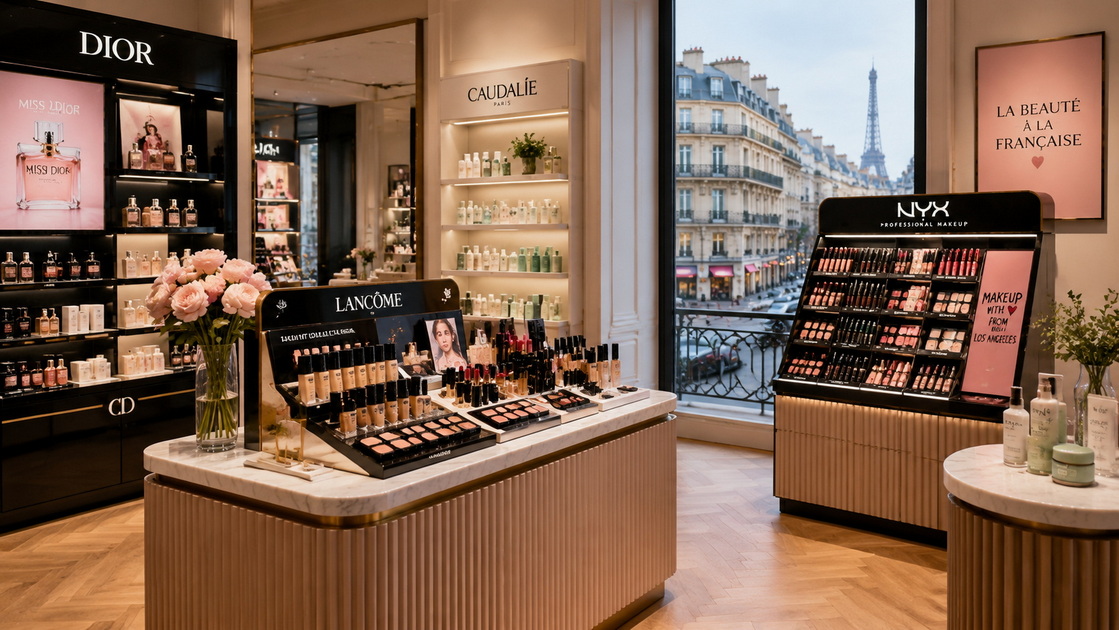
Choosing a strong supplier is fundamentally about evidence. In practice, procurement teams rely on a combination of documentation, project history, and process transparency rather than vague promises.
First, factory-level certification and audit history matter. Suppliers that maintain recognized quality management systems and participate in third-party audits tend to have clearer procedures and better internal discipline. For cosmetic displays destined for French and European retail, conformity to relevant standards and regulations for materials, electrical components, and chemical safety is part of the baseline.
Second, design and development capability plays a critical role. Cosmetic display stands must reconcile brand guidelines, product weight, store traffic flows, and visual merchandising objectives. Suppliers that invest in structural design, prototyping, and engineering can transform abstract concepts into displays that are both attractive and practical, with careful attention to stability and durability.
Third, quality control processes determine whether good intentions translate into consistent output. Mature manufacturers typically apply incoming material checks, in-process monitoring, and final inspection steps. For displays, these checks often include color and finish consistency, edge treatments, load testing on shelves and hooks, and verification of graphic accuracy.
Finally, stable lead times and transparent capacity planning are crucial. Buyers benefit from suppliers that can articulate typical sampling times, standard production lead times, and realistic capacity limits. Clear communication about peak-season constraints and contingency plans helps avoid unpleasant surprises.
Cosmetic display stands operate in high-visibility retail environments where customer interaction, product weight, and safety requirements intersect. They are engineered products as much as they are branding tools.
Common materials include metal, wood and MDF, acrylic and other plastics, and cardboard or corrugated board. Metal frames provide structural strength and long-term durability, while wood and MDF offer a premium feel and allow for cabinet-style designs. Acrylic and similar plastics support transparent windows, color accents, and logo treatments, whereas cardboard displays are better suited to short-term campaigns and lightweight promotions.
Material choice affects both performance and sustainability. Buyers should pay attention to thickness, structural reinforcement, type of coatings or laminates, and how parts are joined or bonded. Well-designed displays respect load limits, maintain alignment, and withstand repeated use and cleaning in store environments.
Processes such as cutting, routing, bending, welding, polishing, and printing determine the final accuracy and appearance of a display. Consistent process control ensures tight tolerances, clean edges, smooth finishes, and reliable graphics. For units that include lighting or electrical components, attention to safety and conformity is particularly important.
Additionally, the choice of finishes—powder coating, painting, plating, laminates, printing, and digital graphics—should match brand expectations. High-gloss surfaces, metallic effects, and precise color reproduction require careful process management and clear standards.
France's role in beauty and skincare is recognized worldwide, and this influences the development of retail fixtures and display stands. Many cosmetic brands, design agencies, and retail solution providers are based in or closely connected to France, giving rise to a dense network of specialists in visual merchandising.
This environment encourages close collaboration between brand teams, architects, and display manufacturers, resulting in solutions that combine aesthetics with on-the-ground practicality. For global buyers, French and France-focused suppliers often bring strong insight into how beauty products should be presented in different types of retail spaces, from boutiques and department stores to pharmacies and hypermarkets.
At the same time, some projects rely on hybrid sourcing models. Design and project management may remain close to brand headquarters, while production is carried out by cost-effective partners in other regions. This combination can balance premium design expectations with competitive production costs.
Long Win Display is a China-based POP display designer and manufacturer with more than two decades of experience. It specializes in countertop display stands, cardboard and permanent structures, and pre-assembled units for various retail categories, including cosmetics. While physically located in China, Long Win Display supports projects for French and European brands and retailers through customized production and coordinated logistics.
Typical characteristics include flexible handling of small and medium series, a strong focus on customization rather than purely standard catalog items, and responsive communication with overseas clients. The company's experience with multi-material displays and retail campaigns makes it a practical partner for international buyers who want to combine cost-effective production with tailored structures.
Long Win Display is particularly relevant for emerging and mid-sized beauty brands, regional retailers, and project-based programs that demand a high degree of structural and graphic customization without the budget of flagship-only fixture projects.
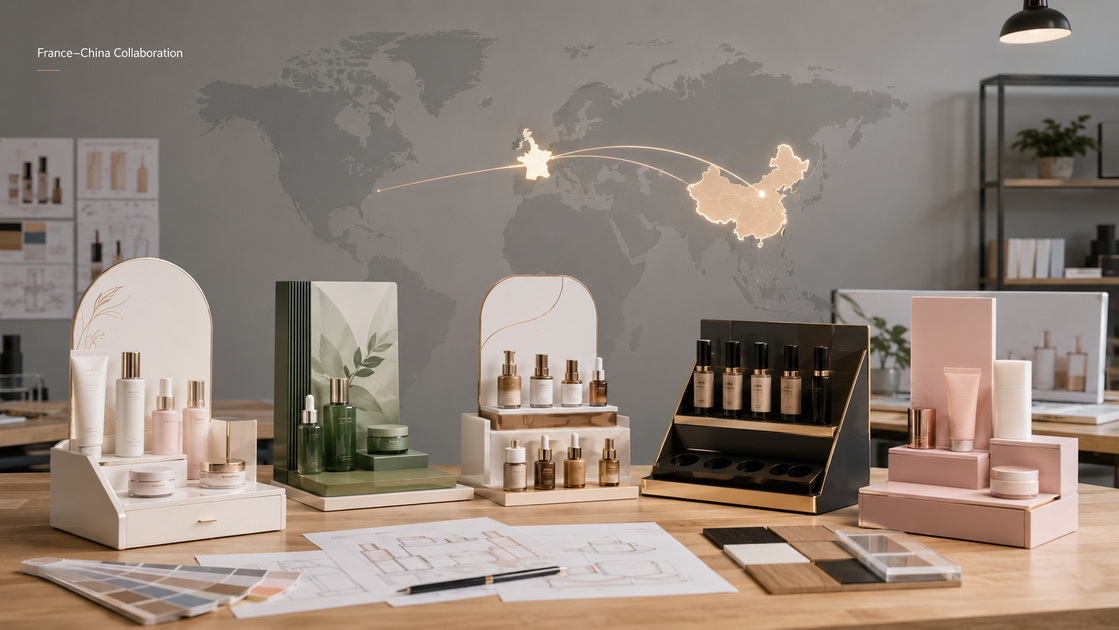
Within France, some companies position themselves primarily as design-led specialists. They combine creative studios with in-house or closely coordinated manufacturing. Their focus is on visually distinctive counters, gondolas, and wall units for cosmetic and fragrance brands.
Such suppliers tend to work closely with brand marketing teams and store planners, developing concepts that harmonize with broader interior designs and brand architecture. They prioritize material quality, precise color matching, and refined finishes, often aiming at department stores, perfumeries, and boutique environments.
These partners are especially suitable for brands that place heavy weight on how their products appear within premium retail spaces and are prepared to invest accordingly in bespoke fixtures.
Another category comprises companies that act as broad POS and POP integrators. They serve multiple sectors, such as fast-moving consumer goods, electronics, fashion, and cosmetics, offering a wide range of temporary and permanent displays.
In the context of cosmetics, these integrators are often responsible for campaign-based units, combined displays in multi-category aisles, and standardized systems for chain retailers. They may provide structural design, graphics production, kitting, and logistics coordination across different regions.
Buyers who need large volumes for promotional periods, multi-category integration, or rapid national rollouts can benefit from this type of provider, especially when cosmetics are part of a broader assortment.
Luxury fixture manufacturers focus on high-end shopfitting projects, providing bespoke cabinetry, counters, and display units for prestigious locations. Cosmetic display stands fall into their portfolio as part of complete store or corner designs.
These suppliers emphasize materials such as high-grade woods, metal structures, glass elements, and integrated lighting. They prioritize craftsmanship, long-term durability, and seamless integration with architectural plans.
Projects with flagship stores, high-profile launches, or tightly controlled brand environments often rely on this type of partner. The investment per unit is higher, but the result aligns with premium brand positioning and store concepts.
There are also European networks that manage design, production, and distribution across multiple countries, including France. These organizations offer system-based fixtures and modular display solutions that can be adapted to cosmetics and other categories.
Their strengths lie in multi-country logistics, consistent standards, and the ability to support chain retailers with standardized elements. Cosmetic displays may be integrated into broader fixture systems, making them easier to deploy across different formats and jurisdictions.
For procurement managers responsible for several markets, working with such networks can reduce complexity and provide a more synchronized approach to merchandising.
The following simplified overview illustrates how different supplier profiles typically position themselves in terms of capacity, minimum order requirements, and general focus:
| Supplier Type | Typical Capacity Level | Approximate MOQ Range | General Focus |
|---|
| Supplier Type | Typical Capacity Level | Approximate MOQ Range | General Focus |
|---|---|---|---|
| Long Win Display (Hybrid Partner) | Medium–High | Flexible, suitable for small–mid runs | Customized POP and cosmetic displays |
| French Design-Led Specialist | Low–Medium | Higher for bespoke units | Premium design and finishes for beauty brands |
| French POS/POP Integrator | Medium–High | Mid-range, scalable for campaigns | Multi-category retail promotions |
| Luxury Fixture Manufacturer | Low–Medium | Project-based, no standard MOQ | High-end shopfitting and long-term fixtures |
| European Multi-Country Network | High | System-based MOQ for chains | Modular fixtures and multi-country rollouts |
Actual numbers depend on each individual company, but the table highlights typical positioning and helps buyers align expectations during initial supplier conversations.
Procurement of cosmetic display stands comes with recurring challenges that can undermine project outcomes if not managed carefully.
One frequent issue is material downgrading between sample approval and mass production. This can involve thinner metals, lower-grade acrylics, different laminates, or less durable coatings. The result is a display that looks similar at first glance but performs worse and wears out faster. To avoid this, buyers should insist on detailed material specifications written into purchase agreements and maintain clear records of approved samples.
Color and finish inconsistency is another pain point. Cosmetic and beauty brands rely heavily on precise color representation and surface quality. Variations between batches or suppliers can damage the visual cohesion of marketing campaigns. Aligning around standardized color codes, having physical references, and including color checks in quality routines helps reduce this risk.
Structural weakness is also a concern. Displays may be designed without realistic load assumptions, leading to sagging shelves or unstable structures when fully stocked. Ensuring that load tests are part of the sampling phase, especially for heavier product ranges, is a practical safeguard.
Finally, logistics and packaging are often underestimated. Fragile elements, high-gloss finishes, and complex assemblies require stronger packaging and careful transit handling. Evaluating packaging design upfront and testing a shipment before full rollout can reveal issues before they scale.
Experienced procurement teams frequently follow a simple internal rule: major structural or material changes after sample approval require explicit written agreement and updated documentation. This principle discourages unannounced changes and clarifies that any deviation must be visible and justified, rather than silently introduced during production.
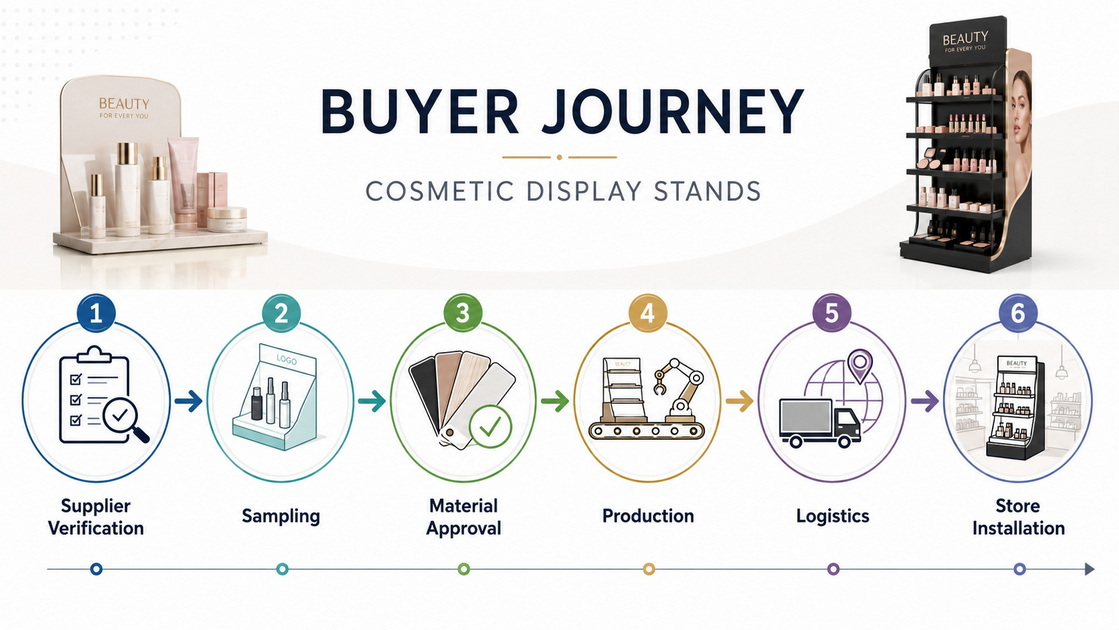
Before committing, buyers should review company registration details, operational history, and project references. Certification documents, audit reports, and compliance statements provide additional insight into how a supplier manages quality and safety. Checking the dates on certificates and confirming renewal status helps maintain confidence over time.
A two-stage sampling approach works well. The first stage focuses on structure and dimensions: fittings, stability, load capacity, and general geometry. The second stage validates visual aspects, including branding elements, color matching, finish quality, and graphic accuracy.
Throughout this process, material specifications, finishes, and assembly details should be captured in structured documents. These records form the basis for mass production instructions, inspection criteria, and future repeat orders.
Clear agreements about packaging and transportation are essential. Buyers should understand whether displays arrive fully assembled, partially assembled, or flat-packed. Installation instructions, hardware kits, and layout drawings support efficient rollout in stores.
When working with hybrid models—such as French design studios combined with manufacturing partners like Long Win Display—roles and responsibilities should be defined. Design, engineering, production oversight, and quality control need clear ownership, ideally supported by shared documentation.
Cosmetic display stands sit at the intersection of branding, engineering, and retail operations. Selecting and managing suppliers in France and connected regions influences not only how products appear in store but also how reliably campaigns and long-term programs can be executed.
By focusing on verifiable capabilities, transparent processes, robust sampling, and realistic logistics planning, procurement managers can build enduring partnerships rather than just short-term project arrangements. Whether working with design-led French specialists, integrated POS and POP providers, high-end fixture manufacturers, multi-country networks, or hybrid partners like Long Win Display, the key is aligning each supplier's strengths with the brand's technical requirements and long-term retail strategy.
This is an opportune moment for buyers to review current supplier portfolios, refine documentation standards, and engage partners that can support multi-year, multi-market initiatives with consistent quality and responsible material choices.
You can request a copy of the certificate and verify the expiry date. For additional assurance, contact the issuing body or use its online verification tools where available. It is good practice to ask suppliers to notify you when certifications are renewed or updated, and to keep a record of their current status.
Define material specifications clearly at the sampling stage, including thickness, grades, and coating types. Include these details in your purchase agreement and require the supplier to confirm compliance before production. Random inspections or third-party checks can further reduce the risk of unapproved changes.
Use standardized color references such as Pantone codes and keep a physical golden sample for each key color or finish. Make sure these standards are included in production documents, and require color checks during printing or coating. For multi-market rollouts, coordinate with local teams to ensure that lighting conditions are considered when assessing color consistency.
At minimum, request detailed technical drawings, material specifications, sample approval records, production lead times, QC processes, and packaging documents. For complex projects, also ask for a project timeline, capacity commitments, and contingency plans for peak seasons or unforeseen disruptions.
Assess their previous custom projects, ask for sample case studies, and review how they handle design iterations and engineering changes. Check whether they have in-house design or engineering teams and how they manage communication and approvals. A capable OEM/ODM partner should be able to translate brief information into detailed concepts, handle revisions constructively, and provide technical guidance rather than simply executing instructions.
1. Long Win Display – Company Overview and Capabilities
https://www.longwindisplay.com/our-company.html
2. Long Win Display – Cosmetic Display Stand Related Content
3. WOW Display – Cosmetics Display Solutions (industry context example)
https://www.wowpopdisplay.com/pop-displays/industry/cosmetics-display/
4. APEX Store Solutions – Custom Cosmetic Display Stands (industry context example)
https://www.apexstoresolutions.com/product-category/cosmetic-display/
5. Statista – Market Data and Reports for Beauty and Retail (general reference)


