
Views: 218 Author: Long Win Display Publish Time: 2026-08-29 Origin: Site


Content Menu
● Why Cross Merchandising Matters in Convenience Stores
>> When Sidekick Displays Work Best
>> When End Cap Displays Work Best
● Sidekick Display vs End Cap Display Comparison
● Choosing the Right Display for Your Campaign
>> Choose a Sidekick Display When
>> Choose an End Cap Display When
● Design Factors That Influence Store Approval
>> 1. Match Structural Design to Product Weight
● A Practical Cross Merchandising Framework
>> Step 1: Identify the Primary Shopper Mission
>> Step 2: Select One Clear Complement
>> Step 3: Define the Display's Single Message
>> Step 4: Test Store-Level Execution
● Combining Sidekicks and End Caps
● FAQ
>> 1. What is the main difference between a sidekick display and an end cap display?
>> 2. Which display is better for convenience-store cross merchandising?
>> 3. Can a cardboard sidekick display hold beverages?
>> 4. What products are best for a convenience-store sidekick display?
>> 5. How can an end cap display improve cross merchandising?
In a convenience store, every second of shopper attention and every inch of selling space matters. Sidekick displays and end cap displays both help brands create cross-merchandising opportunities, but they serve different missions: one wins add-on purchases in tight spaces, while the other creates a larger promotional destination.
For brands selling snacks, beverages, candy, personal-care items, seasonal products, and other fast-moving goods, choosing the right cardboard display can shape visibility, basket size, replenishment workload, and campaign return. At Long Win Display, we have seen that the strongest programs do not treat sidekicks and end caps as interchangeable. They match the display format to the store layout, purchase occasion, product weight, and retail objective.
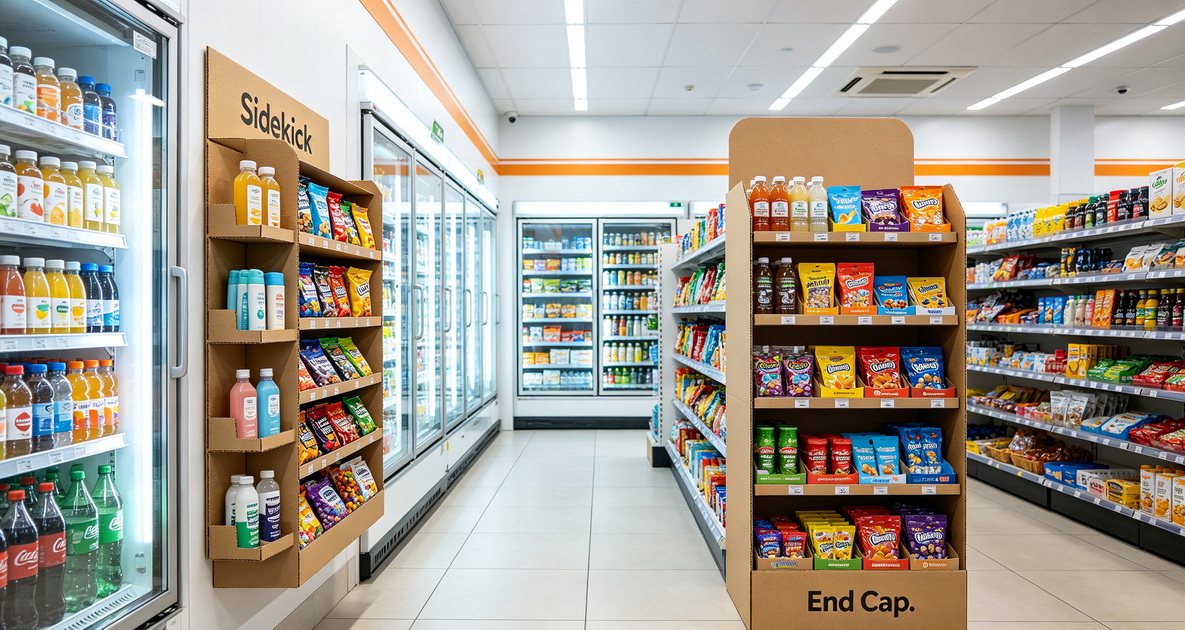
Convenience-store shoppers are usually mission-driven. They may enter for a cold beverage, fuel, tobacco product, prepared food item, or quick snack. That short visit creates a major opportunity for brands that can present a relevant add-on product at the right moment.
NACS Convenience Voices research found that 20.1% of surveyed convenience shoppers left with an impulse purchase. Packaged beverages were the most common impulse item, followed by candy and salty snacks. An eye-catching product display influenced 19.2% of impulse buyers, while appealing product appearance was an even stronger purchase trigger.
This makes cross merchandising more than a display tactic. It is a way to make a shopper's mission more complete.
Examples include:
- Placing beef jerky, nuts, or candy beside chilled drinks.
- Displaying phone cables or chargers near travel essentials.
- Pairing coffee accessories with ready-to-drink coffee or hot-beverage stations.
- Positioning car-care wipes near automotive products.
- Adding seasonal gifting items beside confectionery or greeting cards.
The best pairings feel useful, immediate, and easy to understand. They should answer a simple shopper question: "What else do I need right now?"
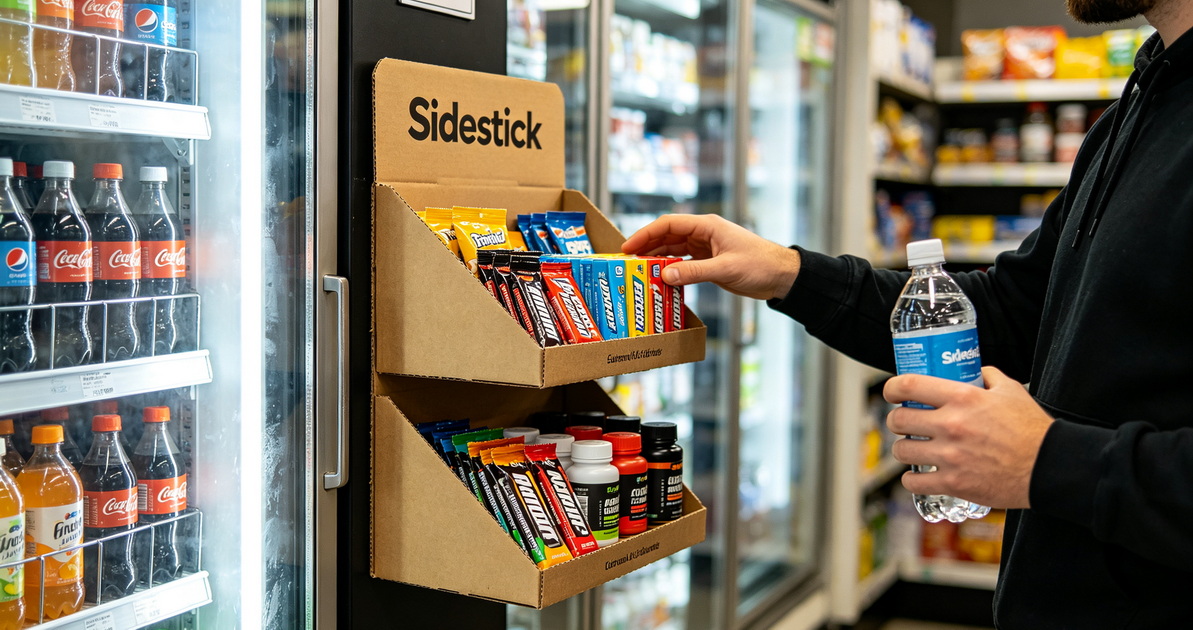
A sidekick display, also called a power wing, sidecap, or shelf-side display, is a compact merchandising unit attached to the side of an existing shelf, gondola, rack, or end cap. It typically uses hooks, clips, brackets, or other fixture-compatible hardware.
Its biggest advantage is simple: it uses underutilized vertical space without taking up much selling floor.
For convenience-store cross merchandising, a sidekick is often designed for lightweight, high-margin, grab-and-go products such as:
- Candy and gum
- Single-serve snacks
- Energy shots
- Small beauty or personal-care products
- Lighters and accessories
- OTC travel-size items
- USB cables, batteries, and small electronics
- Promotional sachets or trial-size packs
A well-designed cardboard sidekick display should be narrow enough to avoid blocking aisle access, strong enough to carry the intended stock load, and easy for store staff to refill.
Sidekicks are most effective when the primary product is already attracting traffic, but a complementary item needs visibility.
For example, a beverage cooler may draw shoppers looking for hydration. A narrow sidekick beside that zone can offer salty snacks, protein bars, mints, or drink enhancers. The shopper does not need to search another aisle. The secondary purchase is directly within reach.
Best uses for sidekicks include:
- Small-product cross selling
- Low-footprint retail programs
- New-product sampling campaigns
- Short promotional periods
- High-traffic aisles with limited floor capacity
- Secondary product placement beside destination categories
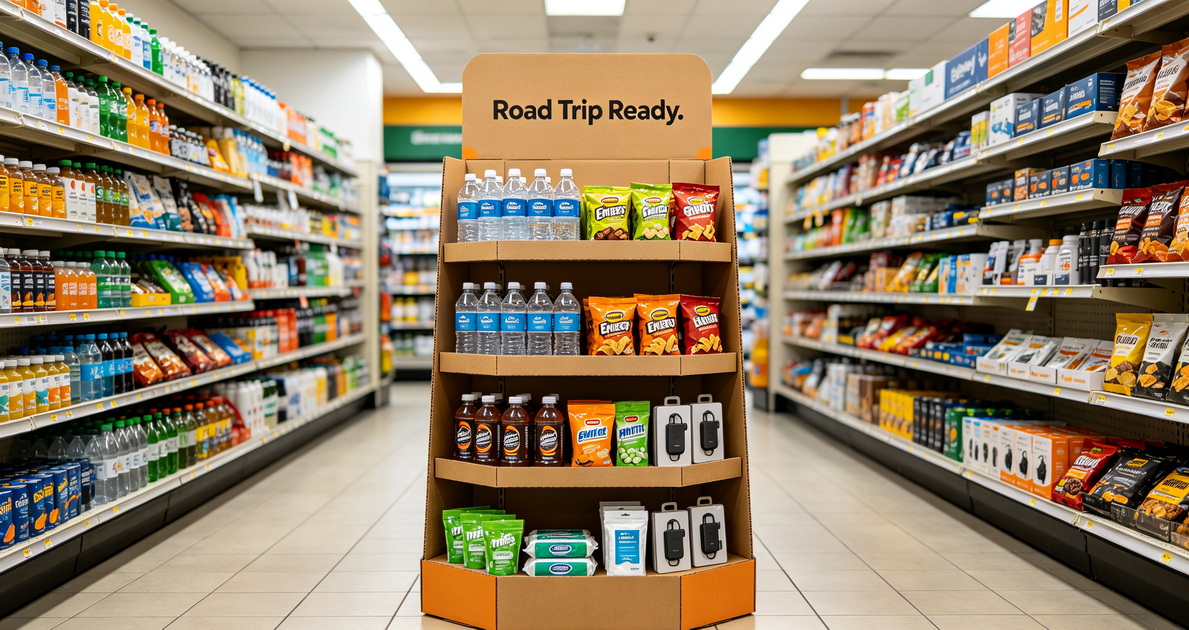
An end cap display is located at the end of a retail aisle or aisle run. It faces a main traffic path and gives a brand a highly visible platform for product storytelling, seasonal promotions, bulk offers, or product bundles.
Unlike a sidekick, an end cap creates a more substantial retail destination. It can carry more stock, support stronger graphics, and display multiple related products together.
An end cap may be built as:
- A full cardboard floor display
- A corrugated display sleeve around existing store shelving
- A pallet-style promotional display
- A freestanding end-of-aisle display
- A multi-tier retail display with branded header signage
For convenience stores, the end cap is especially valuable where aisles intersect, where shoppers move from the cold vault to checkout, or where a retailer has a dedicated promotional bay.
End caps are ideal when a brand wants customers to notice a campaign before they enter an aisle or approach the checkout area. They can hold larger product quantities and support a stronger visual message.
Common convenience-store end cap applications include:
- New beverage launches
- Seasonal candy collections
- Sports-event snack bundles
- Summer hydration promotions
- Road-trip essentials
- Better-for-you snack programs
- Meal-solution combinations
- Multi-pack or value-led promotions
Research into convenience-store shopping consistently shows the importance of impulse categories. A 2025 study of 1,097 U.S. c-store shoppers reported impulse purchases of candy by 63% of shoppers, salty snacks by 62%, and baked goods by 53%.
That does not mean every impulse product needs a large display. It means the display format should match the campaign scale and the purchase mission.
| Comparison Factor | Sidekick Display | End Cap Display |
|---|---|---|
| Primary location | Side of shelf, rack, cooler, or aisle fixture | End of aisle or promotional zone |
| Footprint | Very small | Larger |
| Product capacity | Low to medium | Medium to high |
| Best product type | Lightweight, small, easy-to-grab items | Larger packs, multiple SKUs, bundles, high-volume products |
| Main objective | Add-on sales and impulse conversion | Campaign visibility, category promotion, and stock movement |
| Shopper interaction | Quick grab while passing | Browse, compare, and select |
| Graphic area | Limited but focused | Large and highly brandable |
| Replenishment needs | Frequent for fast sellers | Less frequent when built with deeper inventory capacity |
| Store-space impact | Minimal | Requires allocated aisle-end space |
| Cross-merchandising role | Supports a primary category | Can create a full solution-based destination |
The practical distinction is not simply size. A sidekick is a precision tool for intercepting shoppers beside a relevant category. An end cap is a campaign platform that can influence traffic before shoppers enter an aisle.
The correct choice begins with the product, not the display style.
A sidekick is usually the better option when your product is small, lightweight, and highly complementary to an existing destination category.
Choose it when you need to:
- Add a secondary product beside a strong-selling primary category.
- Use unused shelf-side space.
- Avoid consuming valuable convenience-store floor area.
- Run a focused product trial or impulse campaign.
- Create many placements across multiple stores.
- Encourage a simple "grab one more" behavior.
A practical example is placing a cardboard sidekick with energy shots, gum, or protein snacks beside a beverage cooler. The customer already has a drink in mind. The sidekick makes the add-on feel relevant and immediate.
An end cap is usually the stronger choice when you have a broader campaign, several SKUs, higher stock requirements, or a powerful seasonal message.
Choose it when you need to:
- Launch a new product range.
- Showcase multiple complementary products.
- Build a themed campaign around travel, holidays, sports, or weather.
- Move promotional inventory at scale.
- Create a visual brand statement.
- Give retailers a self-contained display that is easy to identify and replenish.
For example, a "Road Trip Refresh" end cap could combine bottled water, energy drinks, salty snacks, wipes, mints, and portable chargers. This turns several separate purchases into one convenient solution.
Retail buyers and store operations teams will assess more than appearance. A display must fit their workflow.
From a manufacturing perspective, the most successful corrugated display programs balance visual impact, structural reliability, easy assembly, and store-level practicality.
Do not select a display based only on appearance. Product weight, pack format, and replenishment frequency determine the board grade, internal supports, shelf construction, and load-bearing design.
For heavier products, consider:
- Reinforced shelf edges
- Layer pads or dividers
- Locking tabs
- Stronger corrugated flute selection
- Base supports for floor-standing structures
- Controlled product-facing quantities
A display that looks premium but sags after stocking can damage brand perception and create retailer concerns.
Convenience-store staff work quickly. A complicated display may remain in the back room, be assembled incorrectly, or lose important branded elements.
For easier execution, consider:
- Pre-glued structures
- Pop-up display formats
- Clearly numbered assembly points
- Pre-packed product trays
- Simple hook or bracket systems for sidekicks
- Compact flat-pack shipping designs
Pre-assembly and pre-packing can reduce store-level friction. They also help ensure the final display matches the approved brand presentation.
In a compact c-store, a display should never create congestion around refrigeration doors, payment queues, foodservice counters, or busy aisles.
Before approving an end cap or sidekick program, confirm:
1. The fixture does not block key access points.
2. Doors, cooler handles, and shelf labels remain visible.
3. The unit leaves enough aisle clearance.
4. The product can be replenished without disrupting shoppers.
5. The display supports the retailer's store-reset and cleaning routines.
A smaller sidekick may outperform a large display if the larger unit makes the store feel crowded.
Use this five-step framework before designing your cardboard retail display.
Start with the reason the shopper enters the store.
Common missions include:
- Quick beverage purchase
- Fuel-stop refreshment
- Late-night snack
- Morning coffee
- Road-trip preparation
- Personal-care emergency
- Meal or foodservice purchase
Avoid building a display around unrelated products. The best secondary item should naturally improve the first purchase.
Examples:
| Primary Purchase | Cross-Merchandising Product | Recommended Display |
|---|---|---|
| Energy drink | Protein bar, gum, salty snack | Sidekick display |
| Bottled water | Electrolyte mix, nuts, snack packs | Sidekick display |
| Hot coffee | Biscuit, pastry, coffee enhancer | Sidekick or compact counter unit |
| Road-trip beverage | Snacks, wipes, chargers, mints | End cap display |
| Seasonal candy | Gift bag, novelty item, party snack | End cap display |
| Automotive product | Microfiber cloth, wipes, air freshener | Sidekick display |
A shopper should understand the offer in seconds.
Strong display messages include:
- "Snack Better On The Go"
- "Road Trip Ready"
- "Game Night Essentials"
- "Recharge Your Routine"
- "Cold Drink. Quick Snack. Easy Stop."
Keep the message short. Let the products and color system do the rest.
Before a broad retail rollout, test the display in a limited group of stores. Review:
- Sell-through by SKU
- Replenishment frequency
- Display damage or product loss
- Shopper interaction
- Staff feedback
- Sales lift versus comparable stores without the display
Testing matters because shopper behavior differs by store location, daypart, local demographics, and traffic pattern. Industry guidance on shopper research recommends combining sales data with observation and shopper feedback rather than relying on one measurement alone.
Once the winning format is clear, standardize the structural design, packing plan, artwork rules, and store instructions. This helps brands deliver a consistent retail experience across regions and store formats.
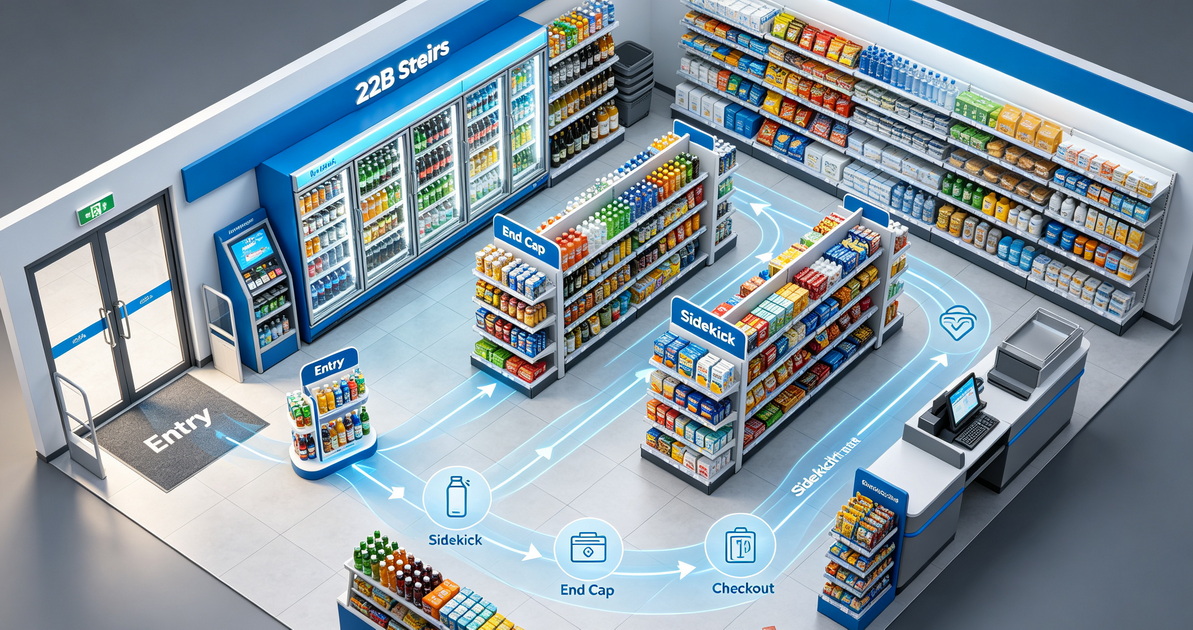
For major programs, the question is not always "sidekick display or end cap display?" The stronger answer may be both, used at different moments in the shopper journey.
An end cap can introduce the campaign and carry core products. A sidekick can extend the campaign beside a relevant category elsewhere in the store.
For example:
- An end cap promotes a sports-event beverage and snack range.
- A sidekick by the cold vault offers a smaller snack or energy-shot add-on.
- A checkout display reinforces one low-price impulse SKU.
This multi-location approach creates repeated exposure without relying on one display to do every job.
Long Win Display designs, customizes, manufactures, and pre-assembles cardboard POP displays for brands entering retail environments. Whether you need a compact sidekick display for high-frequency add-on sales or a robust end cap display for a major convenience-store promotion, the display should be built around real retail conditions.
Bring us your product dimensions, pack weights, retail channel, target store fixture, campaign duration, and merchandising objective. Our team can help turn those requirements into a practical, retail-ready corrugated display solution.
A sidekick display is a compact unit mounted to the side of an existing retail fixture. An end cap display occupies the end of an aisle and provides more product capacity, stronger visual impact, and greater space for a promotional campaign.
A sidekick display is usually better for lightweight add-on products near a related category. An end cap display is better for a larger promotional range, seasonal campaign, product bundle, or higher-volume inventory program.
It can hold lightweight beverage formats if the display is engineered for the product's weight and pack size. For heavier cans, bottles, or multi-packs, an end cap or reinforced floor display may be a safer option.
Candy, gum, snacks, energy shots, small personal-care products, accessories, batteries, cables, and other small impulse items are common choices. The product should be easy to reach, easy to carry, and strongly related to the nearby category.
An end cap can place several complementary products in one easy-to-shop location. For instance, a road-trip end cap can combine drinks, snacks, wipes, mints, and travel accessories to encourage larger baskets.
1. National Association of Convenience Stores. "[Understanding Impulse Buys]."
2. Acosta Group. "[The Ongoing Evolution of Convenience Store Shoppers]."
3. NACS. "[Understanding Your Convenience Shoppers]."
4. Creative Displays Now. "[Sidekick Display vs. Endcap Display: What's the Difference?]."
5. 8th & Walton. "[What Is an End Cap Display?]."
6. InContext Solutions. "[Expert Tips for Mastering Shopper Insights Research]."
7. Shopper Intelligence. "[Understanding the Shopper Journey at Kroger]."


