
Views: 280 Author: Long Win Display Publish Time: 2026-07-15 Origin: Site


Content Menu
● What Is an RSC Box? Foundations and Practical Use
>> Typical Applications of RSC Boxes
>> Key Advantages of RSC Boxes
● What Is a Die Cut Box? Precision Fit and Brand Presence
>> Typical Applications of Die Cut Boxes
>> Key Advantages of Die Cut Boxes
● RSC vs Die Cut Boxes: Side‑by‑Side Comparison
● How to Decide: A Practical Decision Framework
>> Step 1 – Map Your Packaging Role
>> Step 2 – Assess Product Risk and Experience
>> Step 3 – Model Cost and Logistics
● Advanced Corrugated Styles: Beyond RSC and Die Cut
● 2026 Packaging Trends: How They Influence RSC vs Die Cut Choices
● When Die Cut Boxes Outperform the "Safe" RSC Choice
● Internal Pitfall: Silent Changes in Board Grade and Insert Design
● Where Long Win Display Fits: Packaging Boxes, POP and Preloading
Choosing between RSC boxes and die cut boxes is no longer a purely technical decision; it directly affects product protection, shipping efficiency, and the on-shelf and unboxing experience your brand delivers. As a packaging consultant working with retail, e‑commerce and POP display programs, I've seen brands underestimate box style and then pay for it later in damaged goods, bloated freight costs, or weak shelf presence. [pakfactory]
This guide builds on PakFactory's original comparison of RSC vs die cut boxes, then expands it with field experience, updated industry trends and practical decision frameworks for packaging engineers, buyers and brand owners. [cubitpackaging]

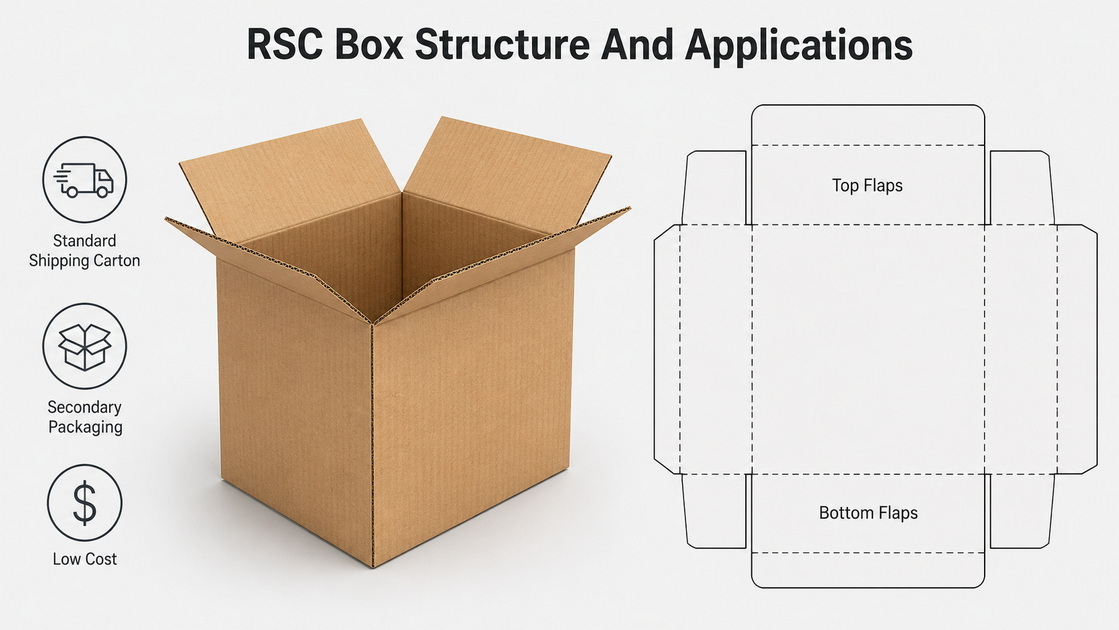
RSC (Regular Slotted Container) is the workhorse of corrugated packaging. It's made from one piece of corrugated fiberboard with equal-length flaps on top and bottom that meet in the middle when closed, usually sealed with tape. [oec]
RSC boxes dominate secondary packaging and shipping across industries because they're simple, adaptable and widely available. Common uses include: [cubitpackaging]
- Consumer goods and appliances being shipped to warehouses or stores. [oec]
- Electronics, toys and office supplies where standard sizes and straightforward packing matter more than visual impact. [oec]
- Industrial and automotive parts, often heavy, where RSC's structural simplicity is an advantage. [cubitpackaging]
- Fragile products when combined with void fillers (bubble wrap, air pillows, peanuts, paper). [oec]
PakFactory and other corrugated guides highlight several core strengths of RSC boxes: [urgentboxes]
- Cost efficiency – RSC boxes use a single sheet with minimal offcut waste, keeping per-unit costs low and tooling simple. [cubitpackaging]
- Easy assembly – Operators can quickly fold and tape RSC boxes; no special training or tools are needed. [cubitpackaging]
- Structural durability – Corrugated board and the regular slotted design provide solid stacking and compression resistance in logistics. [oec]
- Versatility – RSC can be produced in many sizes, flutes (C, B, E, F, double-wall) and print options, making it suitable for a wide variety of SKUs. [cubitpackaging]
- Sustainability – They are typically made from recyclable materials, aligning with mainstream sustainability expectations. [thecustompackaging]
In practice, RSC is the default choice for transport packaging where branding happens on labels or outer prints and where cost and performance outweigh the need for unique structure.
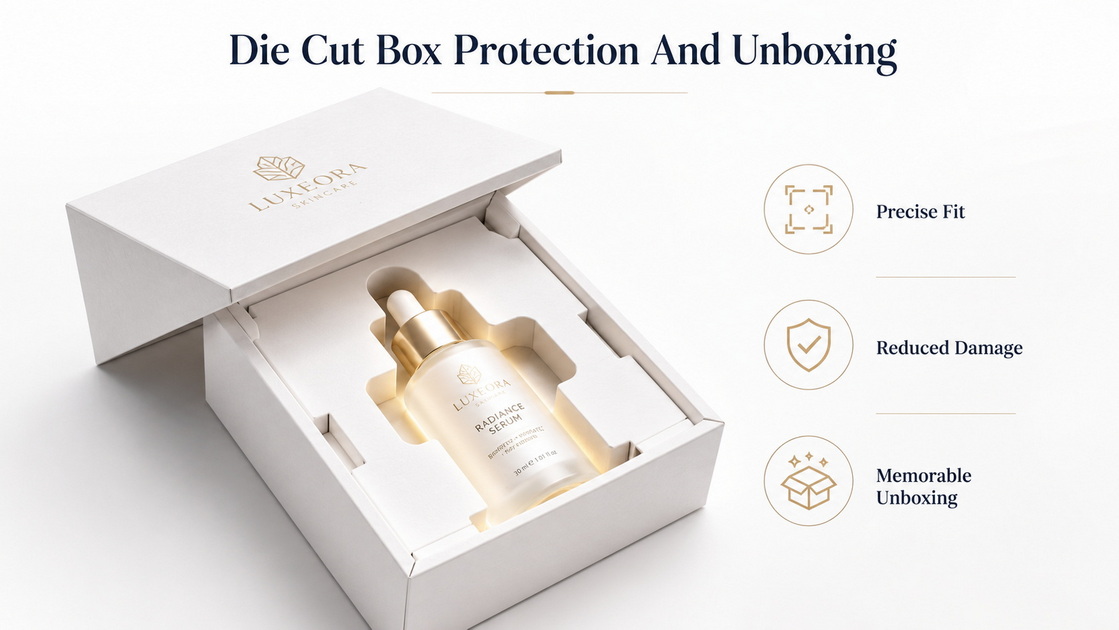
Die cut boxes are corrugated or paperboard structures produced with a cutting die, enabling custom shapes, locking mechanisms, windows and inserts that standard RSC boxes can't easily achieve. [oxopackaging]
Die cut boxes often serve both primary and secondary packaging when brands want a tight fit and distinctive presentation. Typical uses include: [oxopackaging]
- Luxury cosmetics and skincare where structured inserts, windows and unique openings enhance perceived value. [oxopackaging]
- High-end electronics and gadgets needing snug, protective nests and memorable unboxing. [oxopackaging]
- Gourmet food and specialty beverages where premium packaging differentiates on crowded shelves. [oec]
- Fragile products like glassware and ceramics, often combined with foam or corrugated inserts. [urgentboxes]
Die cut designs unlock capabilities that standard RSC cannot. [urgentboxes]
- Maximum protection via inserts – Custom inserts secure each product in a defined cavity, reducing movement and damage in transit. [oxopackaging]
- Compact, shipping‑friendly formats – Because the box is cut to product dimensions, outer volume and dimensional weight can be reduced. [urgentboxes]
- Enhanced branding and unboxing – Unique cuts, windows, folds and locking systems make the box part of the product experience. [thecustompackaging]
- Lower assembly materials – Many die cut boxes use self-locking designs that require little or no tape, reducing labour and consumables. [oxopackaging]
- Resource savings – Efficient layout on the sheet and minimal extra packaging materials support eco-conscious positioning. [thecustompackaging]
For brands, die cut packaging transforms the box from "just a container" into a communication and experience tool, particularly in beauty, electronics and premium food.
The core trade‑off is simplicity and cost vs customization and protection/branding. PakFactory's original guide and several 2026 packaging comparisons outline these differences. [urgentboxes]
| Feature | RSC Box | Die Cut Box |
|---|---|---|
| Structure | Regular slotted, one‑piece, tape‑closed flaps. (oec) | Die‑cut shape; may include self‑locking tabs, windows, perforations, tear‑away sections. (oec) |
| Customization level | Moderate: sizes, flutes, print on panels. (oec) | High: precise product fit, inserts, unique openings and display features. (oec) |
| Protection | Good for many items; relies on void fillers for fragile goods. (oec) | Excellent for fragile/premium items when combined with tailored inserts. (oec) |
| Branding potential | Mainly flat‑panel printing; structure is generic. (oec) | Strong: box itself becomes a designed object, enhancing shelf and unboxing impact. (oec) |
| Unit cost | Generally lower; simple tooling and production. (oec) | Higher initial tooling (dies); per‑unit cost can be competitive at volume and with efficient layouts. (oec) |
| Assembly & materials | Quick manual assembly; tape required. (oec) | Often faster on site; self‑locking designs minimize tape and extra materials. (oec) |
| Shipping efficiency | Standard sizes; may include excess void space. (oec) | Typically more compact; reduces dimensional weight for optimised designs. (oec) |
As a rule of thumb:
- Choose RSC when you need cost-effective, robust transport packaging for multiple SKUs, and branding happens elsewhere.
- Choose die cut when packaging must protect precisely and represent your brand on shelf or on camera.
Beyond theory, the decision is situational. PakFactory suggests evaluating budget, product type, weight, protection, ease of assembly, shipping and customer expectations; this can be translated into a concrete framework. [cubitpackaging]
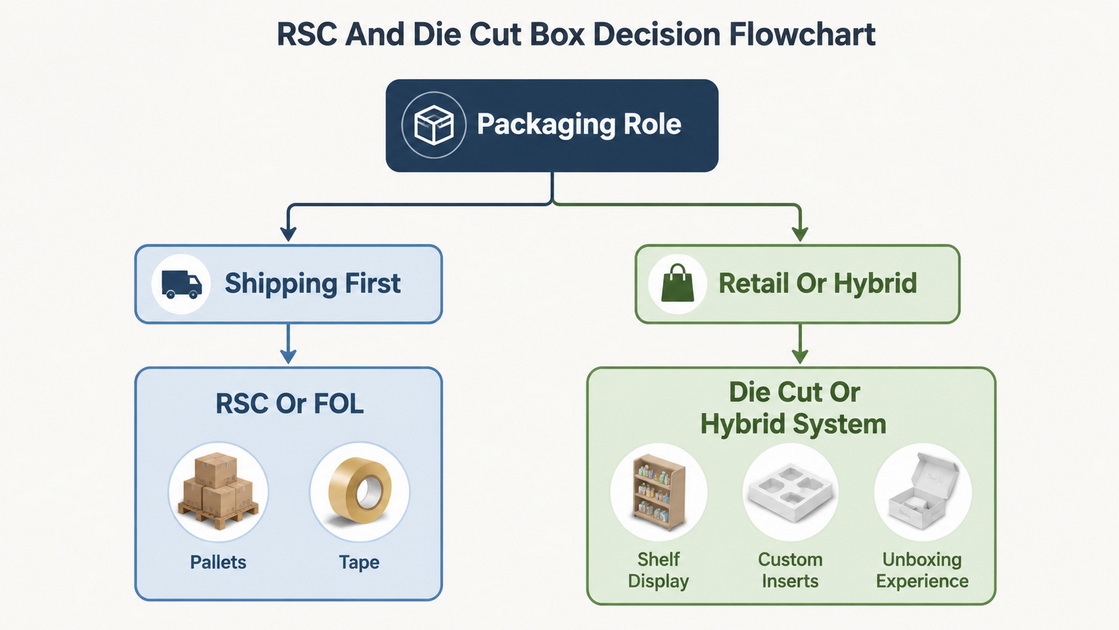
Ask: *Is this box primarily for shipping, retail display, or both?*
- Shipping-first (e.g., outer cartons for e‑commerce, B2B shipments) → start by testing RSC. [oec]
- Retail-first or hybrid (e.g., shelf packs, premium kits) → evaluate die cut options with branding and inserts. [thecustompackaging]
Consider:
- Fragility – high fragility favours die cut with tailored inserts or reinforced RSC/FOL variants. [urgentboxes]
- Price positioning – premium items benefit from die cut structures that elevate unboxing and justify price. [thecustompackaging]
- Channel – beauty, electronics and gift categories often require die cut solutions; bulk FMCG replenishment may remain RSC‑based. [wowpopdisplay]
Include:
- Per‑unit box cost (board, printing, die cost amortisation). [oxopackaging]
- Void filler costs (more with RSC, less with optimized die cut). [oec]
- Freight and dimensional weight (die cut's compactness vs RSC's extra air). [oxopackaging]
- Assembly labour (tape and manual fitting vs self-locking designs). [oxopackaging]
When you run these numbers, you often find die cut boxes pay back their tooling through lower freight and better product protection at moderate to high volumes.
PakFactory's FAQ reminds that RSC and die cut are part of a larger family of corrugated styles. Understanding alternatives helps avoid forcing one style to do a job it's not designed for. [cubitpackaging]
- HSC (Half Slotted Container) – Similar to RSC but only bottom flaps; open top for easy access, often used with separate lids in warehouses. [cubitpackaging]
- FOL (Full Overlap Slotted Container) – Flaps fully overlap at top and bottom for extra strength and improved protection against crushing. [oec]
- Other specialty designs – Multi‑depth cartons, mailers, fold‑over mailers and display trays offer additional options described in corrugated master guides. [cubitpackaging]
When developing packaging systems, it's often optimal to mix styles: for example, die cut primary packaging nested inside RSC or FOL outer cartons.
Recent packaging trend reports for 2026 show several themes that directly impact the RSC vs die cut decision. [designer-daily]
- Sustainability with substance, not slogans – Brands are pressured to reduce waste and avoid "greenwashing"; die cut boxes that minimise materials and integrate reusable inserts can support this, while RSC's recyclability remains a baseline. [digitaljournal]
- Shelf scanning speed and dopamine design – Consumers spend seconds evaluating shelves; die cut structures with windows and bold shapes help products stand out in that tiny window. [awesomesauce]
- Connected and interactive packaging – QR‑enabled unboxing experiences and AR content pair naturally with die cut designs that guide the user journey, but RSC can host these elements on outer shipping cartons as well. [awesomesauce]
- Retro and tactile unboxing – Structural features like tear‑strips, layered openings and reveal panels (typically die cut) support nostalgic and tactile experiences that drive social sharing. [awesomesauce]
For brands planning multi-year packaging platforms, aligning box style with these trends helps ensure your system stays relevant instead of being replaced in the next redesign cycle.
From project experience, one recurring pattern is brands over‑relying on RSC due to habit or perceived cost savings, then discovering hidden costs later.
Common scenarios where die cut quietly wins over RSC:
- High damage rates in shipping – Precision die cut inserts can reduce breakage and returns, especially for fragile electronics or glass, where each damage event is costly. [urgentboxes]
- High freight on light but bulky items – Optimized die cut packaging reduces dimensional weight, lowering shipping charges more than the increase in box cost. [oxopackaging]
- Premium brand positioning – When packaging is central to perceived value (beauty, tech, luxury food), die cut structures become part of the product narrative, supporting price and loyalty. [thecustompackaging]
In other words, "cheaper box" can be the more expensive system, once damage, freight and brand impact are properly accounted for.
A widely recognized but rarely written risk in corrugated packaging is silent spec downgrading—board grades, flute combinations or insert designs changing between production runs without formal notification. [thecustompackaging]
This is especially dangerous for die cut packaging, where insert geometry and board stiffness are critical to protection and fit. Even small changes can alter compression strength or cause products to sit loosely, raising damage rates. [urgentboxes]
To avoid this:
- Lock board specifications (grade, flute, adhesive type) and insert dimensions into your approved drawings and BOMs. [oec]
- Require suppliers to operate under formal change control with written approvals before altering materials or die layouts. [oec]
- Periodically perform compression and drop tests on production samples, not just initial prototypes. [urgentboxes]
This discipline is as important as the initial box style choice.
Long Win Display, as a POP display and package box designer and manufacturer, typically operates in the die cut and custom structural space—especially for branded retail, cosmetics and FMCG. [wits.worldbank]
From a buyer's perspective, a partner like Long Win Display adds value in several ways:
- Integrated design for displays and packaging boxes – Aligning structural design across display stands and boxes improves retail execution and reduces mismatch between primary packaging and POP. [wits.worldbank]
- Preloading and rollout support – Preassembling and preloading products into cartons or displays before shipment reduces in‑store labour and error rates. [wits.worldbank]
- Cost‑optimized engineering – By simplifying structures, minimizing raw material waste and optimising shipping volume, custom die cut solutions can be both visually strong and commercially efficient. [hydrocean]
For brands selling into large retailers, combining RSC transport cartons with Long Win's custom die cut retail packaging and displays is often an effective system solution.
1. How do I verify if my supplier's corrugated specs are being followed for each production run?
Request detailed spec sheets (board grade, flute, adhesive type) and link them to approved drawings; then require batch certificates and spot lab tests on compression and edge crush for ongoing runs. [cubitpackaging]
2. Is RSC always cheaper than die cut boxes?
RSC typically has lower unit cost, but die cut boxes can reduce freight, void filler usage and damage, making them cheaper at system level for certain products and volumes. [urgentboxes]
3. Can I use die cut boxes as both primary and shipping packaging?
Yes, if the structure and inserts are engineered for logistics loads; many beauty and electronics brands use die cut packaging that functions both as shelf packaging and as shipping container, sometimes with an outer RSC in high-risk routes. [oxopackaging]
4. When should I choose FOL or HSC instead of RSC?
Use FOL for heavier or fragile items needing extra protection against crushing; choose HSC when easy top access is needed, often paired with a separate lid for warehouse or archival applications. [cubitpackaging]
5. How do packaging design trends for 2026 affect my box style decision?
Trends toward sustainability, connected experiences and bold shelf presence favour die cut structures for primary packaging, while RSC remains important for efficient and recyclable shipping cartons; many brands now combine both styles strategically. [designer-daily]
1. PakFactory – RSC vs Die Cut: Which Box Style is Right for You?
Comparative guide on RSC and die cut boxes, including definitions, applications, benefits and FAQ. [pakfactory]
2. Cubit Packaging – Corrugated Box Types: RSC, FOL, HSC & Die-Cut Explained (2026)
Overview of common corrugated box styles and their typical use cases. [cubitpackaging]
3. OXO Packaging – RSC vs Die-Cut Boxes: Differences, Benefits and Best Fit
Additional comparison of RSC and die cut boxes, including quick feature table and application notes. [oxopackaging]
4. Urgent Boxes – RSC vs Die Cut Boxes: Which One Is Right for You?
Short article comparing cost and protection aspects between RSC and die cut packaging. [urgentboxes]
5. The Custom Packaging – Top Trends in Retail Packaging Design for 2026
Trend report covering sustainability, interactive experiences and nostalgic design in retail packaging. [thecustompackaging]
6. Designer Daily – Packaging Design Trends That Are Dominating Retail Shelves in 2026
Insight into how consumers scan shelves and the role of packaging structures in visual impact. [designer-daily]
7. Awesome Sauce Creative – Top Packaging Design Trends in 2026
Discussion of connected packaging, dopamine aesthetics and sustainability as drivers of packaging design. [awesomesauce]
8. Long Win Display – About Our Company
Company profile describing Long Win Display's POP display, package box design, production and preloading capabilities. [longwindisplay]


