
Views: 222 Author: Long Win Display Publish Time: 2026-04-22 Origin: Site


When you work on hundreds of cardboard display stands every year for global brands, you quickly learn a simple truth: a display stand either sells in the first few seconds—or it becomes very expensive cardboard. [popdisplay]
As a POP display designer and manufacturer in China, our team at Long Win Display has spent over 20 years helping brands launch and scale in major retail chains with custom retail display stands, from floor‑standing corrugated displays to pallet displays and countertop units. In this guide, I'll share the practical, on‑the‑floor lessons we've learned about how to set up a retail display stand the right way—so it's easy to assemble, visually powerful, retailer‑compliant, and profitable. [longwindisplay]
We will walk through strategy, design, assembly, and optimization, with actionable checklists you can hand directly to your trade marketing team, distributors, or in‑store merchandisers. [mcintyredisplays]

Before you think about assembly instructions or graphics, you need to understand what "effective" actually means for a retail display. Based on our experience designing and pre‑packing thousands of POP units, the best cardboard display stands consistently achieve five things: [cefbox]
- Grab attention within 3 seconds in a busy aisle
- Tell a clear brand and product story with minimal text
- Make picking up the product effortless
- Stay structurally stable and neat throughout the promotion
- Deliver measurable sales uplift, not just "branding"
From the retailer's point of view, a "good" display is one that fits the store layout, is quick to assemble, doesn't create safety issues, and is easy to replenish. From the brand's perspective, it must also reinforce brand positioning, highlight key SKUs, and justify the cost per store. [creativedisplaysnow]
When you set up a cardboard display stand, every decision—from the number of shelves to the QR codes you print—should support these goals.
Many brands jump straight into artwork. That's a mistake. A successful retail display setup starts long before the display arrives in store. [cardboarddisplay.com]
Ask (and document) these questions before any design work begins:
1. Primary Objective
- Are you launching a new SKU?
- Clearing seasonal inventory?
- Driving trial with smaller pack sizes?
The answers influence how many facings, what pack sizes, and which claims you highlight. [packwins]
2. Target Shopper and Occasion
- Who are you trying to influence—parents, teens, professionals?
- Is this a back‑to‑school, holiday, or everyday promotion?
Your visual language, price communication, and product mix should all match this target. [cefbox]
3. Key KPIs
- Incremental sales uplift vs. base shelf
- Units per store per week
- Trial rate or attach rate with other categories
Defining KPIs early will help you evaluate whether the stand and its setup were "worth it" later.
Every retailer has its own rules on footprint, height, materials, safety and fire regulations, and branding guidelines. Before you finalize your display concept, make sure you know: [longwindisplay]
- Maximum footprint and height allowed
- Permitted locations (endcap, front of aisle, checkout, seasonal zone, power aisle, etc.)
- Load‑bearing requirements and stability standards
- Any sustainability or recyclability requirements for cardboard materials [cardboarddisplay.com]
At Long Win Display, we routinely help clients interpret US and EU retailer guidelines and adjust structure and graphics so the stand passes review on the first try. Doing this homework up front means your display won't be rejected or moved to a low‑traffic corner at the last minute. [longwindisplay]
The "right way" to set up a display stand starts with choosing the right display format and material spec for your product and channel. [packwins]
Below is a quick comparison of popular POP cardboard display types and the situations where they perform best: [longwindisplay]
| Display Type | Best Use Case | Typical Location |
|---|---|---|
| Floor‑standing cardboard display | New product launch, hero SKU blocks, seasonal promotions | Aisle, power aisle, entrance |
| Pallet display | Club stores, mass promotions, heavy or bulk items | Warehouse/club floor, promo zones |
| Countertop display stand | Impulse, small packs, samples, trial units | Checkout, service counters |
| Side‑kick / clip strip | Cross‑merchandising near complementary categories | Side of gondola, near main shelf |
| Dump bin (cardboard bin display) | Clearance, mixed SKUs, low‑priced products | Action alley, seasonal zones |
Tip: If your products are heavy (e.g., bottles, multipacks), your cardboard display stand must be engineered with the right flute type and burst strength, not just attractive printing. [cefbox]
As a manufacturer, we often see brands underestimate weight load and dwell time. To avoid collapsed shelves and warped structures:
- Choose appropriate corrugated board
- B, C, E, or combined flutes depending on load requirements [packwins]
- Match burst strength to total product weight per shelf
- For heavier products, higher burst strength materials (e.g., 200–300+ lb) are critical [cefbox]
- Consider promotion duration
- Short, 2–4 week promotions may allow lighter materials, while 3‑month activations in humid environments need more robust structures [cardboarddisplay.com]
A well‑matched material spec means your display stays straight, safe, and visually appealing throughout the promotional period.
Once you have the right structural direction, the next step is visual design and merchandising layout. This is where many brands either unlock strong uplift—or bury their message in clutter.
Our design rule is: one hero message per face of the display. Overloaded stands confuse shoppers and dilute attention. Focus on: [popdisplay]
- A single hero product or benefit at eye level
- Short, compelling headline (ideally ≤8 words)
- High‑contrast colors for readability from a distance
- Large, visible brand logo that can be recognized even while walking [popdisplay]
Examples of strong top‑of‑display headlines:
- "Hydration that lasts all day"
- "Limited‑edition holiday flavors"
- "Try 3x more protein in every bar"
These statements are easy to read in under 3 seconds and immediately tell the shopper why this cardboard display stand deserves their attention. [creativedisplaysnow]
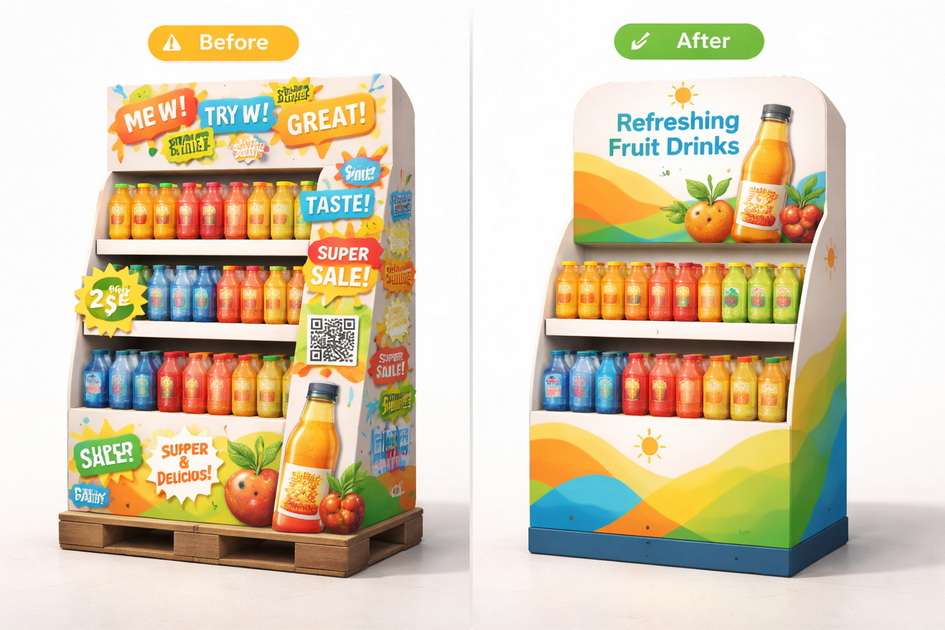
A cardboard display stand should feel like a natural extension of your main shelf and brand world. To achieve this:
- Integrate core brand elements: logo, colors, typography, iconography [packwins]
- Respect category color codes (e.g., blue for water, green for eco products, red for promotions) so shoppers instantly understand the product's role
- Use high‑resolution product imagery and lifestyle visuals that show the product in use [cardboarddisplay.com]
Strong alignment improves brand recall and makes your display look "official" and trustworthy rather than generic or one‑off.
Beyond artwork, merchandising mechanics determine whether your stand helps or hurts conversion. [creativedisplaysnow]
Use these principles when setting up your retail display stand:
- Place key SKUs at eye to chest level for maximum grab rate [cefbox]
- Group similar products together to simplify navigation
- Keep price communication clear and consistent (price cards, promo tags)
- Avoid over‑filling: leave 30–40% open visual space to reduce perceived clutter [popdisplay]
- Ensure all products are front‑faced and easy to reach, including for shorter shoppers [creativedisplaysnow]
Even the best‑designed cardboard display stand will underperform if you put it in a dead zone. Placement is one of the biggest levers in POP success. [creativedisplaysnow]
Based on industry best practices, we recommend placing displays in:
- Power aisles and endcaps for maximum visibility and basket impact [cardboarddisplay.com]
- Entrance zones for new product announcements or seasonal launches [cefbox]
- Checkout and service counters for impulse buys and small trial packs [packwins]
- Cross‑category locations near complementary items (e.g., snacks near beverages, shaving products near grooming tools) [cardboarddisplay.com]
Before roll‑out, ask your retail partners which zones are available and what fees or minimum volumes may be associated with premium placements.
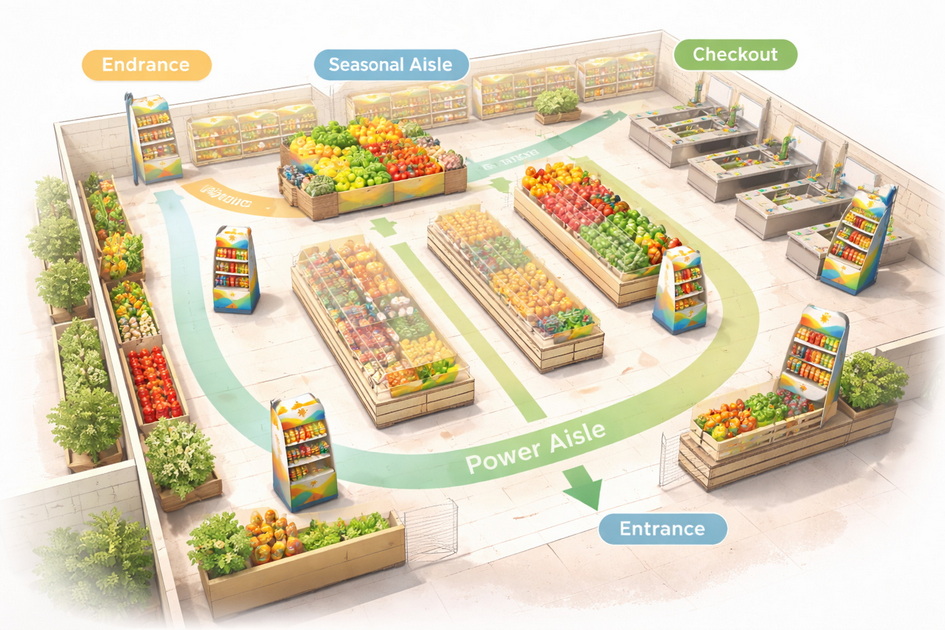
An often overlooked part of "setting up the stand the right way" is understanding the environment around it. [cefbox]
- Make sure the display is not blocking aisles, fire exits, or sightlines to key store fixtures
- Check that lighting is sufficient—targeted lighting can significantly increase the likelihood of shoppers approaching a display [cefbox]
- Avoid locations where the display is vulnerable to trolleys or carts repeatedly hitting it, which can shorten its life
If you plan to include digital or interactive elements, ensure there is safe access to power and that cables are hidden or protected.
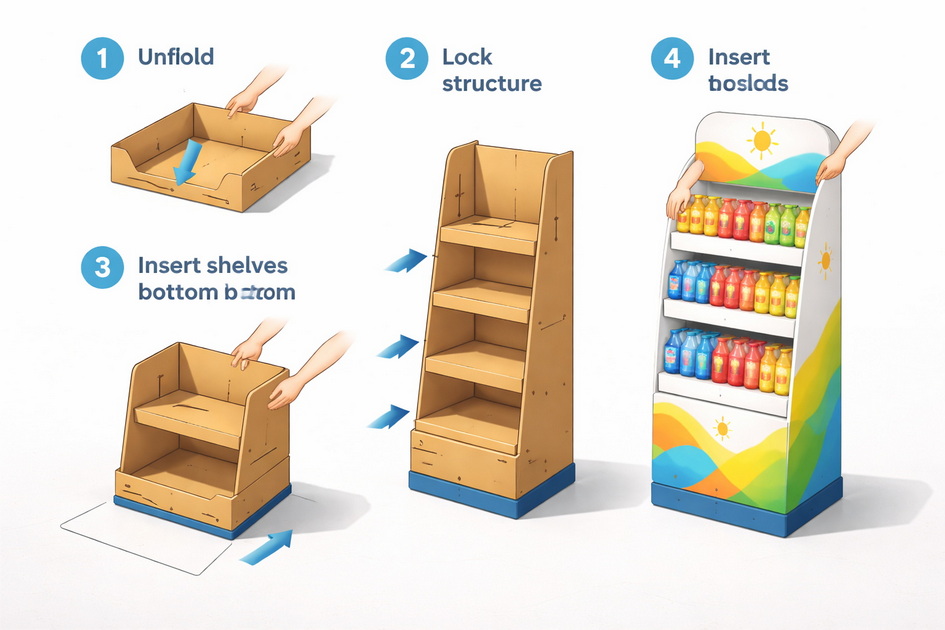
From a manufacturer's perspective, one of the most common friction points is difficult assembly. If store staff find your cardboard display stand confusing or time‑consuming to assemble, it may end up poorly built or not built at all. [mcintyredisplays]
Effective POP engineering focuses on simplifying the number of pieces and the steps required. [mcintyredisplays]
- Use pre‑glued or pre‑folded components where possible
- Integrate locking tabs, spring buttons, or simple slots instead of requiring tools [mcintyredisplays]
- Clearly mark orientation (front/back, top/bottom) on hidden flaps and bases
When we design for export clients, we often iterate through mock assembly sessions in our factory, timing each step and reducing the number of actions needed until floor assembly is comfortably under a few minutes per unit.
To make setup easy for store personnel or field teams:
- Include a one‑page, numbered instruction sheet with step‑by‑step diagrams [mcintyredisplays]
- Use simple, universal icons rather than heavy text blocks
- Indicate estimated assembly time and whether one or two people are required
- Include a QR code linking to a short assembly video for visual learners
Recommended UX enhancement: Place a QR code and "Watch 1‑minute setup video" icon on the inside flap of the shipping carton or on the instruction sheet.
For large programs, pre‑packing the display with product at the factory can dramatically reduce time in store and minimize merchandising errors. [longwindisplay]
- Products are loaded according to an agreed planogram
- Shelf capacities and weight distribution are tested in advance
- Outer cartons are designed to act as transport protection + setup aid
At Long Win Display, we frequently design, produce, and pre‑pack displays so that retailers only need to open the carton, unfold, and position. This is especially powerful for multi‑country roll‑outs where you cannot rely on intensive field training. [longwindisplay]
Today's shoppers and retailers expect more than a static cardboard display stand. To future‑proof your setups, consider these additional layers.
Even simple interactive elements can increase engagement and dwell time: [cefbox]
- QR codes linking to product education, how‑to videos, or coupons
- Augmented reality triggers for trying shades, viewing recipes, or seeing before/after results
- Simple games or loyalty sign‑ups that reward scanning the display
When you design graphics, reserve clean, uncluttered space for these elements so they are easy to notice and scan.
Retailers and shoppers increasingly value sustainable POP solutions. You can strengthen both your brand position and retailer relationships by: [packwins]
- Using recyclable corrugated cardboard and eco‑friendly inks [packwins]
- Printing clear recycling icons and statements on a side panel
- Designing for easy disassembly and flat‑packing after the promotion
Many of our clients now request life‑cycle and material documentation to support corporate sustainability reporting; planning this early makes compliance easier.
To truly set up a retail display stand "the right way," you need a feedback loop. [longwindisplay]
Define in advance how you will track:
- Sales uplift vs. control stores without the display
- Sell‑through speed vs. forecast
- Shopper engagement, if you use QR codes or digital interactions
- Display uptime (how long stands remain well‑stocked and structurally sound)
Use this data to refine future waves—for example, adjusting shelf spacing, changing headline claims, or altering the number of facings per SKU.
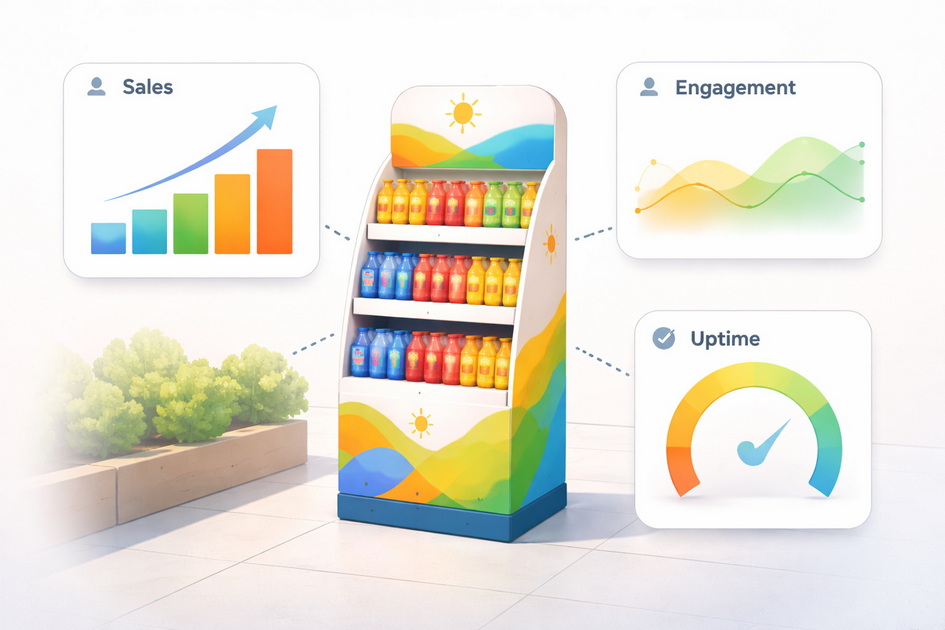
To make this practical for your teams, here's a simple field‑ready checklist that merchandisers can follow.
1. Verify all components against the packing list (base, shelves, header, hooks, etc.) [mcintyredisplays]
2. Check the display's assigned location in the store with staff (endcap, aisle, front, etc.) [creativedisplaysnow]
3. Gather any required tools (usually none if design is optimized).
1. Unfold and lock the base so it stands upright and stable.
2. Attach side panels and back panel, locking tabs into slots.
3. Insert shelves from bottom to top, listening/feeling for secure clicks or locks.
4. Fix the header panel and any side wings or toppers.
1. Place heavier items on lower shelves, lighter items higher up. [packwins]
2. Arrange products according to planogram, grouping by variant or flavor.
3. Ensure front‑facing labels and clear visibility of hero SKUs. [creativedisplaysnow]
4. Add price tags, wobblers, or promo flashes as specified.
Before you leave the stand:
- Confirm the display is straight, stable, and not wobbling.
- Check that nothing obstructs shopper access or store traffic.
- Take photos from different angles for reporting and later analysis.
Setting up a retail display stand the right way is not just about folding cardboard; it's about aligning strategy, engineering, design, and operations. For many brands, especially those scaling into new markets, it's risky to manage this alone.
As a leading POP display designer and manufacturer in China, Long Win Display offers: [longwindisplay]
- End‑to‑end POP services: design, structure engineering, prototyping, testing, mass production, and pre‑packing
- Experience with major retail standards in North America, Europe, and other key markets [longwindisplay]
- Custom cardboard display stands, countertop displays, pallet displays, and more, optimized for your target channels [longwindisplay]
- A proven process to translate brand goals and retailer constraints into ready‑to‑deploy POP programs [longwindisplay]
If you want your next cardboard retail display stand to be:
- Easy for store staff to assemble,
- Stable and durable for the full promo period, and
- Engineered to maximize sales and brand impact,
then now is the time to involve a specialist POP display partner.
Call to Action:
Share your brief (target retailers, product range, promotion timing, and budget) with Long Win Display, and we'll help you design, customize, produce, and, if needed, pre‑pack a data‑driven POP solution that's ready to roll out across your key retail channels. [longwindisplay]
1. How long can a cardboard display stand last in a retail environment?
With the right material spec and load distribution, a well‑engineered cardboard display can easily support multi‑week to multi‑month promotions, even in high‑traffic environments. Duration depends on product weight, humidity, and how well it is maintained and replenished. [cardboarddisplay.com]
2. Are cardboard display stands strong enough for heavy products?
Yes, if you choose the correct flute type, burst strength, and structural design, cardboard stands can safely hold many heavy items such as beverages or cleaning products. It's critical to share accurate product weights and stacking plans with your display manufacturer. [packwins]
3. What information should I provide to my POP display supplier at the start?
You should clarify your campaign objective, target shopper, retail channels, SKU list, expected promotion duration, and retailer guidelines. High‑quality branding assets and any sustainability requirements are also essential. [longwindisplay]
4. Can cardboard displays be fully recyclable?
Most corrugated cardboard stands can be 100% recyclable if they are produced with appropriate boards, inks, and coatings. You can also print clear recycling instructions directly on the display to support store staff. [cardboarddisplay.com]
5. How can I measure the ROI of my retail display stands?
Track incremental sales uplift, sell‑through speed, and when possible, engagement with digital elements like QR codes. Compare performance across different locations and layouts to refine future display designs and placements. [longwindisplay]
1. Creative Displays Now – Best Practices for Setting Up Retail Displays
https://www.creativedisplaysnow.com/how-to-set-up-a-retail-display-stand-the-right-way/ [creativedisplaysnow]
2. Packwins – Designing and Using Cardboard Display Stands: Step‑by‑Step Guide
https://packwins.com/designing-and-using-cardboard-display-stands-a-step-by-step-guide/ [packwins]
3. CEF Box – An Expert Guide to Designing and Assembling Cardboard Display Stands
https://www.cefbox.com/blog/knowledgeBase/An-Expert-Guide-to-Designing-and-Assembling-Cardboard-Display-Stands [cefbox]
4. Long Win Display – Our Company
https://www.longwindisplay.com/our-company.html [longwindisplay]
5. Long Win Display – Top Paper Display Manufacturers and Suppliers in America
https://www.longwindisplay.com/top-paper-display-manufacturers-and-suppliers-in-america.html [longwindisplay]
6. Cardboard Display Australia – Comprehensive Guide to Cardboard Display Stands
https://cardboarddisplay.com.au/comprehensive-guide-to-cardboard-display-stands/ [cardboarddisplay.com]
7. McIntyre Displays – 4 Tips to Make Assembling Displays On the Retail Floor Easy
https://mcintyredisplays.com/blog/4-tips-easy-pop-display-assembly/ [mcintyredisplays]
8. PopDisplay – What Makes a Good Display Stand (Chinese)
https://popdisplay.me/zh-cn/ [popdisplay]


