
Views: 222 Author: Amanda Publish Time: 2026-03-18 Origin: Site


Content Menu
● How We Evaluated Paper Display Manufacturers in America
● What Real Customers Care About Most in POP Displays
● Top Paper Display Manufacturers and Suppliers in America (2026 Overview)
>> 1. Creative Displays Now – In‑House US Cardboard Display Manufacturing
>> 2. The BoxMaker – Corrugated POP Displays with Digital and Conventional Printing
>> 3. ShopPOPDisplays and Similar Retail Display Providers
● Where Long Win Display Fits in a Global POP Strategy
● How to Combine US and Chinese POP Suppliers Effectively
● Questions to Ask Before Choosing a POP Display Manufacturer
● Side‑by‑Side View: Typical Strengths of US vs Offshore POP Suppliers
● Practical Steps to Launch a Successful POP Program with Long Win Display
● Clear Call to Action for B2B Buyers
● FAQ
>> FAQ 2 – Can Long Win Display manage pre‑packing and direct shipments for US retailers?
>> FAQ 3 – Are cardboard displays robust enough for heavy items in big box stores?
>> FAQ 4 – How can I make sure my POP displays meet retailer sustainability standards?
>> FAQ 5 – What is the best way to start a new project with Long Win Display?
As someone who has worked closely with cardboard display stands, retail teams, and brand owners across the US and Europe, I have seen many campaigns succeed or fail purely because of the choice of POP display supplier. A display that looks perfect in a design file can underperform in a busy Walmart or club store if the board is under‑specified, the structure is not properly tested, or the supplier cannot ship reliably during peak season. This guide examines leading paper display manufacturers and suppliers in America from a practical buyer's perspective and explains how a specialized partner like Long Win Display in China can fit into a global POP display strategy.

When assessing paper display manufacturers and suppliers in America, the most reliable insights usually come from real projects: launches, seasonal campaigns, and long‑term retail programs. Brand managers, trade marketers, and retail operations teams care less about slogans and more about what actually happens in stores and distribution centers.
Key evaluation criteria include:
- Manufacturing & printing quality: board strength, structural integrity, print sharpness, color consistency, and defect rates at scale.
- Customization & design support: ability to engineer displays around specific product weights, dimensions, and planograms.
- Lead times & reliability: performance during high‑demand periods, on‑time delivery, and flexibility when forecasts shift.
- Communication & project management: responsiveness, technical understanding, and how the supplier handles changes or problems.
- Sustainability & compliance: use of recyclable materials, certifications, and compatibility with retailer environmental policies.
- Total value for money: not just unit price, but also assembly time, transport efficiency, in‑store durability, and impact on sell‑through.
By grounding these criteria in real project outcomes, buyers can compare suppliers on tangible performance rather than marketing claims.
Across different campaigns and categories, similar themes appear in feedback from US retailers and brands about display suppliers. Understanding these patterns helps you read between the lines when reviewing proposals and portfolios.
Common pain points include:
- Displays bending, leaning, or collapsing after a short period because the board grade or structure was not matched to product weight and shopper traffic.
- Noticeable color mismatches between samples and mass production, or among different batches in a rollout.
- Missed launch windows for major events such as Black Friday or seasonal promotions due to unrealistic scheduling or limited capacity.
- Structures that are too complex, causing store staff to struggle with assembly, leading to inconsistent execution or displays left unbuilt.
In contrast, buyers consistently value suppliers who:
- Proactively propose structural improvements to cut damage rates and improve visibility at similar or lower cost.
- Offer pre‑assembled or pre‑packed displays, reducing store labor and improving compliance with the plan.
- Communicate transparently about risks, constraints, and options instead of simply promising everything and delivering late.
A Chinese specialist such as Long Win Display, which focuses on cardboard display stands, countertop display stands, pallet displays, and pre‑packing, can add significant value when these concerns are addressed from the design phase. By engineering displays around export shipping, palletization, and in‑store assembly, Long Win Display can help brands reduce total landed cost and improve execution quality in US retail environments.
Below is a qualitative overview of several well‑known POP and paper display suppliers serving the US market. The goal is to clarify typical strengths, trade‑offs, and best‑fit use cases, so that B2B buyers can build a realistic short list and then validate through pilots and data.
Creative Displays Now is a prominent US producer of corrugated POP and paper displays, serving CPG brands, retail chains, and marketing agencies with in‑house manufacturing. Many buyers appreciate that design, printing, and converting can all be handled domestically, which simplifies coordination and accelerates timelines.
Typical strengths from customer feedback:
- Consistently solid print quality and structural design, especially for floor and pallet displays in grocery and mass retail.
- Strong ability to turn projects quickly for regional campaigns where importing would add too much time or risk.
- Good familiarity with US retail requirements, packaging standards, and compliance expectations.
Points to consider:
- For large national rollouts, unit costs can be higher than offshore manufacturing, particularly for highly complex structures or intensive pre‑packing.
- Cost‑sensitive programs may benefit from combining a domestic partner for pilots with an offshore producer for scaling.
Best fit: brands and retailers that need reliable, US‑based manufacturing for mid‑to‑large runs, and are willing to pay a premium for shorter lead times and simplified logistics.
The BoxMaker is recognized for corrugated packaging and POP display solutions, using both digital printing and conventional processes. This mix is attractive for marketers who want to test creative concepts or localize graphics without committing to huge volumes immediately.
Key strengths from a buyer perspective:
- Flexible print options: digital printing for shorter runs or variable graphics, traditional printing for high‑volume programs.
- Experienced structural design support, including considerations for palletization, shipping, and retail handling.
- Suitable for brands that want to run A/B tests or regional variations before scaling up.
Limitations to keep in mind:
- For very large, global, or highly cost‑sensitive initiatives, a combination of domestic design and offshore manufacturing with a specialist like Long Win Display can achieve better landed cost at scale.
- Geographic location and freight costs can influence competitiveness depending on your distribution network.
Best fit: brands seeking high‑graphic, structurally sound displays and the ability to mix packaging and POP work through a single US partner.
ShopPOPDisplays and comparable providers supply a wide range of acrylic, cardboard, and mixed‑material displays, including countertop units, sign holders, and merchandising accessories. They are often a good fit for smaller brands, independent retailers, or niche segments.
Common strengths:
- Extensive catalog of standard and semi‑custom solutions, enabling fast deployment without full custom engineering.
- Strong emphasis on countertop display stands and small‑format retail fixtures.
- Friendly to smaller order quantities and trial programs.
Typical limitations for large POP campaigns:
- Comprehensive, highly engineered pallet displays or complex national programs may not be their main focus.
- Per‑unit costs for large, fully custom cardboard structures can be higher than working with a dedicated offshore producer.
Best fit: independents, niche brands, and projects where speed, catalog availability, and modest volumes matter more than deep structural customization.
While US‑based companies serve the domestic market with local production, Long Win Display, as a Chinese POP display specialist, plays a complementary role in a broader sourcing strategy. Many international brands now mix domestic and offshore partners to balance cost, speed, flexibility, and risk.
Long Win Display focuses on:
- Design, customization, and production of cardboard display stands, countertop display stands, pallet displays, and related structures.
- Pre‑packing and pre‑assembly, so displays can arrive at US distribution centers or stores pre‑loaded with products and ready to deploy.
- Supporting brands that want to enter, expand, or standardize execution across major US retail terminals such as supermarkets, chain stores, and club formats.
In practice, Long Win Display is particularly valuable when:
1. You plan large‑scale national or multinational rollouts, where cost per unit and shipping efficiency directly affect campaign feasibility.
2. You need complex or heavy‑duty structures that benefit from expert engineering and controlled pre‑packing at the factory.
3. You are looking for a long‑term POP engineering partner to optimize designs, reduce damage, and improve results over multiple campaigns.
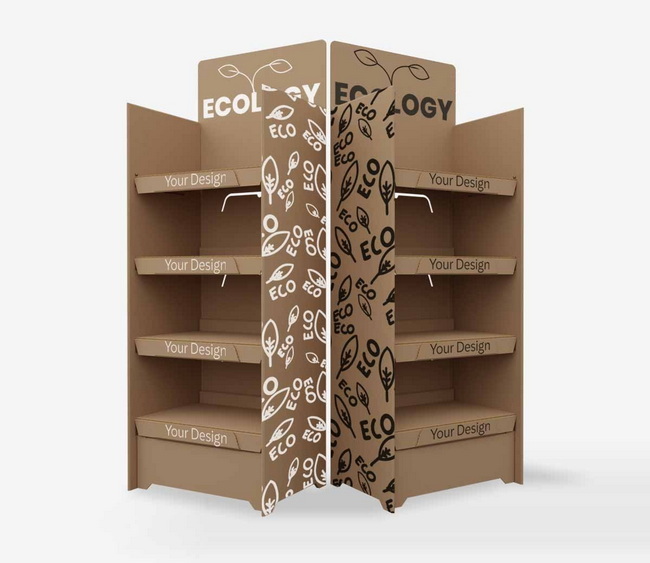
Beyond simple "top supplier" lists, experienced brands increasingly follow a hybrid model that blends domestic and offshore strengths. This approach improves cost efficiency while maintaining flexibility and risk control.
A practical three‑step model:
1. Use a US‑based partner for initial validation
- Work with a local design agency or US manufacturer to interpret retailer guidelines, shopper behavior, and compliance rules.
- Run a small pilot with domestic production to validate structure, graphics, and assembly with real store staff.
2. Scale up with a specialist like Long Win Display
- Once the design is proven, collaborate with Long Win Display to re‑engineer it for export manufacturing, focusing on:
- Board specification and flute selection for container loading and pallet patterns.
- Efficient pre‑packing workflows that minimize damage and labor.
- Optimized flat‑pack versus pre‑assembly decisions based on freight and store resources.
- This typically delivers significant cost savings at volume while preserving design intent.
3. Apply dual‑sourcing and performance data
- Keep a backup domestic option for a portion of volume or urgent needs.
- Measure damage rate, on‑time delivery, assembly time, and sales impact across suppliers and use the data to refine the mix.
This hybrid model is increasingly common among mature brands because it aligns procurement, marketing, and retail execution objectives in a single, data‑driven framework.
To reduce risk and improve outcomes, buyers should use a structured set of questions during supplier selection. This ensures that both domestic manufacturers and offshore specialists are judged on comparable criteria.
Key questions:
1. Structural and load testing
- What test methods do you use to validate load capacity and stability for displays similar to my project?
- Can you share examples of transport and handling tests, such as drop tests or vibration simulations?
2. Lead times and capacity
- What are your standard lead times for design, sampling, and production for my expected volumes?
- How do you manage peak season capacity and sudden increases in demand?
3. Pre‑packing and kitting
- Can you pre‑pack displays with my products, including inserts and instructions, and ship to my DCs or stores?
- How do you control labeling accuracy, component completeness, and packing quality?
4. Sustainability and compliance
- Which material and quality certifications do you hold, and which retailers do you already supply?
- How do you ensure that your displays meet recyclability and waste reduction targets?
5. Communication and project management
- Who will be my primary contact, and how will you manage artwork revisions, approvals, and status updates?
- How do you handle claims or issues during or after a rollout?
A specialized Chinese manufacturer like Long Win Display should be ready to answer these questions with technical data, drawings, and case examples, giving procurement and marketing teams confidence in long‑term cooperation.
To support B2B decision‑making, it helps to summarize typical characteristics of US‑based and offshore POP partners in a single snapshot.
| Supplier type | Typical strengths | Typical limitations | Best use cases |
|---|---|---|---|
| US-based POP manufacturers | Shorter lead times for domestic projects, strong knowledge of US retail expectations, time-zone alignment | Higher unit cost for large volumes, limited pre-packing capacity in some setups | Regional campaigns, urgent programs, retailer-driven pilots |
| Offshore POP specialists (e.g., Long Win Display) | Competitive unit cost at scale, strong export engineering experience, advanced pre-packing and kitting capabilities | Longer shipping times, need for clear specs and early planning | Large national/global rollouts, cost-sensitive campaigns, complex pre-packed programs |
| Hybrid (US + China) | Balances speed, cost, and supply risk, supports pilot-then-scale model | More coordination required across regions and partners | Mature brands, multi-wave launches, retailer-specific programs across regions |
This perspective reflects how many advanced marketing and procurement teams design their POP ecosystem rather than relying on a single supplier for all needs.
To convert strategy into execution, brands can follow a concrete process when working with Long Win Display for US‑focused POP programs.
1. Clarify retail targets and display types
- Identify which US chains and channels you are targeting (mass retail, club, drug, specialty, e‑commerce).
- Decide whether you need cardboard display stands, countertop display stands, pallet displays, or a mix.
2. Collect constraints and technical data
- Gather retailer guidelines, including planograms, aisle dimensions, pallet rules, and height limits.
- Provide product data such as unit weight, pack dimensions, and any special conditions (fragility, temperature sensitivity).
3. Co‑develop design with Long Win Display
- Share brand guidelines, campaign objectives, and any existing display references.
- Request several structural options with different cost and impact levels, plus 3D views and key dimensions.
4. Prototype, test, and iterate
- Order physical samples or pre‑production units for internal review and store‑level testing.
- Collect feedback from sales teams and store staff on assembly time, clarity of instructions, and perceived quality.
5. Plan pre‑packing, labeling, and routing
- Decide which displays should be pre‑packed with product versus shipped empty.
- Align on carton labeling, pallet stacking, and routing to US DCs or direct‑to‑store shipments.
6. Monitor KPIs and refine for future waves
- Track key indicators such as damage rates, assembly time, compliance, and sell‑through lift.
- Use these results to refine designs and sourcing strategy with Long Win Display and any US partners.
If your next project involves cardboard display stands, countertop display stands, or pallet displays for the American market, the choice of supplier will directly influence execution quality, cost, and the reliability of your launch. Early collaboration and realistic planning are essential.
If you need a partner that can design, customize, produce, and pre‑pack POP displays while helping your brand break into or scale within key US retail channels, consider engaging Long Win Display as your global POP engineering and manufacturing partner. Prepare a concise project brief, gather retailer requirements, and connect with the team to explore a tailored, data‑driven POP solution that fits your budget and growth objectives.
Contact us to get more information!
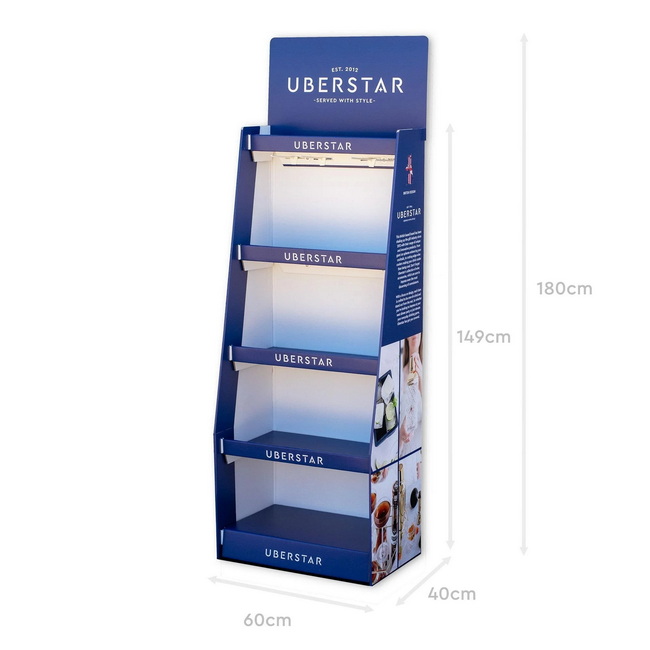
The decision hinges on your priorities and timelines. If you require very fast turnaround for a regional or last‑minute promotion, a US‑based manufacturer is usually the more practical choice. If you are planning large‑scale national or international rollouts where cost per unit and pre‑packing efficiency are critical, a specialist like Long Win Display can often deliver better value, provided that you plan ahead to account for production and transit times.
Yes. Long Win Display focuses on design, production, and pre‑packing of displays, which allows units to be assembled and loaded with product at the factory. Displays can then be shipped to US distribution centers or directly to stores according to your routing plan. This approach reduces in‑store labor and helps maintain consistent execution, as long as logistics details and retailer expectations are clearly defined.
Well‑designed cardboard display stands and pallet displays can safely support substantial weight even in high‑traffic big box environments. Success depends on the correct choice of board grade, structural design, and appropriate testing. When working with Long Win Display, request load calculations, material specifications, and documented test results to ensure every display is suitable for your specific product and retail conditions.
Most large retailers now expect displays to be recyclable and responsibly sourced. You should verify that your POP partner uses appropriate corrugated materials and can provide relevant documentation or certifications. Ask about material sourcing, recyclability, and how the supplier adapts designs to retailer environmental policies. Long Win Display can align material choices and structural solutions with each retailer's sustainability requirements, helping you avoid compliance problems.
Begin with a clear and concise brief that includes your target retailers, approximate quantities, launch windows, and budget guidelines. Share your brand assets and any existing display examples or inspiration. Long Win Display can then propose structural concepts, supply drawings and samples, and work with you to optimize the design for manufacturing, pre‑packing, and shipment into the US market. Starting early gives you more flexibility to balance cost, risk, and visual impact.
1. Creative Displays Now – Custom Cardboard Display Stands, product and capability information.
https://www.creativedisplaysnow.com/displays/
2. The BoxMaker – Corrugated POP Display Solutions, service and technology overview.
https://www.boxmaker.com/pop-displays/
3. General POP display supplier evaluation guidelines and buyer considerations.
https://diformainstore.com/evaluate-a-retail-floor-display-supplier-before-ordering/
4. Considerations for choosing POP display suppliers and project planning insights.
5. ShopPOPDisplays – Retail display catalog and general use cases.


