
Views: 222 Author: Long Win Display Publish Time: 2026-05-08 Origin: Site


When I first started helping footwear brands export to major retailers in North America and Europe, I underestimated how often shoe packaging and shipping errors would destroy margins. Creased uppers, crushed heel counters, and wet boxes did not just create returns; they damaged the brand story those teams had spent years building. In this guide, I'll show you how to package and ship shoes correctly, from the viewpoint of a Chinese POP display and custom shoe box manufacturer (Long Win Display) that designs, produces, and pre‑assembles packaging for retail‑ready distribution. [pakfactory]
In footwear, every shipment is a test of your brand promise. Packaging and shipping shoes properly influence:
- Damage and return rates
- Customer satisfaction and review scores
- Perceived quality during unboxing
- Carrier costs and operational efficiency
Shoes are particularly vulnerable to:
- Creasing and crushing around the toe box and heel counter
- Scuffing and scratching on leather and synthetic uppers
- Moisture damage from condensation, rain, or container humidity
For DTC and wholesale brands alike, well‑engineered shoe packaging turns a fragile product into a protected, beautifully presented shipment. [us.meest]
The original PakFactory guide correctly starts with box size, and from a manufacturing standpoint this is non‑negotiable. [pakfactory]
A good shoe shipping box should:
- Fit the shoe pair or pairs snugly without crushing
- Leave just enough space for protective wrap and fillers
- Avoid large voids that encourage movement and damage
For shipping, we typically recommend a double‑layer strategy:
- Inner custom shoe box (branded rigid or folding carton)
- Outer corrugated shipping box sized to the inner box and filler [easyship]

- Corrugated Boxes
Ideal as outer shippers for all footwear types. They are strong, lightweight, and easy to customize for different SKUs. [pakfactory]
- Rigid Boxes
Best for high‑end sneakers, luxury heels, or premium leather shoes where unboxing is part of the value proposition. [shoprigidboxes]
- Reusable Bags Or Mailers
Suitable for low‑profile shoes like flip‑flops or canvas flats when combined with adequate wrapping; they reduce material use and shipping volume. [us.meest]
At Long Win Display, we often adjust box dimensions by just a few millimeters to reduce dimensional weight while preserving toe clearance and heel protection.
Interior engineering makes the difference between shoes arriving "store‑ready" and shoes that need rework.
The PakFactory article highlights foam inserts and dividers, which we strongly endorse in factory practice.
Depending on your product, you can use:
- Foam inserts for high‑value sneakers and heels
- Cardboard dividers between shoes or between shoes and accessories
- Die‑cut trays that hold each shoe in position
These structures:
- Prevent rubbing between shoes
- Maintain distance from the box walls
- Make presentation more organized when the box is opened [shoprigidboxes]
Before adding shoes into the box:
- Stuff uppers with tissue, kraft paper, or molded inserts
- Secure laces and straps to prevent imprint marks
- Wrap delicate surfaces in soft paper or thin foam
Many brands skip this step and later discover that crushed toe boxes generate negative reviews and "defect" returns that could have been avoided. [leesmovers]

Once shoes are in position, void spaces determine how they will behave in transit.
PakFactory recommends filling gaps with crumpled packing paper, bubble wrap, or air cushions. In our manufacturing projects, we tailor this based on:
- Shoe weight and fragility
- Shipping distance and carrier profile
- Sustainability requirements
Options include:
- Recycled kraft paper for general cushioning
- Bubble wrap or air pillows for heavier boots or long‑distance shipping
- Biodegradable peanuts or molded pulp for eco‑focused brands [easyship]
Even good cushioning fails if the box opens in transit. We instruct clients to:
- Use high‑tack packing tape, at least 48 mm wide
- Apply the H‑taping method (center seam and both edge seams)
- Reinforce high‑stress corners and seams for heavy boots
For export cartons on pallets, we often add strapping and stretch wrap so that individual shoe shippers are no longer the only line of defense. [us.meest]
Shipping shoes without the original box is common for low‑cost items, returns, or marketplace sellers. It can be efficient, but only if executed correctly. [pakfactory]
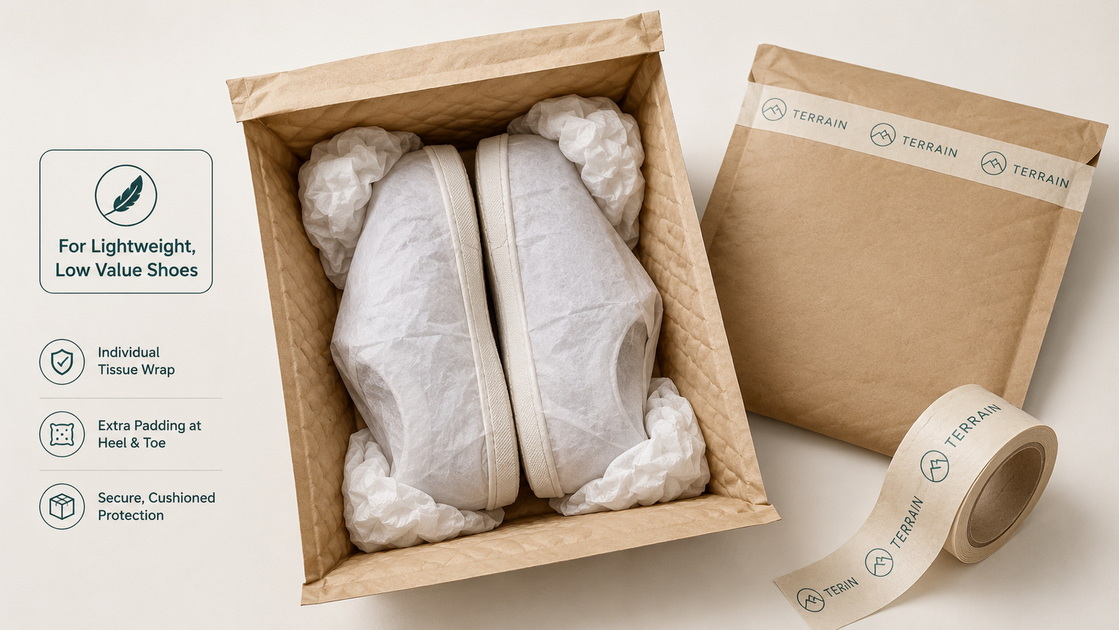
Poly or bubble mailers can work for:
- Lightweight sneakers
- Flip‑flops and sandals
- Fabric house shoes
Best practices: [cend]
- Wrap shoes individually in paper or bubble wrap
- Place soles facing away from each other
- Add a second internal bag or sleeve for moisture control
Brands aiming for sustainability can switch to:
- Recycled paper mailers
- Reusable cloth shoe bags
- Compostable padded mailers
These solutions maintain brand integrity, especially when combined with printed messaging about environmental commitments. [cend]

Different shoe categories demand different packaging strategies. PakFactory's breakdown aligns well with what we see in Long Win Display projects. [pakfactory]
- Use a sturdy corrugated outer box sized closely to the original shoebox
- Double‑box valuable or limited edition sneakers
- Add foam or paper inserts between heel counter and box walls
Collectors judge you on how well you protect original boxes as much as the shoes themselves. [easyship]
- Wrap each shoe individually in tissue or foam
- Use rigid or high‑quality folding cartons with dividers
- Avoid plastic bags that trap moisture and cause mold
Leather is sensitive to pressure and humidity, so proper stuffing and breathable inner materials are critical. [cend]
- Choose a larger corrugated box with reinforced walls
- Fill voids around shafts and toes to prevent collapse
- Reinforce all seams and consider double‑wall board for work boots
Boots can quickly exceed carrier weight thresholds, so you must balance protection and weight very carefully. [us.meest]
Pricing varies by region and carrier, but the core cost drivers are consistent.
- Actual weight of the package
- Dimensional weight based on box size
- Destination and service level (domestic vs international, ground vs express)
The PakFactory article notes that many small to mid‑sized businesses pay around 7–10 USD for domestic shoe shipments, with higher rates internationally depending on distance and service speed. [easyship]
From a packaging perspective, brands can lower costs by:
- Right‑sizing boxes to reduce dimensional weight
- Using lighter but structurally efficient board grades
- Standardizing a few shipper sizes across multiple SKUs [imperialdade]
Shoes do not travel just once. They move from factory to DC, DC to retailer, and often from retailer to end consumer. Custom shoe packaging and POP displays can support each of these journeys.
As PakFactory highlights, custom solutions deliver: [shoprigidboxes]
- Brand recognition through printed logos, colors, and textures
- Better protection via tailored dimensions and inserts
- Sustainability signaling through recycled boards and inks
At Long Win Display, we design shoe boxes that:
- Align with POS and POP shelves in retail
- Integrate with floor and counter displays
- Pre‑pack shoes for rapid merchandising at store level [longwindisplay]

POP displays designed for shoe boxes can:
- Present best‑selling sizes and styles at eye level
- Keep boxes organized, accessible, and visually consistent
- Support cross‑selling (shoes with socks, insoles, or care kits)
By engineering shoe boxes and displays together, you minimize damage in handling and maximize presentation on the shop floor. [longwindisplay]
Use this checklist internally with your operations or fulfillment teams:
1. Prepare The Shoes
Clean, dry, stuff, and secure laces or straps. [cend]
2. Select Inner Packaging
Choose a branded shoebox, reusable bag, or protective wrap.
3. Add Inserts And Fillers
Use foam, cardboard dividers, or paper to prevent movement. [pakfactory]
4. Choose The Outer Box Or Mailer
Right‑size the corrugated box or poly mailer for the order.
5. Seal And Label For Transit
Apply strong tape, H‑tape seams, and label clearly.
6. Consider International Requirements
Include customs information, harmonized codes, and any documentation for cross‑border shipments. [easyship]
Following this repeatable workflow dramatically reduces damage rates and customer complaints.
As a Chinese POP display and packaging box manufacturer, Long Win Display combines structural engineering, branding, and pre‑assembly under one roof.
We help footwear brands:
- Design custom shoe boxes that protect and present their products
- Integrate packaging with retail POP displays for unified in‑store branding
- Optimize inner and outer pack dimensions to control shipping and material costs
- Pre‑pack or kitting solutions so that shipments arrive retail‑ready
1. What is the safest way to ship high‑end sneakers?
Use the original shoebox as the inner packaging, wrap it in tissue or bubble wrap, and place it inside a snug corrugated outer box with added cushioning. For limited editions, double‑boxing and foam inserts provide extra protection. [us.meest]
2. Can I ship shoes without their boxes?
Yes, especially for low‑cost or lightweight shoes. Wrap each shoe individually, place them in a poly or padded mailer, and add extra protection around heels and toes. However, for premium or fragile shoes, an inner box is strongly recommended. [us.meest]
3. How can I reduce shoe shipping costs without increasing damage?
Right‑size your shipper, choose structural board grades that balance strength and weight, and standardize a few modular box sizes. Avoid oversized cartons that increase dimensional weight but offer no additional protection. [imperialdade]
4. What are the most eco‑friendly options for shoe packaging?
Use recycled cardboard boxes, soy‑based inks, recyclable paper tape, and fillers such as kraft paper or biodegradable peanuts. Reusable cloth shoe bags and recycled mailers also help communicate your sustainability commitments. [cend]
5. How can Long Win Display support my footwear brand?
Long Win Display can design, customize, and produce shoe packaging and POP displays that match your brand positioning, protect your products in transit, and arrive pre‑assembled or kitted to simplify store rollout and e‑commerce fulfillment. [longwindisplay]
1. PakFactory. "How To Package And Ship Shoes." [Link]
2. Meest. "How to Package and Ship Shoes." [Link] [us.meest]
3. Easyship. "What's the Cheapest Way to Ship Shoes?" [Link] [easyship]
4. Cend. "How To Pack Shoes." [Link] [cend]
5. Lees Movers. "Shoe‑Packing 101: Mastering the Art of Moving Your Soles." [Link] [leesmovers]
6. Three Men Movers. "The Ultimate Guide on How to Pack Shoes for Moving." [Link] [3menmovers]
7. Premier Packaging. "Custom Shoe Boxes – Premium Packaging for Footwear." [Link] [thepremierpackaging]
8. Shop Rigid Boxes. "Wholesale Custom Shoe Display Box." [Link] [shoprigidboxes]
9. Easyship Community and Marketplace Threads on Shoe Shipping Best Practices. [reddit]
10. Long Win Display. "Customized Apparel Display Manufacturer & Factory." [Link] [longwindisplay]


