
Views: 222 Author: Long Win Display Publish Time: 2026-04-20 Origin: Site


As a Chinese POP display manufacturer specializing in custom cardboard display stands, I've seen one consistent truth across supermarkets, pharmacies, and big‑box retailers worldwide: brands that invest in custom retail displays win more visibility, more space, and more sales. [creativedisplaysnow]
In this guide, I'll share how custom cardboard POP displays – from floor stands to sidekicks and endcaps – can transform your retail strategy, based on real manufacturing and in‑store experience. You'll see why generic fixtures are no longer enough and how to brief your display supplier to get measurable results, not just pretty structures. [pakfactory]
Custom point‑of‑purchase (POP) displays are branded, purpose‑built fixtures designed around your product, your shopper, and your retail environment. Instead of using a standard metal rack or plain shelf, you use a cardboard display stand or other structure that carries your colors, graphics, and messaging right where decisions happen. [creativedisplaysnow]
Custom POP displays are: [creativedisplaysnow]
- An extension of your packaging
- A mini billboard in the aisle
- A silent salesperson that explains, persuades, and closes
Typical customizable POP formats include:
- Floor displays – freestanding, ideal for promotions and center‑of‑store activation
- Inline displays – shelf‑ready, organized units that maximize facings
- Endcap displays – full‑height structures at the end of aisles for hero products
- Gravity‑feed displays – products feed forward automatically as shoppers pick
- Counter displays – compact units near checkout for impulse items
For manufacturers like us, the real power comes when we engineer the display structure around your specific SKU dimensions, weight, and retail brief.
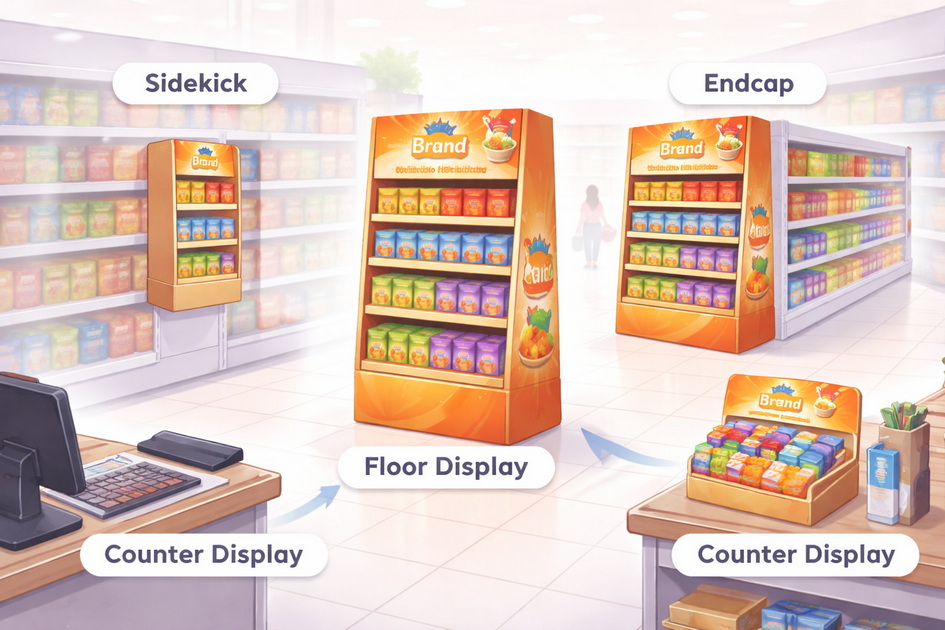
To make smart retail decisions, you need to match display type to campaign objective. [georgeandwilly]
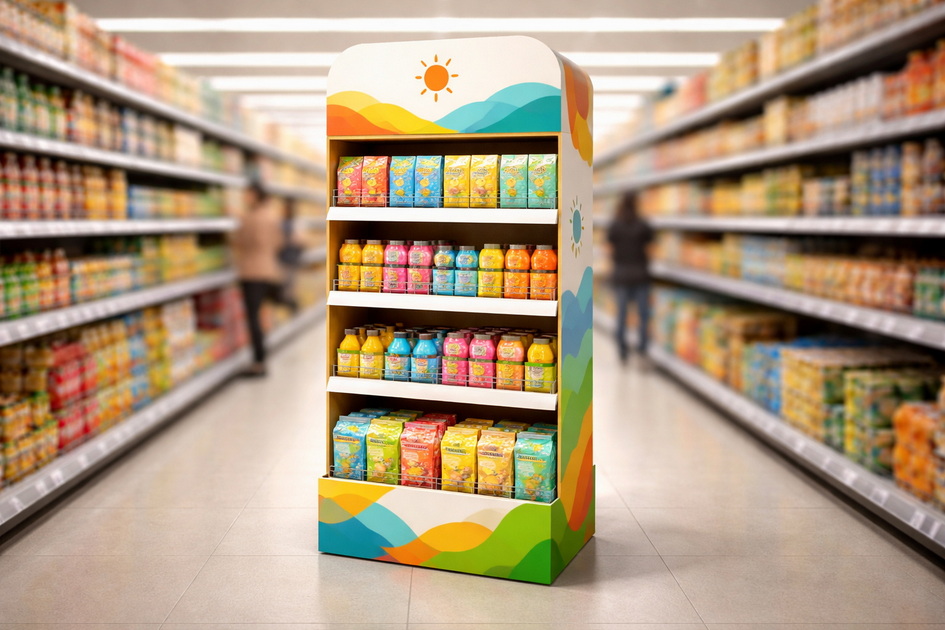
Best for: launches, seasonal promotions, bundled offers.
Benefits:
- High visibility in high‑traffic zones
- Can hold multiple SKUs and larger stock volumes
- Flexible footprint for different store layouts
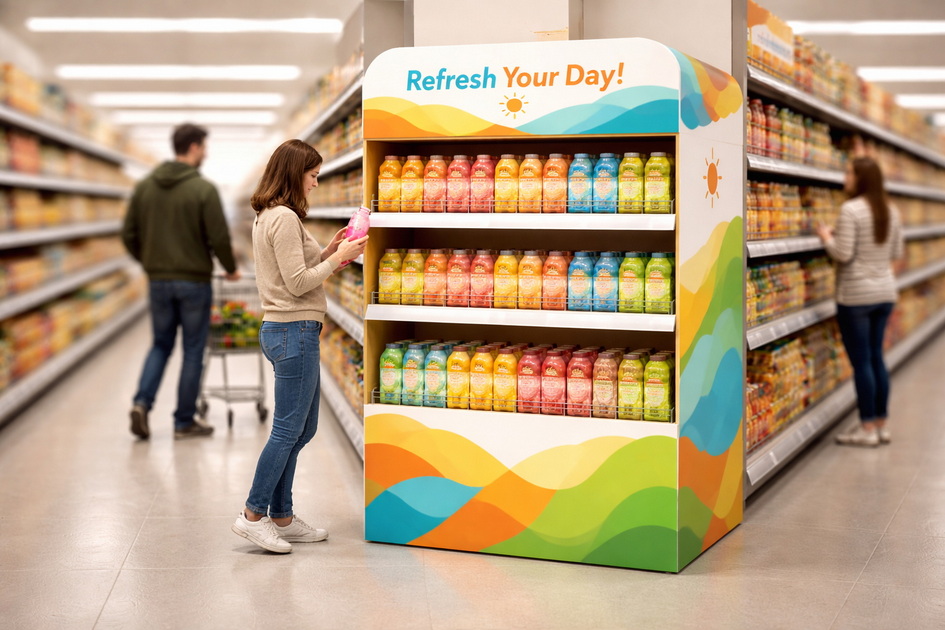
Best for: category leadership, hero SKUs, brand blocks.
Benefits: [georgeandwilly]
- Prime position at aisle entrances and main walkways
- Strong storytelling with large headers and side panels
- Ideal for price promotions and new product education
Best for: impulse, trial SKUs, cross‑merchandising.
Benefits: [pakfactory]
- Hang on shelf sides or fixtures without taking full bays
- Perfect for small packs and add‑on items
- Easy to move and test in different locations
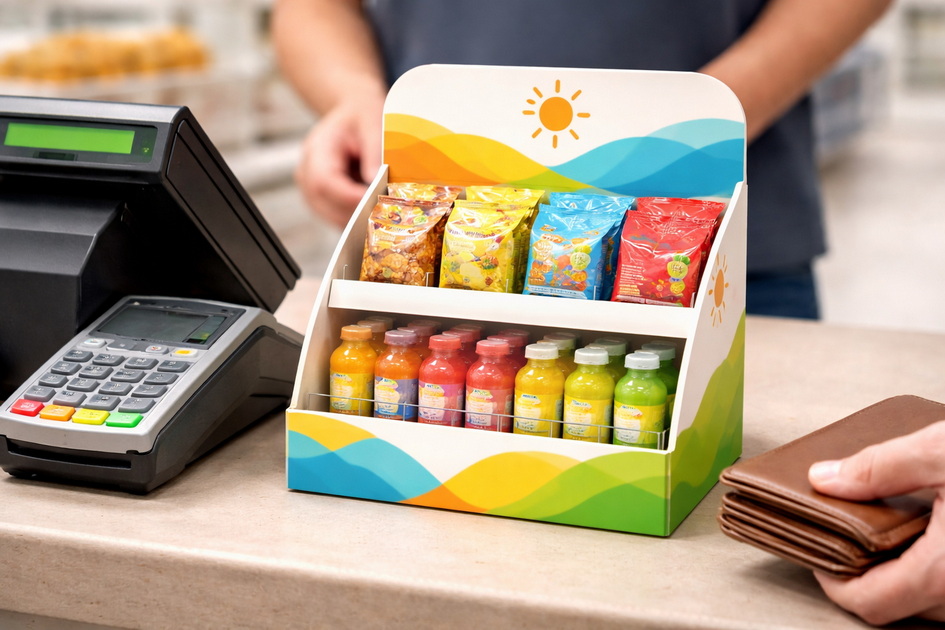
Best for: small, low‑cost products and last‑minute adds.
Benefits: [creativedisplaysnow]
- Located where shoppers pay and wait
- Great for trial sizes, samples, and accessories
- Low cost, fast to deploy across many stores
The original article highlights several key benefits of custom displays; here we deepen them from a practical POP manufacturing and retail operations lens. [dimensionaldesign]
Using generic, unbranded fixtures makes your product blend into the background. Custom POP displays, on the other hand, let you: [creativedisplaysnow]
- Use brand colors, logos, and key visuals consistently
- Mirror your online campaigns (website, social, video) in‑store
- Create a recognizable "brand block" shoppers remember
Brands that align display graphics with their packaging and digital assets report higher recognition and recall, which directly supports repeat purchase. [exactec]
UX tip: keep your brand mark and main benefit at eye‑level and clearly separated from clutter so shoppers "get it" in under 2 seconds. [linkedin]
Shoppers don't want to dig through messy shelves. Custom cardboard display stands allow you to: [igegroup]
- Group products by flavor, size, or benefit
- Use tiered shelves to expose more facings
- Control eye‑level and reach‑level positioning
When displays are designed around your exact SKUs, every pack has a defined, secure space, reducing damage and stock chaos. That makes it easier for both shoppers and store staff to interact with your brand. [pakfactory]
Custom POP displays act as campaign hubs for promotions. Effective promotional displays: [dimensionaldesign]
- Highlight limited‑time offers clearly
- Combine price callouts with benefit messaging
- Use QR codes or short URLs to drive online engagement
Retail studies show that well‑executed promotional displays can drive 20–40% sales uplift in key periods like back‑to‑school or holiday seasons. A plain shelf tag cannot deliver the same level of impact. [linkedin]
Unlike fixed metal fixtures, corrugated displays can be quickly adapted for: [longwenshowcase]
- Different store sizes (convenience, supermarket, hypermarket)
- Different promo mechanics (discounts, bundles, gifts)
- Different seasonal campaigns (swap graphics, keep the structure)
This versatility means your marketing team can run more tests, in more retailers, with less investment, because you can redesign artwork without reinventing the entire structural engineering every time. [dimensionaldesign]
Shoppers often skip a product simply because they don't understand what it is or how it helps them. Custom displays give you extra "real estate" to explain: [creativedisplaysnow]
- What the product does
- Who it's for
- How to use it
- Why it's better
Instead of long paragraphs, effective displays use: [igegroup]
- 1 short headline benefit
- 2–3 bullet icons with key points
- Simple visuals or usage illustrations
This combination boosts trust and reduces hesitation, especially for new concepts, higher‑priced items, or technical products. [exactec]
Custom POP displays are relatively low‑cost compared to TV ads or large digital campaigns, but they operate exactly where purchase decisions happen. When done well, they: [dimensionaldesign]
- Raise units per transaction
- Speed up sell‑through of promotional stock
- Support premium pricing with stronger perceived value
Industry data indicates that seasonal and promotional POP displays frequently deliver 20–40% incremental sales, and new product launches can see 15–30% higher trial when supported by dedicated displays vs standard shelf placement. [linkedin]
Many brands under‑measure their displays. To manage POP like a serious investment, track these key performance indicators (KPIs): [georgeandwilly]
| KPI | What It Measures | Why It Matters |
|---|---|---|
| Sales Uplift | % sales increase vs control stores | Direct ROI from display |
| Sell‑Through Speed | Time to clear display stock | Efficiency and demand strength |
| Units Per Transaction | Extra items per basket involving display | Basket‑building impact |
| Compliance Rate | % stores that execute display as planned | Execution quality across retail network |
| Dwell Time / Engagement | Attention time (if using sensors or video) | Helps refine design and messaging for next run |
Practical tip: even if you don't have advanced tracking, you can still compare before/after sales in the same store and with/without display across similar outlets. [linkedin]
Based on typical projects we see as a manufacturer, here are simplified scenario sketches (you can adapt them into anonymized case snippets on your site): [longwenshowcase]
1. Snack Brand – Seasonal Endcap
- Objective: clear limited‑edition flavor in 8 weeks.
- Solution: branded cardboard endcap with bold flavor visuals and "Only This Season" callout.
- Outcome: faster sell‑through vs core flavors and increased category share during promo period.
2. Personal Care Brand – Counter Display
- Objective: drive trial of new travel‑size SKU.
- Solution: compact counter display at checkout with "Try Me" visual and small price tag.
- Outcome: strong trial rate and new consumers entering the brand through the smallest pack.
3. Electronics Accessories – Sidekick Display
- Objective: increase attachment rate of accessories to main devices.
- Solution: sidekick with cables and chargers next to main product aisle.
- Outcome: more baskets containing both device and accessory, raising average ticket.
To move from idea to effective in‑store execution, follow this simple 5‑step framework: [igegroup]
1. Define Objectives
- What do you want: trial, trade‑up, clearance, or brand awareness?
2. Select Display Type
- Floor, endcap, sidekick, or counter based on product size, price point, and store traffic.
3. Gather Product And Retail Specs
- SKU dimensions, weight, required facings, retailer rules, safety constraints.
4. Work With A Specialist Manufacturer
- Share a clear brief and let them propose structure options, materials, and assembly methods.
5. Test, Learn, And Scale
- Pilot in selected stores, track KPIs, refine artwork or structure, then roll out wider.
This process ensures that your custom cardboard display stands are not just visually appealing, but also practical, safe, and profitable.
From a manufacturer's perspective, the quality of your brief often determines the success of the final display. [creativedisplaysnow]
Include at least:
- Brand and product overview
- Campaign goals (e.g., +20% category sales, launch visibility, stock clearance)
- Display type and store format
- SKU list, sizes, and weights
- Retailer requirements (footprint, height, materials, safety)
- Desired assembly style (flat‑pack vs pre‑assembled and pre‑loaded)
- Timeline and budget range
With this information, a partner like Long Win Display can design a structure that is:
- Strong enough for real conditions
- Easy for store teams to assemble
- Optimized for printing and logistics costs
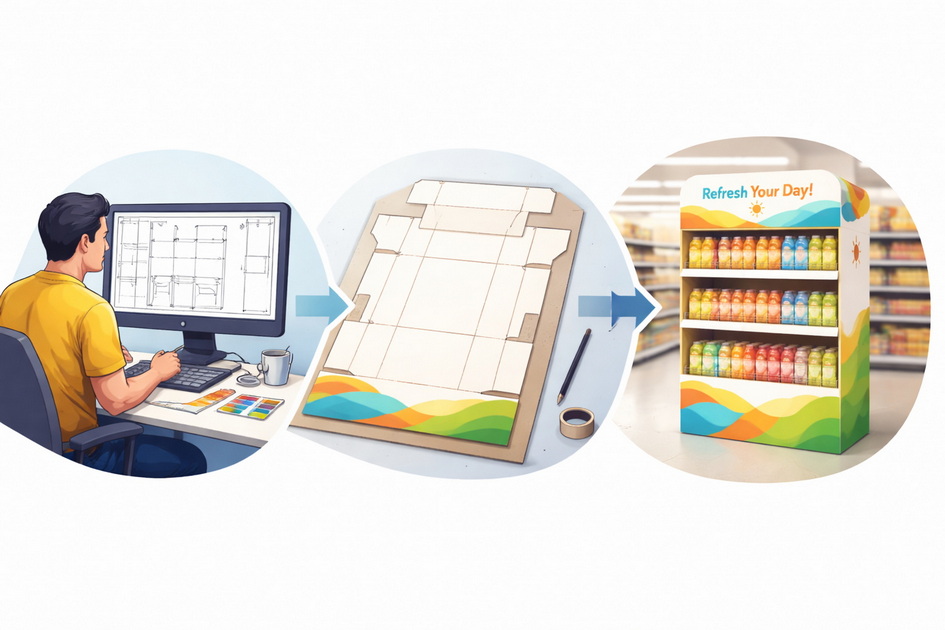
If you're serious about upgrading your retail strategy, you need more than a catalog display. You need a display partner who understands structure, materials, and shopper behavior.
At Long Win Display, we:
- Design, customize, manufacture, and pre‑pack a full range of cardboard POP displays
- Support brands entering major retail chains with compliance‑ready structures
- Help you choose the right display type and optimize it for performance
Ready to turn your retail vision into an in‑store reality?
Contact Long Win Display for a free structural consultation and custom cardboard display quote for your next campaign.
1. Are custom cardboard displays strong enough for heavy products?
Yes, when engineered correctly with the right corrugated board grade and internal supports, cardboard displays can safely hold heavy items like multi‑packs or bottles. Your manufacturer should calculate load and test prototypes. [longwenshowcase]
2. How long do custom POP displays usually stay on the floor?
Most in‑store campaigns run from a few weeks to several months, depending on retailer policy and material quality. For long campaigns, we recommend reinforced structures and moisture‑resistant coatings. [dimensionaldesign]
3. What information do I need before requesting a custom display quote?
You should prepare SKU dimensions, weights, desired facings, target store types, campaign duration, and any retailer guidelines. This allows accurate structural design and pricing. [creativedisplaysnow]
4. Are custom displays only suitable for big brands?
No. Smaller brands often rely on custom displays to compensate for limited shelf space and weaker brand recognition. A well‑placed cardboard stand can give a challenger brand disproportionate visibility. [exactec]
5. How can I know if my display is working?
Track sales before and after installation, compare with control stores, and monitor stock‑out speed. If possible, capture photos of execution and gather feedback from field teams and retailers. [linkedin]
1. Creative Displays Now – Ways Custom Displays Can Benefit Your Retail Strategyhttps://www.creativedisplaysnow.com/how-custom-displays-benefits-retail-strategy/
2. Dimensional Design – How Can Custom Displays Benefit Your Retail Strategyhttps://dimensionaldesign.net/blog/how-can-custom-displays-benefit-your-retail-strategy
3. PakFactory – Custom Cardboard Display Stands for Retailhttps://pakfactory.com/custom-cardboard-displays.html
4. Creative Displays Now – Custom Cardboard Display Standshttps://www.creativedisplaysnow.com/displays/
5. Ria Agustina – Winning In‑Store Through Display Strategyhttps://www.linkedin.com/posts/ria-agustina-159a7914a_winning-in-store-through-display-strategy-activity
6. Long Wen Showcase – Freestanding Display Cases: The Ultimate Marketing Tool for Retailhttps://www.longwenshowcase.com/blog_details/2021396381152215040.html
7. Exactec – Why Custom Displays Are Essential for Brand Visibilityhttps://www.exactec.net/blog/why-custom-displays-are-essential-for-brand-visibility
8. Marketing Aid – Ultimate E‑E‑A‑T Guide for 2024https://www.marketingaid.io/ultimate-eeat-guide/
9. eWay CRM – How to Apply E‑E‑A‑T Principle in Your Contenthttps://www.eway-crm.com/blog/sales-marketing/information-is-now-a-commodity-google-is-focused-on-e-e-a-t-and-we-can-see-why/
10. IGE Group – Retail Display Tips for Designhttps://www.igegroup.com/blog/retail-display-tips-and-benefits/


