
Views: 217 Author: Long Win Display Publish Time: 2026-08-09 Origin: Site


Content Menu
● What Are E-Commerce Packaging Boxes?
● Why Custom Packaging Matters for Online and Retail Brands
>> Protect Products and Reduce Damage Risk
>> Build Stronger Brand Recognition
>> Create a Better Unboxing Experience
● Choosing the Right Custom Package Box
>> Folding Cartons for Retail Packaging
>> Corrugated Boxes for E-Commerce Shipping
>> Rigid Boxes for Premium Products
>> Display-Ready Packaging for Retail Programs
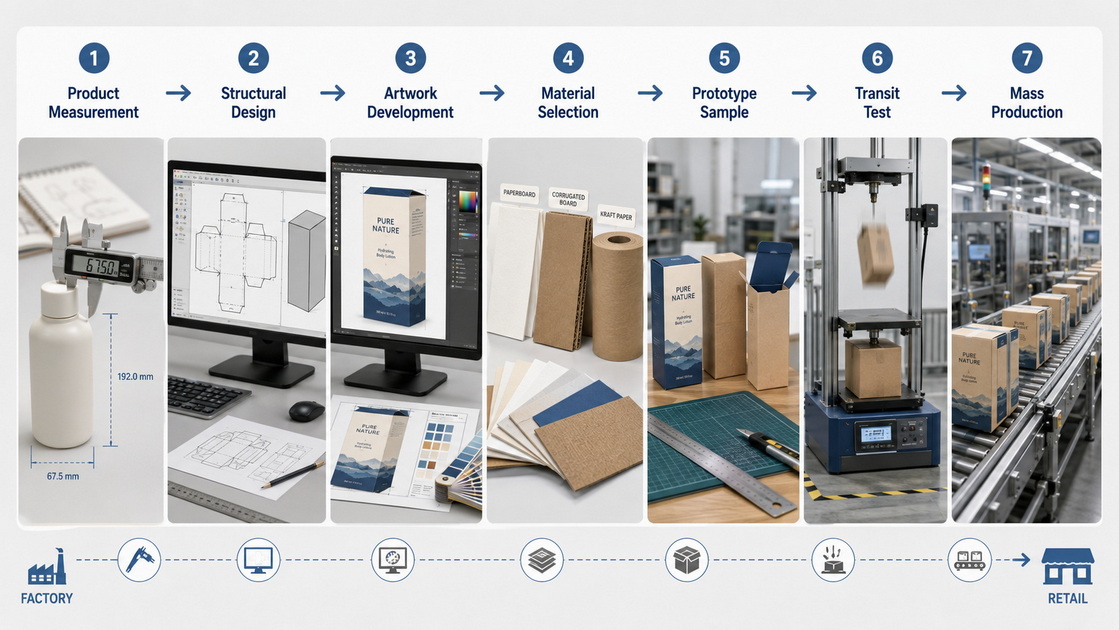
● A Seven-Step Packaging Development Process
>> 1. Define Product and Sales Channel Requirements
>> 2. Measure the Product and Plan Internal Fit
>> 3. Build a Clear Front-Panel Message
>> 4. Select Materials and Finishes Carefully
>> 5. Reduce Unnecessary Packaging Materials
>> 6. Test the Packaging Before Mass Production
>> 7. Coordinate Production and Pre-Assembly
● Printing Methods for Custom Packaging Boxes
● Packaging Boxes and POP Displays: A Better Retail Connection
● FAQ
>> 1. What is the difference between e-commerce packaging and retail packaging?
>> 2. What type of box is best for e-commerce shipping?
>> 3. How can I make packaging more sustainable?
>> 4. Should I use a folding carton or a rigid box?
>> 5. Why should I create a packaging prototype before production?
For brands selling online, through distributors, or in physical stores, e-commerce packaging boxes do far more than hold a product. The right package protects the item during transportation, presents it professionally, reinforces brand recognition, and helps the product stand out when it reaches a retail shelf.
At Long Win Display, we design, customize, manufacture, and pre-assemble package boxes and POP displays for brands preparing for competitive retail environments. From our manufacturing perspective, the strongest packaging programs treat the box as part of the product experience rather than as a final shipping requirement.
A successful package must work across three important moments:
- During transit: It must protect the product from pressure, vibration, impact, and moisture.
- At the shelf: It must communicate product value quickly and fit retail display requirements.
- In the customer's hands: It should be easy to open, clear to understand, and consistent with the brand promise.
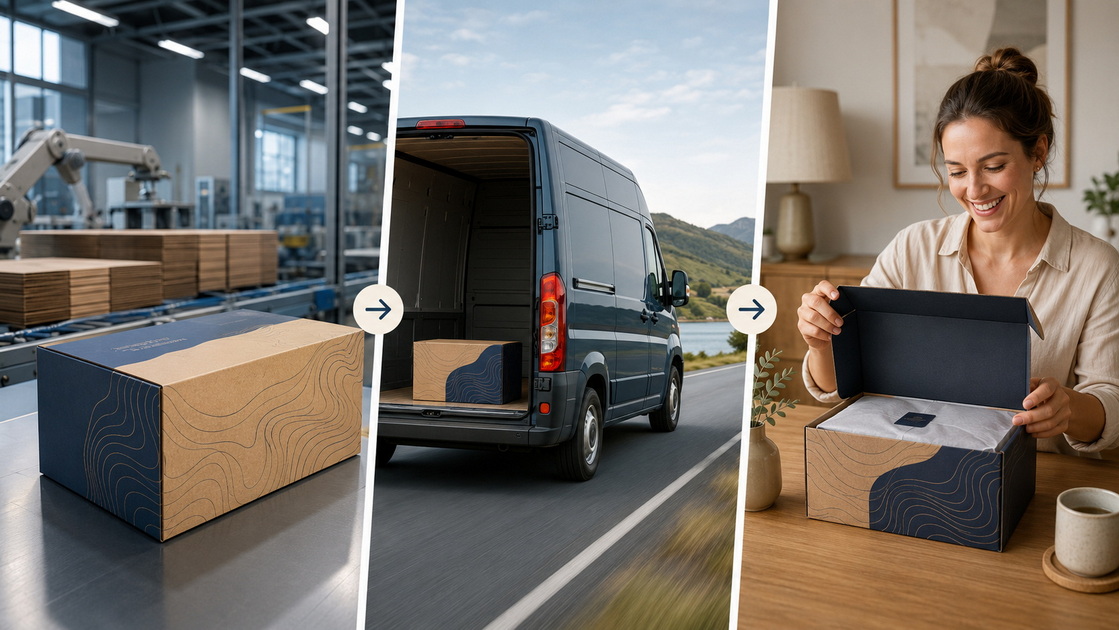
E-commerce packaging includes the boxes, inserts, protective materials, printed graphics, labels, seals, and supporting components used to deliver products to customers.
A basic shipping carton may complete delivery, but custom packaging boxes are designed around a specific product, customer, sales channel, and brand identity. Depending on the project, a complete packaging system may include a printed mailer box, folding carton, corrugated shipping carton, internal tray, paper insert, instruction card, tissue paper, tamper seal, or QR code.
Packaging normally works in three layers:
| Packaging Layer | Primary Function | Typical Examples |
|---|---|---|
| Primary packaging | Directly contains or protects the product | Bottle, pouch, inner tray, protective wrap |
| Secondary packaging | Presents, groups, and brands the product | Folding carton, gift box, subscription box |
| Tertiary packaging | Supports storage and bulk transportation | Master carton, shipping case, pallet carton |
A well-planned packaging solution connects all three layers. It protects the product while avoiding unnecessary material, excess shipping volume, and complicated packing processes.
Custom packaging is not only a visual upgrade. It is a practical tool for product protection, brand communication, retail execution, and customer satisfaction.
Product protection is the first job of any packaging box. A visually attractive box is not effective if it crushes, opens unexpectedly, scratches the product, or allows loose items to move during shipment.
Before selecting a box structure, evaluate:
- Product dimensions and weight
- Fragile areas and pressure points
- Surface sensitivity, such as glass, polished metal, coatings, or screens
- Required product orientation
- Temperature and moisture sensitivity
- Need for inserts, dividers, paper cushioning, foam, or molded trays
The best package is not always the smallest one. It should be compact enough to control shipping volume while providing enough protection for the product's actual transportation conditions.
Packaging is one of the most tangible brand touchpoints. Colors, logo placement, typography, images, materials, and finishing details should work together with the brand's website, product line, retail display, and marketing materials.
For example, a premium skincare brand may use a refined folding carton with soft-touch finishing, foil details, and a carefully fitted insert. A practical consumer electronics brand may use bold feature callouts, clear specifications, and efficient corrugated protection.
The goal is consistency. Customers should recognize the brand whether they see the product online, receive it at home, or encounter it in a store.
A strong unboxing experience does not need excessive layers or expensive decorative materials. It should feel intentional, easy, and useful.
Useful additions may include:
- A short welcome message printed inside the box
- A fitted insert that keeps the product secure
- A product guide or quick-start card
- A QR code linking to setup instructions or product support
- A care guide, warranty card, or reorder information
- A simple thank-you note
- A structure that is easy to reuse or recycle
The package should match the product. A technical item may benefit most from clear instructions and protected accessories. A gift product may benefit from a premium opening sequence and more refined internal presentation.
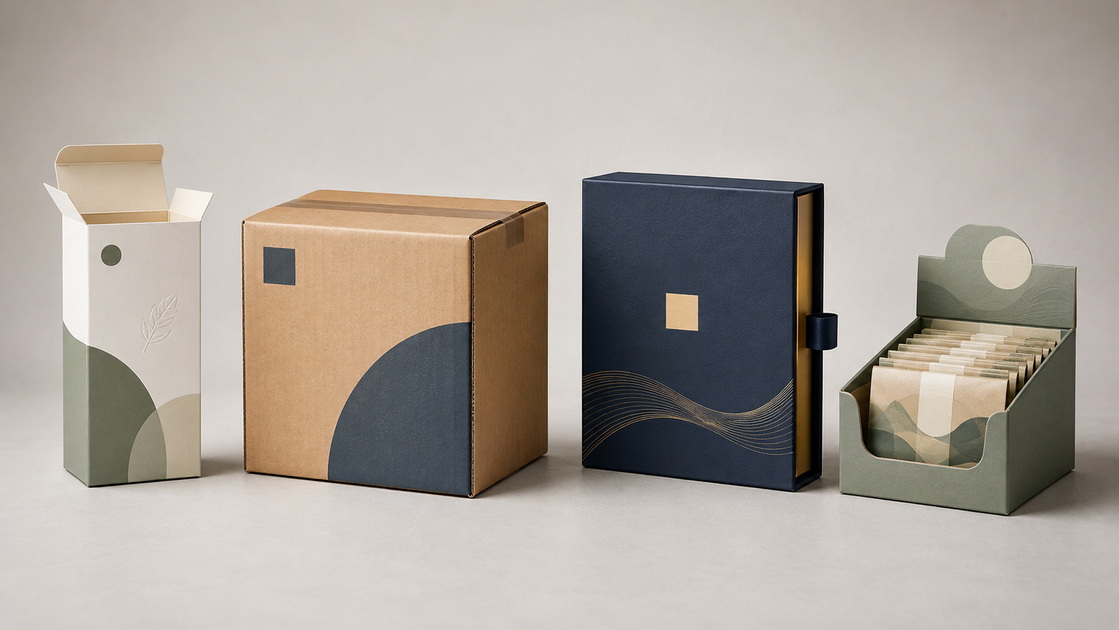
The right box style depends on the product, sales channel, order quantity, target price point, transportation method, and retail environment.
Start with the required function, then select the structure, material, printing process, and finish.
Folding cartons are lightweight paperboard boxes that can be shipped flat before assembly. They are widely used for cosmetics, food products, personal care items, accessories, small electronics, and consumer goods.
They are often a good choice when a brand needs:
- High-quality printed graphics
- Efficient flat storage and shipping
- Clear product information
- Hang tabs, windows, sleeves, or special shapes
- A strong balance of visual appeal and cost control
Folding cartons can be produced in many structures, including tuck-end boxes, auto-bottom boxes, sleeve boxes, drawer boxes, and window boxes.
Corrugated packaging uses fluted material between linerboards to provide strength, cushioning, and stacking performance. It is commonly used for shipping cartons, subscription boxes, mailers, master cartons, and display-ready trays.
Custom corrugated e-commerce boxes can include printed graphics on the outside, inside, or both. They can also be designed with locking tabs, tear strips, return-friendly closures, internal dividers, and protective inserts.
Corrugated packaging is especially suitable for products that are:
- Heavy or bulky
- Fragile or easily scratched
- Shipped over long distances
- Packed with multiple accessories
- Delivered directly to consumers
Rigid boxes provide a more substantial and high-end presentation. They are often used for luxury goods, beauty products, gift sets, electronics, jewelry, watches, and influencer kits.
Common rigid-box structures include:
- Lift-off lid boxes
- Magnetic closure boxes
- Drawer-style boxes
- Shoulder-neck boxes
- Book-style boxes
Rigid packaging should be chosen when the perceived value, gifting appeal, or long-term brand impression justifies the additional material and assembly cost.
When a product will enter retail stores, packaging should be developed with merchandising requirements in mind. The package must work not only in a warehouse or during delivery, but also on a shelf, peg hook, counter, or POP display.
Display-ready packaging can help improve:
- Shelf organization
- Product replenishment speed
- In-store presentation
- Product visibility
- Store staff efficiency
- Brand consistency across multiple locations
For retail projects, consider carton dimensions, product-facing direction, shelf depth, display capacity, barcode location, product stability, and store setup requirements before finalizing the structure.
Begin by identifying where and how the product will be sold.
Important questions include:
- Will the product be sold online, in retail stores, or through both channels?
- Is it shipped individually or in multipacks?
- Does it require special protection during transportation?
- Will it sit on a shelf, hang from a peg, or be placed in a POP display?
- Are there retailer requirements for barcodes, warnings, labels, or carton dimensions?
- Does the project require pre-assembly before delivery?
This early planning prevents a common issue: creating attractive packaging that does not fit the real retail or fulfillment environment.
Measure the finished product and every component that must be packed with it. Include cables, manuals, accessories, refill packs, inserts, and protective materials.
Then develop the internal packaging layout. The product should remain stable during shipping but still be easy for the customer to remove.
A physical sample is essential. Digital renderings can show the visual concept, but they cannot fully reveal tolerance issues, friction points, assembly challenges, or product movement.
Retail packaging has only a short moment to communicate with shoppers. The front panel should answer three basic questions:
1. What is the product?
2. What does it do?
3. Why should the customer choose it?
Use the front panel for the product name, primary benefit, key visual, and essential brand elements. Place detailed features, instructions, specifications, warnings, and product story on the side or back panels.
A clean message hierarchy helps customers understand the product quickly, especially in crowded retail environments.
Materials and finishes influence durability, cost, appearance, perceived value, and end-of-life handling.
| Material or Finish | Suitable For | Main Benefit |
|---|---|---|
| Matte lamination | Premium consumer goods | Refined, understated appearance |
| Gloss lamination | Bright graphics and bold colors | Strong visual impact and scuff resistance |
| Aqueous coating | Fast-moving consumer products | Efficient protective coating with a subtle finish |
| Spot UV | Logos, product names, patterns | Creates contrast and visual focus |
| Foil stamping | Gift boxes and premium lines | Adds metallic visual detail |
| Embossing or debossing | Brand marks and tactile details | Enhances touch and perceived craftsmanship |
| Kraft paperboard | Natural or minimalist product lines | Creates an organic, straightforward look |
Use finishing details selectively. A single well-executed element often has more impact than several competing effects.
Efficient packaging design can improve product protection while reducing unnecessary layers and empty space.
Practical improvements include:
- Right-sizing the box around the actual product
- Reducing oversized voids inside shipping cartons
- Replacing multiple inserts with one functional insert
- Choosing paper-based structures when suitable
- Making components easier to separate after use
- Adding clear disposal guidance where appropriate
- Avoiding decorative elements that do not add protection or value
The objective is not simply to use less material. It is to use the right material in the right place.
Packaging should be tested with real products and realistic handling conditions.
Three useful tests are:
- Shelf test: Place the package beside competing products. Check whether the brand, category, and primary benefit are easy to understand.
- Handling test: Open, close, lift, carry, and assemble the package. Confirm that tabs, inserts, seals, and instructions are intuitive.
- Transit test: Review how the packed product performs under pressure, vibration, impact, and stacking conditions.
Feedback after launch is also valuable. Customer comments, return reasons, damage reports, retailer observations, and fulfillment-team feedback can reveal improvements for future production runs.
Before mass production, confirm all key specifications:
- Final artwork and dielines
- Material grade and thickness
- Printing method and color requirements
- Surface finish and special effects
- Structural tolerances
- Packaging and master-carton configuration
- Quality inspection standards
- Lead time and shipping requirements
For brands using POP displays, packaging can also be coordinated with display packing, product loading, kitting, and retail-ready pre-assembly. This can simplify store delivery and create a more consistent final presentation.
Different printing methods suit different product volumes, materials, lead times, and graphic requirements.
Digital printing is useful for short production runs, product variations, regional versions, promotional packaging, and faster sampling. It can be a practical solution when flexibility is more important than the lowest possible unit cost.
Lithographic printing is widely used for high-quality retail packaging. It is suitable for detailed graphics, strong color reproduction, premium folding cartons, and larger-volume packaging programs.
Flexographic printing is commonly used for corrugated shipping boxes and higher-volume packaging. It is often a practical choice for straightforward graphics, bold logos, and shipping-carton applications.
The best printing method depends on the quantity, material, design complexity, desired finish, timeline, and cost structure of the project.
Several common mistakes can weaken an otherwise strong product launch:
- Using the same package design for online shipping and retail shelves without adapting it
- Choosing a box that is too large for the product
- Adding too much text to the front panel
- Ignoring product weight and internal movement
- Selecting decorative finishes before confirming structural performance
- Skipping physical prototypes
- Forgetting shelf dimensions, display configuration, or store setup requirements
- Making the package difficult to open, stock, or recycle
- Failing to coordinate package boxes with POP displays and retail merchandising
A package should look appealing, but visual design must support clarity, protection, and ease of use.

Package boxes and POP displays are often developed separately, but they work best when planned as one retail system.
A coordinated approach can ensure that product packaging fits naturally within countertop displays, floor displays, shelf-ready trays, or sidekick units. It can also help maintain consistent colors, messaging, product-facing direction, and brand presentation from the individual box to the complete display.
For example, a beauty brand may use individual folding cartons that fit securely into a countertop display. A consumer electronics brand may use corrugated retail-ready trays that hold products in organized rows. A seasonal promotion may combine gift packaging with a pre-loaded floor display for faster store setup.
Long Win Display supports this integrated approach through custom package-box design, POP display manufacturing, production coordination, and pre-assembly services.
The best e-commerce packaging boxes protect the product, clarify the brand message, support an enjoyable customer experience, and perform reliably across online and retail channels.
Every decision—from box structure and internal fit to printing, finishes, shipping protection, and display configuration—should serve a clear purpose. When packaging is designed around real product needs and real retail conditions, it becomes a practical asset for both the brand and the customer.
Long Win Display is ready to help transform product requirements, packaging ideas, and retail-display needs into a coordinated custom packaging solution.
E-commerce packaging must prioritize shipping protection and delivery experience. Retail packaging must also win attention at the shelf, communicate product value immediately, fit store requirements, and support efficient stocking.
Corrugated boxes are commonly used because they provide strength and cushioning. The best structure depends on product weight, fragility, dimensions, shipping distance, and whether an internal insert is required.
Start by right-sizing the package, reducing unnecessary components, selecting recyclable or recycled-content materials where appropriate, and providing accurate disposal instructions. Avoid broad claims unless they can be verified.
Choose a folding carton for efficient shipping, strong printability, and retail versatility. Choose a rigid box when premium presentation, gifting, or a high-end unboxing experience is central to the product's value.
A prototype helps identify structural, fit, graphic, usability, and assembly issues before mass production. It also allows you to perform shelf, handling, and transit tests with the actual product.
1. [Bennett, "e-Commerce Packaging: The Complete Guide"] [bpkc]
2. [The Fulfillment Lab, "Leverage Business With Custom Retail Packaging"] [thefulfillmentlab]
3. [Meyers, "How to Design Product Packaging: An In-Depth Guide"] [meyers]
4. [RRD, "Packaging Design: 6 Essential Best Practices for 2025"] [rrd]
5. [Retailbound, "Retail Packaging Mistakes That Keep Your Product Off Shelves"] [retailbound]
6. [ArcWorks, "POP Display Assembly & Fulfillment: Retail-Ready Pack-Out"] [arcworksrochester]


