
Views: 231 Author: Long Win Display Publish Time: 2026-08-26 Origin: Site


Content Menu
>> Best Products for Dump Bins
>> Best Products for Pallet Displays
● Dump Bin vs Pallet Display: Main Differences
● When Should You Choose a Dump Bin?
>> Choose a Dump Bin When Your Campaign Needs:
>> How to Make a Dump Bin More Effective
● When Should You Choose a Pallet Display?
>> Choose a Pallet Display When Your Campaign Needs:
>> How to Make a Pallet Display More Effective
● The Most Important Factor: Product Handling
● Shopper Psychology: Discovery vs Abundance
>> Recommended Placement by Display Type
● A Practical Selection Checklist
>> Select a Pallet Display If:
● Why Custom Engineering Matters
● Build the Right Display for Your FMCG Campaign
>> 1. What Is the Main Difference Between a Dump Bin and a Pallet Display?
>> 2. Are Dump Bins Suitable for Food and Beverage Products?
>> 3. Can Pallet Displays Be Shipped Fully Assembled?
>> 4. Which Display Is Better for a Seasonal FMCG Promotion?
>> 5. Can a Corrugated Dump Bin Hold Heavy Products?
For high-volume FMCG promotions, the choice between a dump bin and a pallet display can affect product visibility, shopper behavior, replenishment efficiency, store labor, logistics, and sales results.
Both display formats are widely used in supermarkets, hypermarkets, warehouse clubs, convenience stores, and promotional retail spaces. However, they are not interchangeable. A dump bin is designed to encourage quick product discovery and impulse purchases. A pallet display is designed to support bulk buying, high inventory capacity, and retail-ready floor execution.
At Long Win Display, we help brands turn product, packaging, and retail requirements into custom POP display solutions. The right choice is not simply about selecting an attractive structure. It is about creating a display that protects products during shipping, fits the retail environment, communicates value quickly, and makes purchasing easier for shoppers.
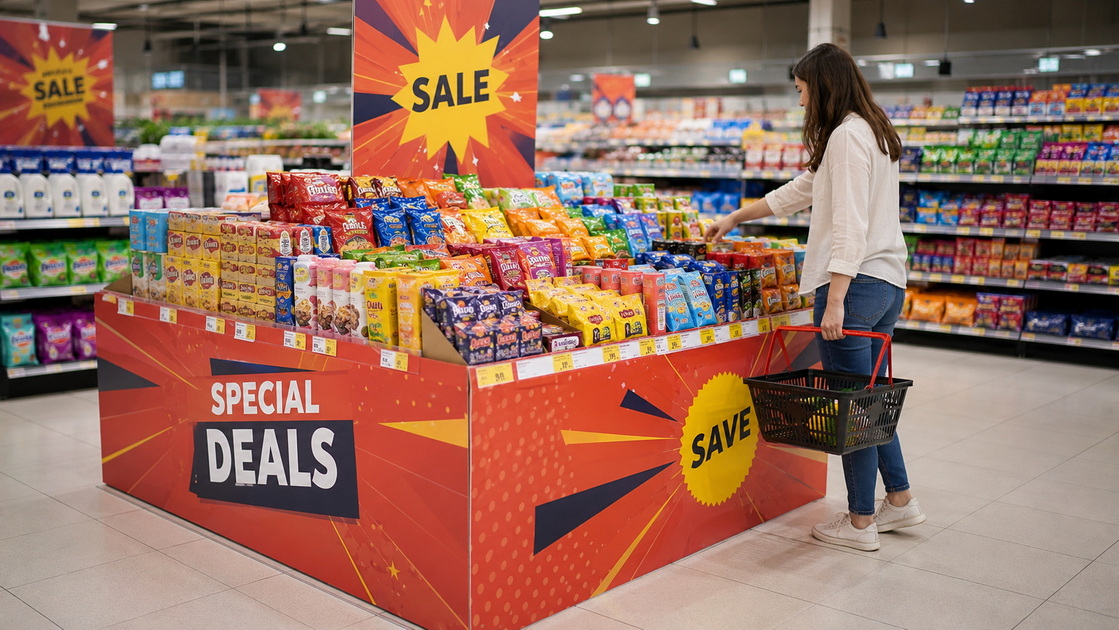
A dump bin display is an open-top retail container used to present a large quantity of products in one accessible location. Products are usually placed loosely inside the structure instead of being organized on conventional shelves.
Dump bins are often positioned in high-traffic retail areas, including:
- Store entrances
- Checkout queues
- Promotional aisles
- Seasonal campaign zones
- End-cap areas
- Clearance sections
- High-visibility category locations
The structure can be made from corrugated cardboard, plastic, metal wire, acrylic, or a combination of materials. For temporary FMCG promotions, corrugated cardboard dump bins are often preferred because they are lightweight, printable, customizable, and easier to recycle after the campaign.
Dump bins work best for products that shoppers can understand, pick up, and purchase quickly.
Common applications include:
- Candy and confectionery
- Snack packs
- Small packaged foods
- Cosmetics and beauty accessories
- Travel-size personal care products
- Small toys and collectibles
- Seasonal gifts
- Promotional household items
- Bundled products
- Clearance merchandise
A dump bin creates a feeling of discovery. Shoppers see a large quantity of products, notice the promotion, and can immediately reach into the display.
This format is especially useful when the product has a low to moderate price point and does not require detailed comparison before purchase.
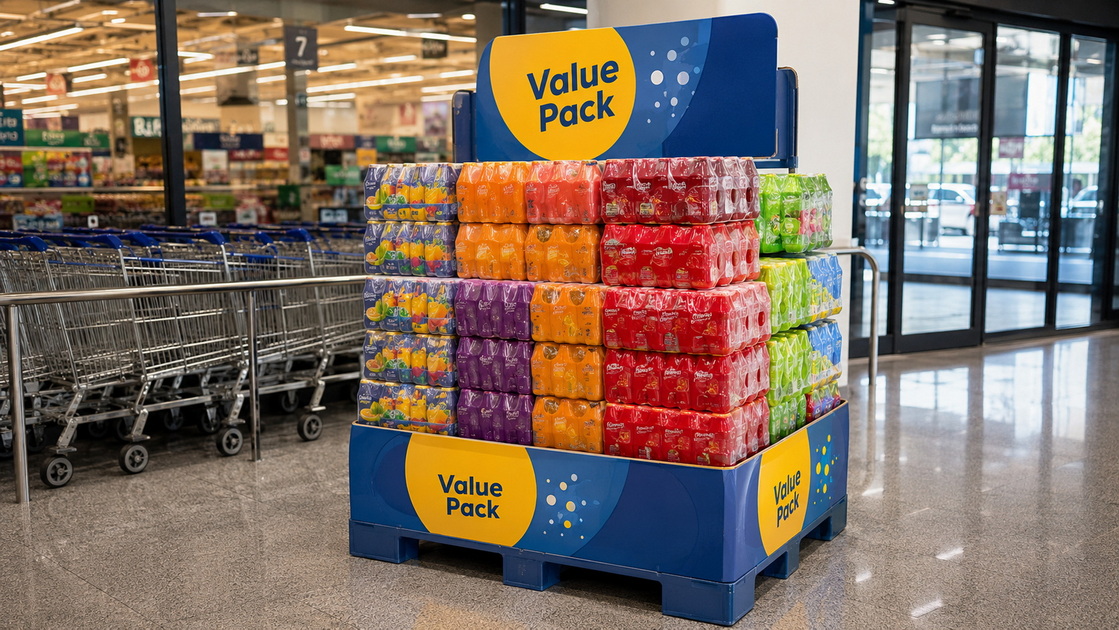
A pallet display is a retail-ready product display built directly on a transport pallet. The products are packed, protected, transported, and displayed on the same base structure.
In many retail programs, the pallet display arrives at the store already loaded with products. Store staff remove the transport packaging and position the display on the sales floor. This reduces handling steps and supports faster campaign execution.
A pallet display may include:
- Corrugated retail trays
- Printed side panels
- Brand headers
- Shelf units
- Product dividers
- Reinforced pallet bases
- Protective outer cartons
- Stretch wrap
- Corner protectors
- Top caps
- Retail opening instructions
A well-designed pallet display combines logistics efficiency, brand visibility, and shopper accessibility in one unit.
Pallet displays are most suitable for products that are heavy, bulky, carton-packed, or sold in multipacks.
Typical FMCG applications include:
- Bottled water
- Soft drinks
- Energy drinks
- Beer and beverage multipacks
- Tissue paper
- Paper towels
- Laundry products
- Household cleaning products
- Pet food
- Dry food packs
- Cooking oil
- Diapers
- Large snack multipacks
- Warehouse-club promotional packs
A pallet display gives shoppers a strong visual signal of abundance and value. It shows that the retailer has substantial product inventory and that the promotion is designed for high-volume purchasing.
| Comparison Factor | Dump Bin Display | Pallet Display |
|---|---|---|
| Main purpose | Encourage impulse purchases | Drive bulk purchasing and high-volume sales |
| Product type | Small, lightweight, loose products | Heavy, bulky, carton-packed, or multipack products |
| Product presentation | Open and flexible | Structured, stacked, tray-based, or shelf-based |
| Common placement | Checkout, aisle, entrance, seasonal area | Entrance, promotional zone, wide aisle, warehouse-club floor |
| Inventory capacity | Low to medium | Medium to very high |
| Shopper behavior | Browse, discover, and grab | Recognize value and purchase in larger quantities |
| Replenishment method | Manual refilling | Full pallet, tray, or carton replenishment |
| Store labor needs | Higher during the campaign | Lower when shipped in retail-ready form |
| Branding space | Moderate | High, including header, sides, trays, and pallet skirt |
| Best campaign type | Small-price promotions and seasonal offers | Bulk promotions, retail launches, and large FMCG activations |
The key difference is simple: a dump bin makes products easy to browse, while a pallet display makes products feel available in quantity and ready for bulk purchase.
A dump bin is usually the better option when your product is small, affordable, lightweight, and easy for shoppers to purchase without hesitation.
It is particularly effective for promotional campaigns that need a compact footprint and a strong impulse-buying effect.
- Fast shopper interaction
- Easy product pickup
- Flexible retail placement
- Low-cost promotional execution
- Frequent product rotation
- Seasonal campaign messaging
- A clearance or bargain-shopping effect
- A compact display footprint
For example, a brand promoting individually packed snacks, chocolate bars, trial-size beauty products, or small household accessories may benefit from a dump bin. The shopper does not need to study product specifications. They only need to see the offer, understand the price, and pick up the product.
A dump bin should feel full, organized, and easy to shop. If it looks too deep, overcrowded, unstable, or messy, it can reduce shopper confidence.
Consider the following design details:
1. Control the bin depth. Products should be easy to reach without forcing shoppers to lean too far inside.
2. Use reinforced materials. The walls and base should handle product weight and repeated shopper contact.
3. Keep the price message visible. A shopper should understand the offer within seconds.
4. Add strong category visuals. The product type should be recognizable from a distance.
5. Avoid overfilling. Excessive loose inventory can make the display look unorganized.
6. Plan for quick refilling. Store staff should be able to add products without damaging the structure.
A pallet display is usually the better solution when the campaign requires high capacity, efficient logistics, and strong floor presence.
This format is especially useful when products are delivered in cases, trays, or multipacks. It is also highly suitable for retailers that want to reduce display assembly and shelf-stocking time.
- High inventory capacity
- Bulk-purchase appeal
- Fast store setup
- Retail-ready shipping
- Lower replenishment effort
- Stronger long-distance brand visibility
- A large promotional footprint
- Support for heavy or bulky products
For example, a beverage brand launching a 24-pack energy drink promotion requires a display that can handle the product weight, maintain stable stacking, and remain attractive after shoppers remove cases. A pallet display provides the necessary strength, capacity, and visual impact.
A pallet display must work across its entire journey. It should perform well during factory loading, container transport, warehouse movement, store delivery, sales-floor placement, and shopper interaction.
The most important design factors include:
| Design Area | Why It Matters |
|---|---|
| Pallet footprint | Helps prevent product overhang and supports safe handling |
| Product weight | Determines material selection, reinforcement, and stacking method |
| Tray configuration | Keeps products organized and easy to remove |
| Brand header | Improves visibility from a distance |
| Side panels | Add promotional and brand communication space |
| Transit packaging | Protects the display during shipping and distribution |
| Opening process | Helps store staff prepare the display quickly |
| Recyclable materials | Supports retailer sustainability expectations |
A strong pallet display should remain stable even when part of the inventory has been sold. This is important because a display that looks premium at launch but collapses visually after several days may weaken the campaign.
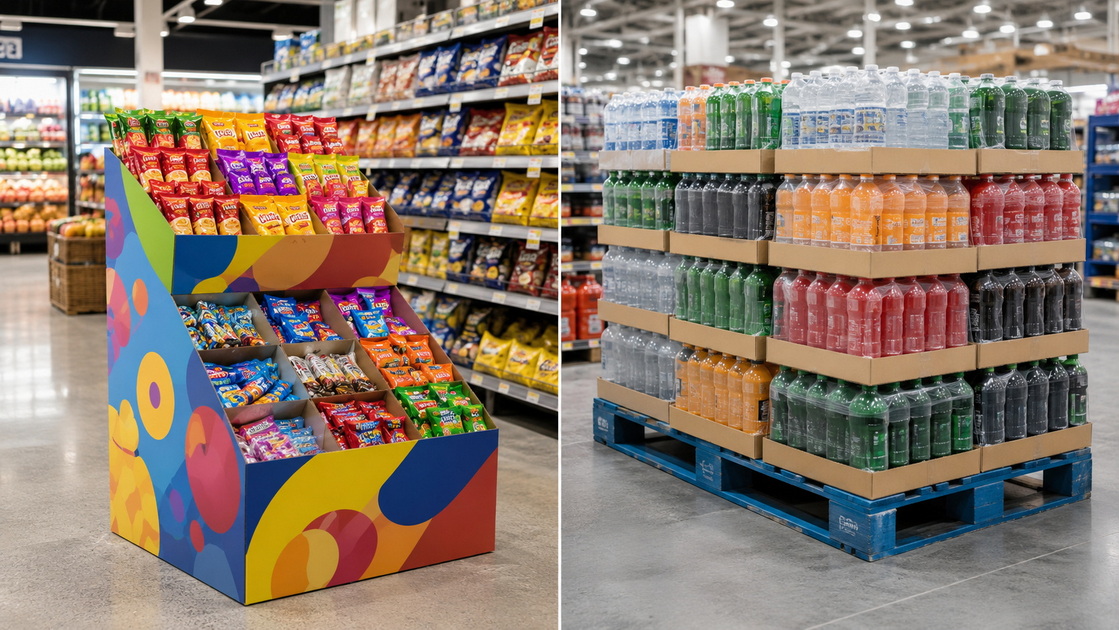
Many brands choose a display format based only on appearance. However, product handling is often the most important decision factor.
A dump bin may be visually engaging, but it can require frequent manual refilling. A pallet display may need more planning at the design stage, but it can reduce store labor by allowing products to move from factory to sales floor in a more integrated format.
Before choosing a display, ask these questions:
1. How many units will each store receive?
2. What is the total product weight per display?
3. Will the retailer allow full pallet placement on the sales floor?
4. How much store labor is available for setup and replenishment?
5. Can the display move safely through warehouse and store access points?
6. Does the product need individual organization?
7. Is the purchase decision impulsive or planned?
8. How long will the promotion remain in-store?
9. Will the display still look attractive when inventory decreases?
10. Can the materials be handled and recycled efficiently after the campaign?
The best retail display is not simply the one that looks impressive during a presentation. It is the one that performs consistently through shipping, setup, replenishment, and shopper interaction.
Dump bins and pallet displays create different shopper expectations.
A dump bin communicates discovery. It can feel like a special find, a limited-time offer, a seasonal opportunity, or an easy add-on purchase. The open structure encourages shoppers to browse and touch the products.
A pallet display communicates abundance. It shows high inventory levels and strengthens the value perception of bulk packs, household essentials, and large promotional offers.
This difference is important for FMCG campaign planning.
If the objective is to encourage shoppers to add a small item to their basket, a dump bin may be more effective. If the objective is to move a high volume of cases, multipacks, or essential products, a pallet display is usually the stronger option.
| Retail Location | Recommended Display | Reason |
|---|---|---|
| Checkout queue | Dump bin | Supports low-price impulse purchases |
| Narrow promotional aisle | Dump bin | Fits smaller spaces and encourages browsing |
| Store entrance | Pallet display | Creates a strong promotional statement |
| Wide main aisle | Pallet display | Supports large footprints and bulk packs |
| Seasonal event zone | Dump bin or pallet display | Depends on product size and campaign volume |
| Warehouse-club floor | Pallet display | Matches bulk-buying behavior |
| Product-category aisle | Both formats | Choose based on product size and purchase pattern |
Use this checklist when planning your next FMCG retail promotion.
- Your products are small and lightweight
- The price point supports impulse purchasing
- Shoppers can make a quick buying decision
- Products can be displayed loosely or semi-loosely
- The campaign requires a compact retail footprint
- You want a playful, promotional appearance
- Store staff can refill the display regularly
- Your products are heavy, bulky, or multipack-based
- The campaign requires high inventory capacity
- The retailer needs quick sales-floor setup
- The promotion depends on visible product abundance
- Your target channel includes supermarkets, hypermarkets, or warehouse clubs
- Products can remain in trays, cases, or retail-ready packaging
- Your brand needs visibility from a greater distance
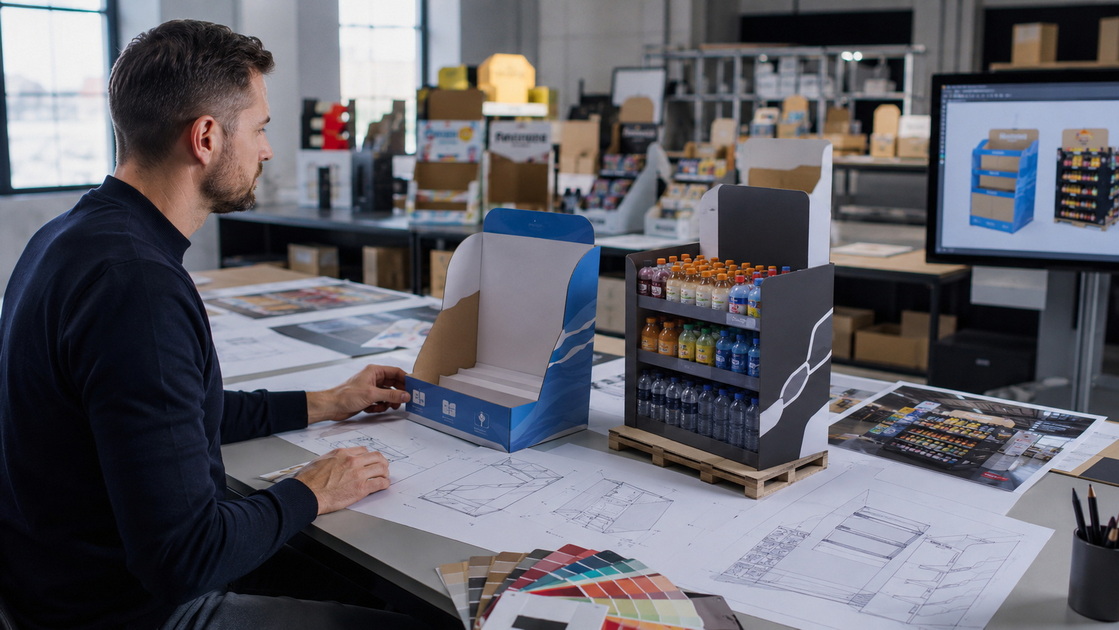
For FMCG brands, a retail display is not only a promotional tool. It is also part of the supply chain, retail operation, and shopper experience.
A custom display should be engineered around:
- Product dimensions
- Unit weight
- Packaging format
- Retailer pallet requirements
- Shipping method
- Container loading efficiency
- Store assembly needs
- Replenishment process
- Brand graphic hierarchy
- Material selection
- Sustainability goals
- Promotion duration
- Order quantity
Long Win Display designs, customizes, manufactures, and pre-assembles POP display solutions for brands entering retail channels worldwide. Whether the project requires a compact dump bin for a snack campaign or a heavy-duty pallet display for bulk FMCG sales, every structure should be developed around real product, logistics, and retail conditions.
The right decision is not simply dump bin versus pallet display. The best choice is the display format that aligns with your product weight, packaging configuration, promotion mechanics, store environment, logistics plan, and shopper behavior.
Choose a dump bin when the goal is quick discovery and easy impulse purchase. Choose a pallet display when the campaign requires high product capacity, strong promotional visibility, efficient store setup, and bulk-buying confidence.
Long Win Display can help you develop a customized retail display solution based on your product dimensions, pack configuration, target retailer, shipment requirements, campaign quantity, and brand presentation needs. Share your project details to begin creating a display that is built to perform from production to the retail floor.
A dump bin is an open retail container for loose, smaller, and often impulse-driven products. A pallet display is a larger retail-ready structure built on a transport pallet for heavy, bulk, carton-packed, or multipack products.
Yes. Dump bins are commonly used for packaged snacks, confectionery, small food items, and lightweight promotional beverage-related products. The product packaging should remain clean, protected, and easy for shoppers to pick up.
Yes. Many pallet displays can be pre-assembled, preloaded with products, protected with transit packaging, and shipped as ready-to-place units. The final shipping method depends on product weight, retailer requirements, delivery conditions, and container-loading plans.
The right option depends on the product. A dump bin is suitable for seasonal snacks, candy, small gift packs, and low-cost impulse products. A pallet display is better for high-volume seasonal promotions involving beverages, tissue, cleaning products, large snack packs, or household essentials.
A corrugated dump bin can hold moderate product weight when it includes reinforced board, internal supports, and a stable base. For very heavy products, large multipacks, or high-volume loads, a pallet display is usually the safer and more practical choice.
1. Han, Y., et al. "Impact of Different Types of In-Store Displays on Consumer Purchase Behavior." "Journal of Retailing". [Read the research abstract]
2. Packaging Corporation of America. "Retail-Ready Packaging: Increase Sales by Focusing on Merchandiser and Consumer Needs." [Read the article]
3. Packaging Corporation of America. "7 Retail Display Styles Companies Rely On." [Read the guide]
4. MDI. "Your Guide to POP Point-of-Purchase Displays." [Read the guide]
5. PakFactory. "What Is Retail-Ready Packaging?" [Read the article]
6. Repsly. "30 Powerful Point of Purchase Displays to Make Your Products Pop." [Read the article]
7. Frank Mayer and Associates. "Packaging and Logistics Planning for Retail Displays." [Read the logistics guide]


