
Views: 222 Author: Long Win Display Publish Time: 2026-06-11 Origin: Site


Content Menu
● What Is a Custom Mailer Box? (And What It Is Not)
● Build a Real Customer Profile Before You Design
● Create Graphics That Evolve With Every Campaign
● Optimize Space Like an Engineer, Not Just a Designer
● Design an Unboxing Journey (Not Just a Lid)
● Create a Premium Tier for High‑Value Customers
● Sustainability And Materials Your Customers Now Expect
● Bridging Online Mailers And In‑Store POP Displays
● A Practical Workflow For Your First Custom Mailer Project
● Quick Reference: Key Design Choices For Custom Mailer Boxes
● How Long Win Display Can Support Your Next Mailer Project
● FAQ
As someone who has sat in more packaging review meetings than I can count, I can tell you this: your mailer box is now part of your product, not just a shipping cost. The brands we support at Long Win Display often discover that a well‑designed mailer box lifts repeat orders, UGC, and even wholesale interest—while a poorly designed one quietly erodes margins and word‑of‑mouth. [printivity]
From an e‑commerce and retail POP perspective, custom mailer boxes sit at the intersection of three critical goals: brand storytelling, product protection, and a share‑worthy unboxing experience. If you get all three right, you turn every shipment into a mini billboard and a low‑cost retention engine. [ecoenclose]

A custom mailer box is a durable paperboard or corrugated box with interlocking flaps and wings designed for shipping and presentation, often without external tape. Unlike standard RSC shipping cartons, mailer boxes are built to open neatly, protect products with double side walls, and present your brand the moment the lid lifts. [printivity]
For many DTC and marketplace brands, the mailer box replaces traditional retail packaging, meaning it must carry branding, regulatory info, and a curated unboxing flow in one structure. This is exactly where an experienced POP display manufacturer adds value: we design the box as part of the full retail and e‑commerce journey, not as an isolated print job. [kingwinpaper]

Most disappointing mailer boxes have one thing in common: they were designed before anyone wrote down who the customer actually is. Before we open CAD software at Long Win Display, we insist on a short but focused brief that clarifies: [printivity]
- Who is buying this product (age, price sensitivity, priorities like sustainability or luxury) [diypack]
- Where they discover the brand (TikTok, Amazon, boutique retail, B2B channel) [reddit]
- How the product is shipped (domestic vs. international, courier class, fragile vs. non‑fragile) [ecoenclose]
When your core audience values sustainability, your box should visually and verbally communicate eco‑friendliness via kraft substrates, green or earthy tones, and claims about recycled content or material reduction. If they're buying a premium or "quiet luxury" item, a minimalist matte black or soft‑touch white box with restrained typography often outperforms loud graphics in perceived value. [theboxology]
The original Bennett Packaging article suggests using a fresh graphic for each delivery or campaign instead of a rigid one‑design‑fits‑all approach. We see this working extremely well when combined with high‑speed digital printing, which eliminates plates and tooling, making short runs and seasonal variants cost‑effective. [thepackagingcompany]
For growing brands, a smart pattern is:
1. Keep a stable core system: logo placement, brand colors, core tagline.
2. Rotate campaign layers: seasonal colors, limited‑edition artwork, influencer co‑branding, or QR‑codes that change landing pages. [thepackagingcompany]
This approach keeps unboxing fresh without confusing customers or exploding SKUs. Because digital printing can handle multiple artworks in one run, it's realistic even for small and mid‑size order volumes. [packifyme]
Designers love interesting shapes, but your warehouse and freight invoices care about cubes, weight, and stacking efficiency. Bennett rightly highlights using simple shapes like squares and rectangles to optimize internal space; we build on this by modeling both internal fit and palletization in 3D before sampling. [diypack]
Three practical rules we apply on real projects:
- Right‑size the box. Minimize void space to reduce filler, movement damage, and dimensional weight charges. [ecoenclose]
- Eliminate unnecessary inner wraps. Replace poly bags and cellophane with branded tissue or a snug paper insert to improve first impressions and recyclability. [printivity]
- Integrate structure with graphics. If you add dividers, trays, or tiers, align graphics so that the product reveals feel intentional rather than chaotic. [diypack]
Many of our clients only realize how much money they're losing to inefficient box sizes when we run a side‑by‑side test: same product, optimized mailer vs. legacy box, comparing damage rates and volumetric freight costs. [nwpaperbox]
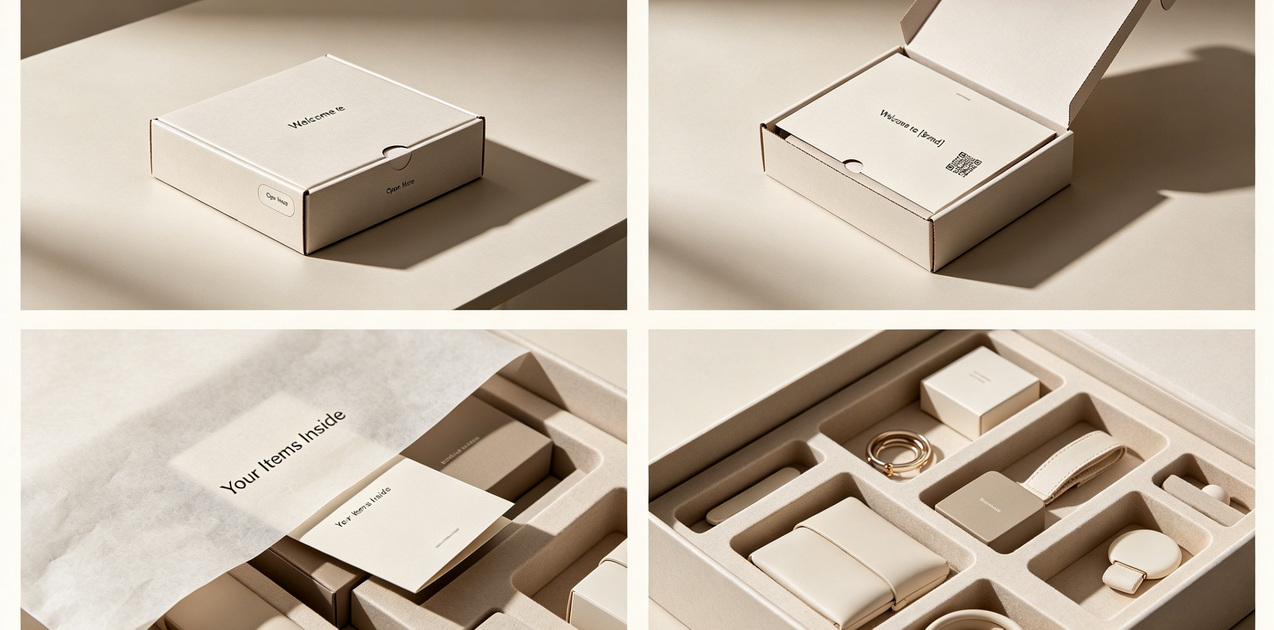
Bennett correctly emphasizes that unboxing drives loyalty and shareability—in some categories more than paid ads. We treat unboxing as a mini storyboard: every layer the customer touches should be intentional in both function and emotion. [heyijiapack]
A simple, high‑impact unboxing sequence often looks like this:
1. Clean exterior with strong branding and a clear opening cue ("Lift Here", tear strip, or thumb notch).
2. Interior lid print carrying a welcome message, social handles, or a scannable QR to a thank‑you video or tutorial. [heyijiapack]
3. Branded tissue or inner card that frames the product as the hero and keeps accessories in order. [heyijiapack]
4. A small insert for upsell/cross‑sell, care instructions, or referral code.
This "visual and information layering" keeps the experience smooth and avoids information overload on the front face. In our POP projects, we often mirror key box messaging on in‑store displays, so customers feel the same narrative from shelf to doorstep. [longwindisplay]
One of the most underrated ideas in the original article is segmenting packaging by customer or product value. In practice, we see tiered mailer strategies driving both margin and brand prestige when done thoughtfully. [nwpaperbox]
For example, a fashion brand might use:
- A standard kraft mailer with one‑color print for first‑time or low‑value orders.
- A premium mailer with interior print, ribbon, or magnetic closure for VIP customers, limited drops, or influencer seeding. [theboxology]
While the premium box costs more per unit, the incremental spend often pays for itself via higher AOV, social reach, and increased perceived value. The key is to define clear rules in your ops and CRM so that upgrading to premium packaging feels consistent, not random. [nwpaperbox]
Over the last few years, customer expectations around eco‑friendly packaging have shifted from "nice‑to‑have" to "baseline requirement" in many markets. Surveys and buyer feedback consistently show that obvious plastic and excessive filler create negative sentiment, especially among younger and eco‑conscious buyers. [diypack]
To align your custom mailer boxes with these expectations, focus on:
- Substrates: Recycled or FSC/SFI‑certified corrugated, kraft liners, and water‑based inks. [ecoenclose]
- Design for recyclability: Avoid mixed materials that are hard to separate; keep foils, laminates, and magnets to premium lines where justified. [nwpaperbox]
- Lean engineering: Right‑sizing boxes and reducing unnecessary inner packaging can cut both costs and your packaging footprint. [sztcy]
As a manufacturer, we also see more RFQs from global brands that require documented sustainability data—basis weight, recycled content percentage, and certifications—right in the early quoting stage. Building this into your packaging specs from day one protects you from future compliance headaches. [ecoenclose]
Long Win Display started as a POP display and packaging specialist, so we see how packaging and in‑store displays influence each other. When your mailer box and POP materials share structural logic and visual language, the brand feels coherent everywhere: on shelf, in ads, and in your customer's hands. [kingwinpaper]
Three integration strategies we use with global retail clients:
- Shared structural cues: Echo the same cut‑outs, windows, or corner radii on both POP trays and mailer boxes so your products are instantly recognizable. [kingwinpaper]
- Consistent story hooks: Use the same hero claim or tagline across mailers, retail displays, and digital creative to reinforce a single clear benefit. [longwindisplay]
- Modular design systems: Build artwork templates that can be adapted to PDQs, floor displays, and mailers without starting from scratch for each format. [longwindisplay]
This holistic approach means a customer who first notices your brand on a retail end‑cap feels the same promise when they later open a DTC mailer at home. It also simplifies production because you can standardize dielines and color systems across multiple packaging types. [kingwinpaper]
Based on both the original article and our manufacturing experience, here is a step‑by‑step workflow we recommend for brands preparing their first (or next‑generation) custom mailer box. [heyijiapack]
1. Clarify objectives and constraints.
Define primary goals (brand lift, damage reduction, UGC, sustainability) and list non‑negotiables: budget range, target unit cost, MOQs, and shipping conditions. [nwpaperbox]
2. Build a focused design brief.
Document product specs, target customers, sales channels, and mandatory content (logos, certifications, legal text). This brief keeps internal teams and your packaging partner aligned. [heyijiapack]
3. Co‑develop structure and graphics.
Work with your packaging or POP manufacturer to pick materials, flute grades, and box styles while your design team develops artwork mapped to the final dieline. [kingwinpaper]
4. Prototype and stress‑test.
Produce white samples and printed mockups; test them under real shipping conditions and retail lighting, and gather customer or internal feedback before committing to mass production. [diypack]
5. Lock specs and scale.
Finalize tolerances, color standards, sustainability claims, and packing instructions, then move into bulk production with clear QC checkpoints. [heyijiapack]
Following this workflow keeps your project grounded in data and operations, not just aesthetics, and reduces the painful back‑and‑forth that often delays launches.
| Design aspect | Recommended focus | Why it matters for UX and ROI |
|---|---|---|
| Customer profile | Values, channel, expectations | Aligns visuals and claims with real buyer motives (printivity) |
| Box structure | Right size, flute strength, closure type | Reduces damage, freight, and frustration (diypack) |
| Graphics system | Stable core + rotating campaigns | Keeps brand consistent and fresh (printivity) |
| Sustainability | Recycled materials, simple recycling, fewer plastics | Meets buyer expectations and retailer demands (diypack) |
| Unboxing flow | Step‑by‑step reveal and layered information | Boosts delight, UGC, and referrals (printivity) |
| Tiered packaging | Standard vs. premium options | Matches packaging investment to customer value (printivity) |
As a China‑based POP display and custom packaging manufacturer, Long Win Display has helped brands from cosmetics to consumer electronics enter major retail chains and scale their DTC operations with cohesive mailer and display systems. Because we handle design, customization, production, and pre‑packing, our team can support you from initial concept through to ready‑to‑ship units. [longwindisplay]
Whether you are launching your first custom mailer box or refreshing a mature packaging system, we can collaborate with your in‑house or agency designers, provide structural engineering, and run pilot batches to validate the design before you commit to large volumes. Many clients start with small test orders targeting a single market or channel, then roll out globally once performance and feedback are validated. [longwindisplay]
1. What is the ideal order quantity for custom mailer boxes?
The best MOQ depends on your print method and supply chain, but digital printing now makes low‑to‑mid quantities workable while you test designs and demand. Once a design proves itself, you can move to higher quantities or different print processes to optimize unit costs. [reddit]
2. How do I balance sustainability with premium finishes?
Focus on recycled or certified substrates and water‑based inks as your base, then reserve heavier laminations, foils, or magnets for specific premium tiers. Communicate sustainability claims clearly and avoid mixed materials that make recycling difficult. [diypack]
3. Can one mailer box size work for multiple SKUs?
Modular insert systems and adjustable dividers often allow one core box to serve multiple SKUs, reducing complexity and inventory risk. However, very different product sizes or protection requirements typically justify at least two or three optimized formats. [thepackagingcompany]
4. How should I measure the success of a new mailer box?
Track damage and return rates, average shipping cost per order, repeat purchase behavior, and user‑generated content such as unboxing posts and reviews mentioning packaging. On the qualitative side, survey customers about how the packaging influenced their perception of quality and sustainability. [ecoenclose]
5. What files do my designers need to start artwork?
Always work from the finalized dieline supplied by your packaging manufacturer, along with print specs like bleed, safe areas, color profiles, and any limitations on special finishes. This ensures that what looks good on screen will actually fold, lock, and print correctly in production. [kingwinpaper]
1. Bennett Packaging. "5 Design Tips For Custom Mailer Boxes." [printivity]
2. Printivity Insights. "How to Create a Branded Custom Mailer Box." [printivity]
3. DIYPack. "5 Retail Display Box Design Tips That Sell." [diypack]
4. EcoEnclose. "The Ultimate Guide to Custom Shipping Boxes." [ecoenclose]
5. The Packaging Company. "A Few Awesome Design Ideas For Mailer Boxes." [thepackagingcompany]
6. Long Win Display. "How To Prepare Your First Customized Packaging: An Expert Guide From A POP Display Manufacturer." [longwindisplay]
7. Kingwin Paper. "Custom Cardboard Display Boxes." [kingwinpaper]
8. Eco/packaging market insights and MOQs from industry blog sources and e‑commerce founder discussions. [reddit]
9. NWPaperBox. "The Future of Custom Packaging Boxes for Profitable Brands." [nwpaperbox]
10. Mailer box trend analysis. "2026‑27 Mailer Box Packaging Trends." [theboxology]


