
Views: 222 Author: Long Win Display Publish Time: 2026-06-17 Origin: Site


Content Menu
● What Makes Rigid Boxes So Attractive — and So Expensive?
>> Key strengths of rigid boxes
● When Rigid Boxes Still Make Sense
● Core Strategies to Reduce Packaging Cost Without Losing Impact
>> 1. Right‑size your packaging
>> 2. Switch from fully rigid to hybrid solutions
>> 3. Simplify finishes, upgrade design
● The Most Common Cost‑Effective Alternatives to Rigid Boxes
>> 1. High‑End Folding Carton Boxes
>> 2. Corrugated Gift Boxes (E‑Flute and Micro‑Flute)
>> 4. Sleeve, Drawer, and Belly‑Band Solutions
>> 5. Eco‑Conscious Minimalist Packaging
● Comparing Rigid Boxes and Their Alternatives
● How to Choose the Right Alternative: A 4‑Step Framework
>> Step 1: Clarify your packaging objectives
>> Step 2: Map products into tiers
>> Step 4: Optimize for operations
● Real‑World Perspective: What We See in the Factory
● Working With a Manufacturer: What to Prepare
● Call to Action: Plan Your Next Gift Box Iteration
● FAQ
If you manage a consumer brand today, you've probably felt the tension between luxury packaging and sustainable margins. Rigid boxes look premium, but they are not always the most cost‑effective option—especially for fast‑moving consumer goods, DTC brands, and gift campaigns that run at scale. As a China‑based POP display and gift box manufacturer at Long Win Display, we've helped hundreds of brands reduce packaging cost while protecting their visual impact on the retail shelf and in e‑commerce channels. [longwindisplay]
In this guide, I'll walk you through practical, tested alternatives to rigid boxes, how to compare them, and how to redesign your gift boxes so they are "both budget‑friendly and brand‑worthy".

Before exploring alternatives, it's important to understand why rigid boxes became the "default" for premium packaging and where their cost really comes from. [zenpack]
- High perceived value and "luxury" unboxing experience. [primelinepackaging]
- Excellent structural strength and product protection for fragile items.
- Large printable surface for branding, finishes, and storytelling. [primelinepackaging]
- Ideal for cosmetics, electronics, premium food, wine, and gifting scenarios. [zenpack]
- Material weight and thickness (greyboard or chipboard) increase both material costs and shipping weight. [primelinepackaging]
- Multi‑step production: board cutting, wrapping, lining, and finishing require more labor and time. [zenpack]
- Complex finishes (foil stamping, embossing, soft‑touch lamination, magnetic closures) raise unit cost significantly at small and mid‑size runs. [zenpack]
- Higher logistics cost for shipping assembled rigid boxes versus flat‑packed alternatives. [pakfactory]
If your packaging cost is rising faster than your product price, continuing with traditional rigid boxes may not be sustainable. That is where cost‑effective alternatives come in.
Although this article focuses on alternatives, there are situations where rigid boxes remain the best strategic choice. [primelinepackaging]
- Ultra‑high‑end positioning: Luxury fashion accessories, premium spirits, collector editions.
- High price–low volume: When each unit margin justifies the packaging investment.
- Long‑term keepsake boxes: Gift sets intended to be reused or displayed.
- Retail theater: Flagship stores or limited displays where the box is part of the in‑store storytelling. [zenpack]
In our work with global brands, we often keep rigid boxes for top‑tier SKUs, while redesigning mid‑tier products into more cost‑effective gift box structures. [acesgift]
From an operations perspective, moving away from rigid boxes isn't just about swapping materials. It's about redesigning your packaging system. [pkgbranding]
- Avoid oversized boxes that increase material usage and dimensional weight charges. [pkgbranding]
- Re‑engineer internal fitments (inserts, trays) to protect the product with less material.
- Standardize 2–3 box sizes across multiple SKUs to gain economies of scale in tooling and production.
- Combine folding cartons with a simpler rigid or cardboard insert.
- Use corrugated boards with premium laminated prints to simulate a rigid feel.
- Reserve heavy "book‑style" or magnetic closures only for hero SKU gift sets. [pakfactory]
- Replace multiple special finishes with one high‑impact technique (e.g., a single foil logo on a matte base). [acesgift]
- Use strong structural and graphic design so you rely less on expensive coatings and hardware. [sztcy]
- Optimize design files for efficient nesting and printing to reduce waste.
From a manufacturer's standpoint, these three levers—structure, materials, and finishes—usually deliver the biggest cost savings without compromising perceived quality. [longwindisplay]
Below are practical alternatives we recommend most often to brand owners and packaging buyers.
Folding carton is often the first step down from rigid boxes in terms of cost, while keeping a premium look. [pakfactory]
Key benefits
- Delivered flat, which significantly reduces shipping and storage costs.
- Good printability for branding, patterns, and color consistency. [primelinepackaging]
- Easy to automate for high‑volume runs.
- Can integrate locking tabs, windows, or simple handles.
Best use cases
- Cosmetics and skincare gift sets.
- Lightweight electronics and accessories.
- Retail and e‑commerce gift boxes that require a neat, compact form.
From our factory floor experience, a well‑designed 350–450 gsm folding carton with thoughtful graphics can visually "punch above its weight", especially when displayed in a coordinated POP display or counter unit. [longwindisplay]
Corrugated board is no longer only for brown shipping cartons. Micro‑flute and E‑flute corrugated boxes can achieve a clean, premium appearance with the right print and lamination. [pkgbranding]
Advantages
- Strong structural protection, ideal for heavier or fragile items in transit.
- Cost‑effective at medium to high runs.
- Works well for both outer shipping and inner gift packaging when smartly designed.
Use scenarios
- E‑commerce gift boxes that double as the shipping container.
- Subscription boxes and bundles.
- Food and beverage sets, glassware, or ceramics.
We often help brands design one corrugated master box with an inner printed sleeve or insert, reducing total packaging components while maintaining a storytelling surface. [longwindisplay]
Hybrid structures combine elements of rigid boxes and folding or corrugated materials to create a luxurious feel at a lower cost. [pakfactory]
Examples include:
- Rigid lid with a folding carton base.
- Corrugated base with a laminated litho wrap and a rigid‑style closure.
- Foldable rigid boxes using V‑cut or engineered scores for flat shipping and quick assembly. [zenpack]
These solutions can cut logistics costs significantly while keeping much of the tactile rigidity and "book‑like" unboxing experience that brand managers love. [pakfactory]
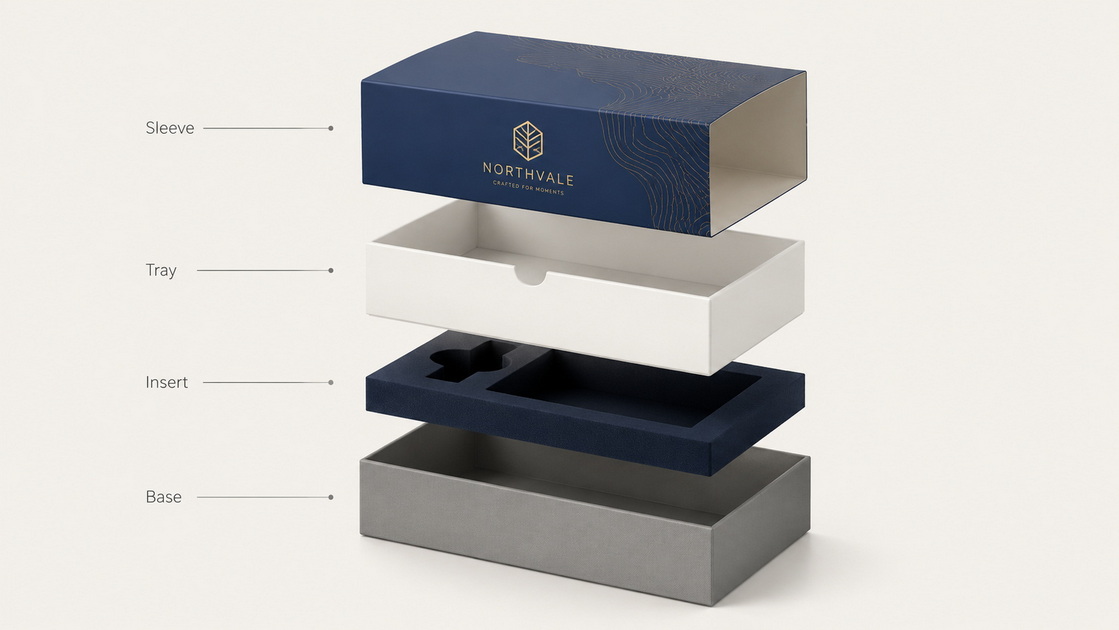
Instead of investing in a fully rigid box, you can elevate simpler structures with sleeves, sliders, and bands. [acesgift]
- A folding carton or corrugated box wrapped in a printed sleeve instantly looks more premium.
- Drawer‑style boxes can be built with folding board plus a reinforced tray only where needed.
- Belly bands or printed wraps provide branding and security while using minimal additional material.
These structures are especially powerful for seasonal promotions and limited editions, where the base box can stay the same and only the outer sleeve or band changes. [acesgift]
Consumer expectations around sustainability have shifted rapidly. Many buyers now equate minimal packaging with thoughtful, modern brands. [pkgbranding]
Cost‑effective, eco‑conscious options include:
- Uncoated kraft folding cartons with a single‑color logo.
- Corrugated boxes with minimal ink coverage and recyclable tapes.
- Re‑usable cloth or paper pouches inside a simple printed mailer.
Sustainable does not mean "cheap‑looking". With strong typography, clear hierarchy, and a well‑designed unboxing sequence, minimalist packaging can feel more intentional than over‑engineered rigid boxes. [packagingeurope]
The table below summarizes how rigid boxes stack up against major alternatives in the contexts we see most often in manufacturing projects. [pkgbranding]
| Packaging Type | Cost Level | Perceived Luxury | Shipping Efficiency | Best Channels |
|---|---|---|---|---|
| Rigid box | High | Very high | Low | Luxury retail, premium gifting (primelinepackaging) |
| High‑end folding carton | Medium | Medium–high | High | Mass retail, DTC, cosmetics (primelinepackaging) |
| Micro‑flute corrugated | Medium | Medium | Medium–high | E‑commerce, subscription boxes (pkgbranding) |
| Hybrid rigid‑look | Medium–high | High | Medium | Gift sets, hero SKUs (pakfactory) |
| Sleeve + base box | Low–medium | Medium | High | Seasonal campaigns, promo packs (pkgbranding) |
| Minimalist eco packaging | Low | Medium (design‑dependent) | High | Sustainable brands, DTC (pkgbranding) |
When we consult with brand owners, we use a simple framework to select or design the best alternative to rigid boxes. [sztcy]
Answer these questions:
1. Is your priority margin, brand image, or sustainability?
2. Is this packaging for retail shelf, e‑commerce shipping, or gifting events?
3. Do you want the box to be kept, or just protect during transit?
Write down your top three objectives and keep them visible during every design review.
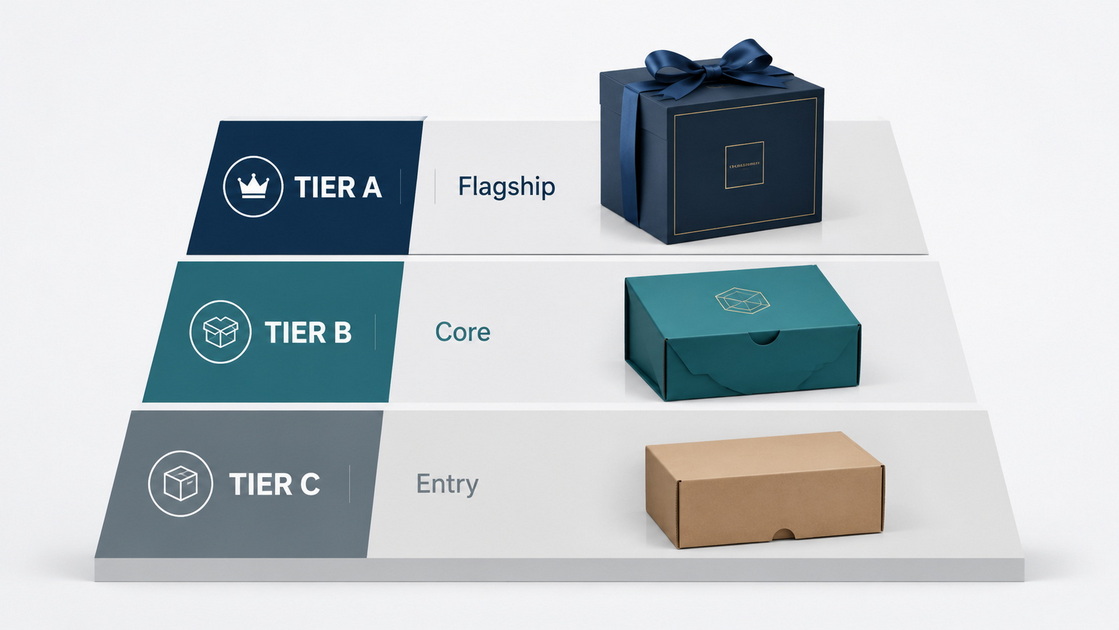
We often create a simple tiered structure:
- Tier A: Flagship products or VIP gifts (may keep rigid or hybrid).
- Tier B: Core volume products (folding carton, hybrid, or high‑end corrugated).
- Tier C: Entry SKUs or samples (minimalist or simple corrugated).
This tiering ensures you only pay for rigid‑level packaging where it genuinely drives ROI. [longwindisplay]
- Develop 2–4 structural concepts per project (our design team does this routinely for FMCG, beauty, and kitchenware brands). [longwindisplay]
- Produce white mock‑ups to test assembly, filling, and shelf presence before investing in full color and finishes.
- Conduct drop tests, stacking tests, and small focus groups when launching into new channels.
- Ensure the box is easy to erect, preload, and pack—especially if you run gift‑set preloading at the factory. [longwindisplay]
- Check that dimensions work with your pallets, warehousing racks, and e‑commerce fulfillment lines.
- Standardize components (e.g., inserts, sleeves) where possible across SKUs to simplify inventory.
A cost‑effective alternative only works if it "fits" your real‑world operations, not just your design mood board.
As a POP display and custom gift box manufacturer in China, we see three clear trends when brands move away from rigid boxes. [zhenhua-hk]
1. Blended material strategies
Brands increasingly mix cardboard, corrugated, acrylic, or metal in their displays and packaging to achieve a premium look at controlled cost. [longwindisplay]
2. Faster cycles and smaller batches
With more frequent campaigns and product launches, buyers want small‑batch flexible customization and quick lead times (often as fast as 7–15 days for certain structures). [longwindisplay]
3. Display + packaging integration
Gift boxes are now often designed together with counter displays, pallet displays, and floor stands, so the entire shopper journey feels cohesive. [packagingeurope]
From experience, the brands that win retail space most consistently are those that treat gift boxes as part of a total retail presence, rather than isolated objects.

To get accurate costing and design proposals for cost‑effective alternatives, share the following information with your packaging partner. [sztcy]
- Product dimensions and weight.
- Intended sales channels (retail, e‑commerce, gifting).
- Target cost per unit and estimated order quantities.
- Brand positioning and reference images you like.
- Any sustainability targets or material preferences (e.g., recycled content, plastic‑free).
At Long Win Display, our senior designers typically provide 2–4 structural concepts per project, balancing brand requirements with manufacturability and cost. The more clearly you define your objectives, the faster we can guide you from rigid boxes to smarter alternatives. [longwindisplay]
If you are looking for a partner experienced in custom gift boxes, POP displays, and preloading, Long Win Display can help you design, prototype, and deliver solutions that reduce cost while preserving your brand story at the point of sale.
1. Will switching from rigid boxes make my brand look cheaper?
Not necessarily. When structure and graphics are thoughtfully redesigned, many brands maintain or even improve perceived value using folding carton, corrugated, or hybrid solutions. Strategic use of finishes and clear brand hierarchy matters more than the box being rigid. [pakfactory]
2. How much cost can I realistically save by moving away from rigid boxes?
Savings vary by structure and volume, but it is common to reduce packaging cost by 15–30% when switching from fully rigid to high‑end folding carton or corrugated alternatives, especially when you also optimize shipping and storage through flat‑pack designs. [primelinepackaging]
3. Are alternatives strong enough to protect fragile products?
Yes, when engineered correctly. Micro‑flute corrugated boards, reinforced corners, and custom inserts (paperboard, pulp, or foam) provide excellent protection for glass, ceramics, and electronics, often at a lower material and logistics cost than rigid boxes. [pkgbranding]
4. Can I still use premium finishes on non‑rigid boxes?
Absolutely. Techniques like foil stamping, spot UV, embossing/debossing, and soft‑touch lamination are widely available on folding cartons and corrugated wraps, allowing you to achieve a premium look without a fully rigid structure. [acesgift]
5. How do lead times compare between rigid boxes and alternatives?
Foldable and corrugated structures can often be produced and shipped faster, particularly when your supplier runs an integrated, digitally managed production line and offers small‑batch flexible customization. Flat‑packed designs also speed up handling and preloading at the factory or fulfillment center. [longwindisplay]
1. Prime Line Packaging – "Why Your Business Needs Rigid Box Packaging" (2024). [primelinepackaging]
2. Long Win Display – Official website and company profile. "Custom POP Displays and Gift Boxes Manufacturer in China" (2026). [longwindisplay]
3. PKG Branding – "7 Best Practices for E‑Commerce Packaging" (2017). [pkgbranding]
4. PakFactory – "A More Cost Effective Alternative to Rigid Boxes" (2024). [pakfactory]
5. Packaging Europe – "The key to packaging design success in the e‑commerce era". [packagingeurope]
6. Zenpack – "Custom Rigid Box Packaging: Luxury Hardware Guide" (2026). [zenpack]
7. Zhenhua Packaging – "Display Box Manufacturers for Custom Retail Packaging". [zhenhua-hk]
8. Packwins – "China Leading Cardboard Display Manufacturer & Designer". [packwins]


