
Views: 216 Author: Long Win Display Publish Time: 2026-08-18 Origin: Site


Content Menu
● Cardboard vs Corrugated: Quick Comparison
● What Is Cardboard in Packaging?
>> Why Brands Choose Paperboard Packaging
>> Limitations of Paperboard Boxes
>> Why Corrugated Packaging Is Stronger
● Corrugated Flute Types and Their Packaging Uses
● Cardboard vs Corrugated for Custom Package Boxes
>> Choose Paperboard for Retail Presentation
>> Choose Corrugated Board for Protection and Structure
● Why ECT and Box Compression Matter
>> Practical Strength Planning
● The Role of Grain and Flute Direction
● Premium Packaging With Litho Lamination
● Moisture, Handling, and Transport Risks
● How to Select the Right Packaging Material
>> Step 2: Define the Packaging Role
>> Step 3: Define the Brand Experience
>> Step 4: Define the Supply Chain Conditions
>> Step 5: Create and Test a Prototype
● Cardboard or Corrugated: Which Is Better?
● FAQ
>> Is corrugated the same as cardboard?
>> Which is stronger, cardboard or corrugated board?
>> 1. Is E flute suitable for retail packaging?
>> 2. Can corrugated boxes have premium printing?
>> 3. What is the difference between ECT and BCT?
>> 4. Can paperboard packaging be used for shipping?
>> 5. What packaging information should I provide to a manufacturer?
When sourcing custom packaging boxes, the terms cardboard and corrugated are often used as if they mean the same thing. They do not. Their structural differences affect print quality, product protection, stacking performance, shipping cost, retail presentation, and damage risk.
Cardboard, more accurately described as paperboard or folding carton board in many packaging applications, is usually a solid paper-based sheet. Corrugated board uses a fluted paper medium bonded between flat linerboards. That internal flute structure creates thickness, cushioning, and load-bearing strength.
For retail brands, choosing the wrong material can result in crushed inventory, damaged products, weak countertop displays, poor shelf presentation, and unnecessary replacement costs. Long Win Display designs, customizes, manufactures, and pre-assembles package boxes and POP display solutions for retail brands. This guide explains how to select the right paper-based packaging material for product protection and retail performance.
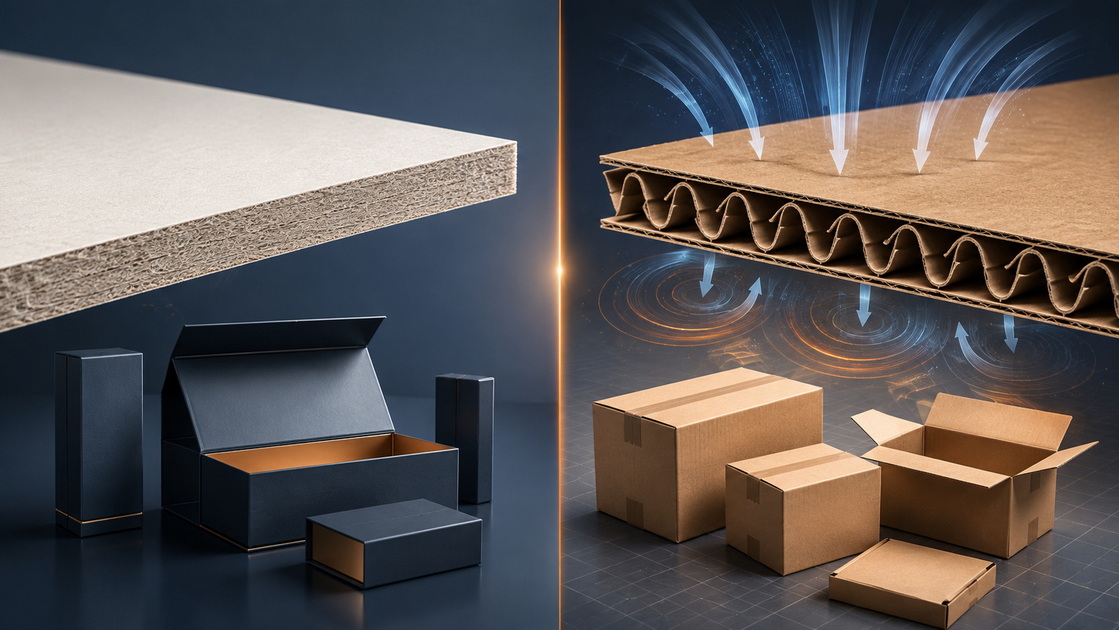
The most important difference is the material structure.
Cardboard is typically a single solid paper-based sheet. Corrugated board is an engineered multi-layer material with a wavy middle layer called a flute.
| Feature | Cardboard or Paperboard | Corrugated Board |
|---|---|---|
| Basic structure | Single solid paper-based sheet | Flat linerboard with a fluted middle layer |
| Typical use | Folding cartons, cosmetic boxes, cereal boxes, sleeves | Shipping boxes, mailer boxes, retail displays, protective packaging |
| Surface quality | Smooth and suitable for detailed printing | Can be smooth, especially with fine flutes or laminated print sheets |
| Product protection | Suitable for lightweight products | Better cushioning and compression resistance |
| Stacking strength | Limited | Higher when properly specified |
| Typical thickness | Thin to medium | Medium to thick |
| Shipping suitability | Best as retail packaging inside a shipper | Best for shipping and transit protection |
| Structural role | Product presentation and basic containment | Transport protection, load support, and display structure |
| Customization options | Printing, coating, embossing, foil, die cutting | Structural die cutting, printing, litho lamination, inserts, reinforcement |
| Best for | Lightweight retail packaging | Products requiring stronger protection or display support |
A simple rule is useful:
Use paperboard when presentation and print quality are the main priorities. Use corrugated board when protection, strength, and transport performance are essential.
In everyday conversation, cardboard can describe many types of paper-based packaging. In professional packaging projects, more precise terms help prevent material mistakes.
For product packaging, cardboard often refers to paperboard or folding carton board. It is a solid sheet made from paper pulp fibers. It can be coated, uncoated, recycled-content, virgin-fiber, white-lined, or kraft-finished depending on the product and visual requirements.
Paperboard is commonly used for:
- Cosmetic packaging boxes
- Skincare packaging
- Perfume sleeves
- Food and beverage cartons
- Pharmaceutical packaging
- Small electronics boxes
- Gift boxes
- Retail product sleeves
- Hang tags and header cards
Paperboard packaging offers several practical advantages.
- Smooth surface for high-resolution printing
- Strong color reproduction
- Suitable for premium finishing
- Lightweight construction
- Efficient die cutting and folding
- Flexible structural shapes
- Suitable for small and lightweight products
- Good retail shelf appearance
For premium consumer goods, paperboard can support refined finishes such as matte lamination, gloss lamination, soft-touch coating, hot foil stamping, embossing, debossing, spot UV, and textured wrapping paper.
A paperboard folding carton is often the visible retail package. It creates the first impression before a customer touches or opens the product.
Paperboard is not designed to perform like a shipping box.
Potential limitations include:
- Lower puncture resistance
- Lower stacking strength
- Limited cushioning performance
- Reduced suitability for heavy products
- Higher sensitivity to moisture without proper coating
- Greater crushing risk during parcel transport
- Limited ability to support tall retail display structures
A premium folding carton may protect a lightweight cosmetic product on a store shelf. It may not protect that same product during export shipping unless it is placed inside a suitable corrugated shipper.
Corrugated board, also known as corrugated fiberboard, is a multi-layer paper-based material engineered for structural strength.
A standard single-wall corrugated board contains three layers:
1. Outer linerboard
2. Fluted corrugated medium
3. Inner linerboard
The flute is the wavy paper sheet between the liners. This structure creates air space, improves cushioning, and increases resistance to compression.
Corrugated board is commonly used for:
- Shipping cartons
- E-commerce mailer boxes
- Subscription boxes
- Retail-ready packaging
- Countertop display stands
- Floor display stands
- Pallet displays
- Protective inserts
- Heavy product packaging
- Multi-pack product cartons
Corrugated packaging does not depend on thickness alone.
Its strength is affected by:
- Flute profile
- Linerboard quality
- Paper basis weight
- Board grade
- Flute direction
- Box dimensions
- Die-cut structure
- Glue bonding quality
- Humidity exposure
- Stacking conditions
The fluted medium helps distribute force. When a corrugated box is correctly specified, it can resist stacking pressure more effectively than a solid paperboard carton of similar weight.
Corrugated board is especially valuable when packaging must move through warehouses, container loading, parcel networks, retail distribution centers, and repeated manual handling.

The flute profile affects thickness, printability, cushioning, puncture resistance, and stacking performance.
Common flute options include B flute, C flute, E flute, and double-wall combinations such as BC flute and EB flute.
| Flute Type | Approximate Thickness | Typical Strength | Common Packaging Uses |
|---|---|---|---|
| E Flute | Around 1.5 mm to 1.6 mm | Fine structure with a good print surface | Premium mailers, retail boxes, display packaging |
| B Flute | Around 3 mm | Good puncture resistance and general strength | Shipping cartons, countertop displays, die-cut boxes |
| C Flute | Around 4 mm | Strong cushioning and stacking performance | General shipping cartons and transport packaging |
| BC Flute | Around 6 mm to 7 mm | Higher strength and better heavy-load support | Heavy products, pallet packaging, industrial shipping |
| EB Flute | Around 4.5 mm | Fine print surface with greater strength | Premium retail displays and heavy printed packaging |
E flute is often selected for premium packaging because its smaller flute profile creates a smoother printing surface. It is useful for mailer boxes, retail-ready packaging, subscription boxes, and countertop display structures.
B flute is a versatile option for die-cut boxes and retail displays. It offers practical strength and puncture resistance.
C flute is commonly used for shipping cartons because it provides reliable cushioning and stacking performance.
Double-wall corrugated board is suitable for heavy products, high warehouse stacking, and demanding transport conditions.
The right material depends on what the package must do.
A retail box has a different purpose from a shipping carton. A gift box has a different purpose from a countertop display. A lightweight skincare jar has different protection requirements than a glass bottle, metal tool, or electronic device.
Paperboard is usually the better choice when you need:
- High-quality product photography
- Detailed color printing
- Fine text and graphic precision
- Luxury retail finishing
- Compact packaging
- Lightweight product containment
- Folding cartons and product sleeves
- Strong shelf-ready visual impact
Paperboard is often the correct material for the primary package that customers see and touch.
Corrugated board is usually the better choice when you need:
- Product protection during shipping
- Greater stacking strength
- Cushioning for fragile items
- E-commerce mailer packaging
- Retail display support
- Larger box dimensions
- Heavier product packaging
- Multi-unit packaging
- Pallet-ready transport cartons
Corrugated board is often the correct material for the outer shipping package, retail-ready case, protective insert, or point-of-purchase display structure.
Packaging should be selected using measurable performance requirements, not visual appearance alone.
Two important packaging performance indicators are Edge Crush Test and Box Compression Test.
The Edge Crush Test, often called ECT, evaluates how much edgewise compression a corrugated board can withstand before it buckles.
A higher ECT value generally indicates better resistance to crushing along the edges. This matters because box edges carry much of the load when cartons are stacked.
ECT can help packaging teams compare corrugated board options and select a grade suitable for the product weight and expected stacking conditions.
The Box Compression Test, often called BCT, measures how much top-to-bottom force a completed box can tolerate before it deforms or fails.
BCT is affected by more than board grade. It also depends on box dimensions, board moisture content, cut quality, closure method, storage conditions, and finished conversion quality.
For a new packaging project, confirm:
1. Product weight
2. Product dimensions
3. Number of units per carton
4. Internal protective packaging
5. Shipping method
6. Expected warehouse stacking height
7. Humidity and climate conditions
8. Retailer packaging requirements
9. Required safety margin
10. Drop, vibration, compression, and transport testing needs
A package can look strong and still fail under warehouse pressure. Testing the actual finished box is the best way to verify real performance.
Flute direction is a critical structural detail in corrugated packaging.
For corrugated boxes, flutes should normally run vertically on the side panels. Vertical flutes act like columns. They help the box resist compression when cartons are stacked.
If flute direction is poorly planned, the package may bend or collapse more easily under load.
This is especially important for:
- Tall retail display stands
- Floor displays
- Large shipping cartons
- Pallet-ready boxes
- Heavy product packaging
- Countertop displays with multiple shelves
For retail display structures, material selection should be combined with shelf-load calculations, product positioning, reinforcement design, and expected store handling.

Brands do not always need to choose between a smooth printed surface and strong corrugated construction.
Litho lamination combines a printed paperboard sheet with corrugated board. The printed sheet delivers refined graphics and premium finishes. The corrugated structure provides strength and thickness.
This method is useful for:
- Luxury e-commerce mailer boxes
- Premium countertop displays
- Retail-ready packaging
- Subscription boxes
- Gift-set packaging
- Electronic product packaging
- Beauty and wellness displays
- High-graphic corrugated boxes
Litho-laminated corrugated packaging can create a strong balance between brand presentation and shipping performance.
Packaging performance changes after it leaves the factory.
Humidity can soften paper fibers and reduce compression strength. Repeated handling can damage corners. Parcel networks can cause punctures. Long-distance shipments can expose cartons to temperature changes, vibration, container pressure, and variable warehouse conditions.
To reduce risk, consider:
- Moisture-resistant liner options
- Appropriate board grades
- Correct flute selection
- Reinforced corners or inserts
- Secure internal product retention
- Protective outer packaging
- Appropriate pallet patterns
- Stretch wrapping or strapping when required
- Transport testing based on the actual delivery route
For export projects, packaging should be designed for the full transport journey, not only the final retail shelf.
A structured decision process helps prevent costly material-selection mistakes.
Confirm the product weight, dimensions, fragility, surface sensitivity, and value.
A lightweight plastic accessory needs different packaging from a glass bottle, ceramic product, electronic device, or metal component.
Determine whether the box is:
- Primary retail packaging
- Protective inner packaging
- E-commerce mailer
- Master shipping carton
- Retail-ready case
- Gift box
- Countertop display
- Floor display
- Pallet display
One product may require several packaging layers, each using a different material.
Consider print requirements, brand colors, finishing needs, unboxing experience, shelf presence, and retail photography.
Paperboard usually supports higher visual detail. Corrugated board can also create a premium result when litho laminated or designed with an appropriate print method.
Review shipping distance, transport mode, handling frequency, warehouse stacking, retail requirements, humidity risk, and damage history.
A digital rendering is useful, but it cannot replace a physical sample.
Test the package with the actual product inside. Check fit, opening experience, structural stability, product movement, compression resistance, and visual finish.
For larger projects, complete loaded transit testing before full-scale production.
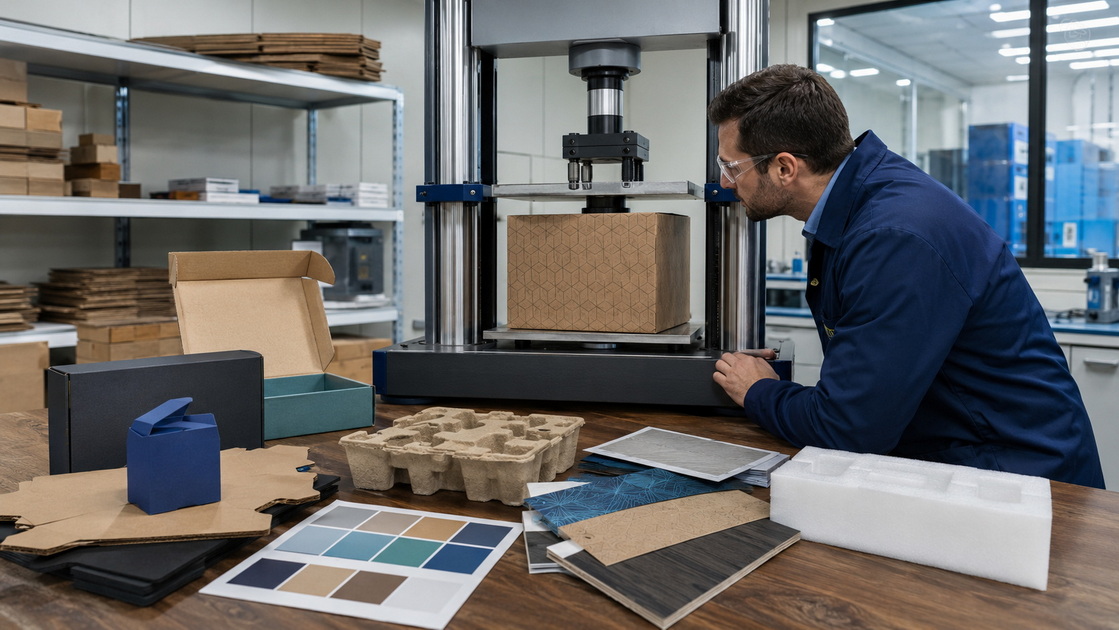
There is no universal winner.
Choose paperboard packaging when your project prioritizes:
- Premium print quality
- Lightweight retail cartons
- Cosmetic or beauty packaging
- Small consumer goods
- Fine graphic detail
- Luxury finishes
- Compact product presentation
Choose corrugated packaging when your project prioritizes:
- Shipping strength
- Product protection
- E-commerce delivery
- Larger or heavier products
- Stackable transport cartons
- Retail display structures
- Cushioning and impact resistance
- Pallet distribution
Choose litho-laminated corrugated packaging when your project needs both:
- Premium printed graphics
- Stronger structure
- Retail-ready presentation
- Protective shipping performance
- Custom display capability
Long Win Display provides custom package boxes, corrugated display structures, retail packaging, pre-assembly, and integrated POP display solutions. Share your product dimensions, weight, packing configuration, retail environment, transport route, branding requirements, and expected quantity to develop packaging that protects your product and supports its retail presentation.
Not exactly. In everyday language, the terms are often used interchangeably. In packaging production, paperboard is generally a solid sheet, while corrugated board contains a fluted material layer between linerboards for added strength and cushioning.
Corrugated board is usually stronger for shipping, stacking, and impact protection because its fluted internal structure increases rigidity and load-bearing capacity.
Yes. E flute is often used for premium retail packaging, mailer boxes, and display packaging because it provides a relatively smooth printing surface while maintaining useful structural strength.
Yes. Corrugated boxes can achieve premium graphics through direct printing, digital printing, flexographic printing, or litho lamination. Litho lamination is particularly suitable when refined color, detailed imagery, and stronger structure are required.
ECT measures the edgewise compression resistance of corrugated board. BCT measures the top-to-bottom compression strength of a completed box. Both are useful for evaluating shipping and stacking performance.
Paperboard can be used for light, low-risk products in controlled conditions. For most shipping and e-commerce applications, a corrugated outer box is recommended because it provides better impact protection and compression strength.
Provide product dimensions, product weight, quantity per box, packing method, shipping route, retail environment, target box style, print files, preferred finishes, protection requirements, and expected order quantity.
1. POP Display. [Cardboard vs Corrugated: What Is the Difference?]
2. Fibre Box Association. [What Is Corrugated?]
3. Metro-Pack. [BCT and ECT Tests: Assessing Corrugated Box Strength]
4. GWP Group. [Corrugated Board Grades Explained]
5. ScienceDirect. [Paperboard Overview]


