
Views: 258 Author: Long Win Display Publish Time: 2026-07-28 Origin: Site


Content Menu
● What Is a Cardboard Dump Bin Display?
>> 1. Start with a clear sales goal
>> 2. Match the bin to the product type
>> 3. Use dividers to control visual chaos
>> 4. Turn the header into a billboard
>> 5. Design for the shopper's viewing distance
>> 6. Keep the display simple and specific
>> 7. Build the structure around merchandising behavior
>> 8. Add urgency with promotions and seasonal messaging
>> 9. Test the display before full rollout
● How Long Win Display Adds Value
>> 1. What products work best in a cardboard dump bin display?
>> 2. Should I use dividers in a dump bin?
>> 3. What should I put on the header?
>> 4. How do I make a dump bin display more effective?
>> 5. Can a cardboard dump bin display be customized for different retail markets?
In competitive retail environments, a cardboard dump bin display can do much more than hold products. When designed well, it becomes a silent salesperson that improves visibility, supports promotions, and helps shoppers make faster decisions.

A cardboard dump bin display is a corrugated POP display designed to hold loose, bulk, seasonal, promotional, or grab-and-go products in one accessible place. It is often used in supermarkets, convenience stores, chain retailers, and promotional aisles because it combines low cost, lightweight construction, and strong merchandising impact.
For brands, the real advantage is not just storage. It is impulse selling. Dump bins make products easier to notice, easier to reach, and easier to buy.
A dump bin is only effective when it is both visually clear and operationally practical. A weak design can look messy, bury products, or confuse shoppers, which reduces conversion. A strong design, on the other hand, helps retailers present products neatly while still keeping the easy-access feeling that makes dump bins effective.
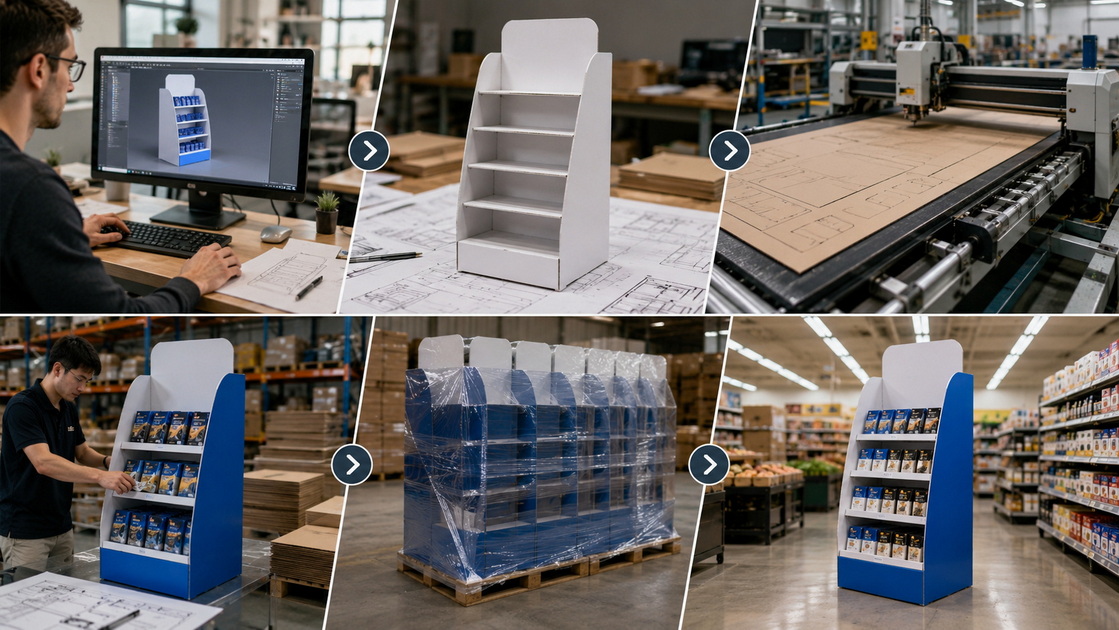
From a manufacturer's perspective, design also affects production efficiency, shipping, assembly time, and print quality. Long Win Display supports customized cardboard display stand design, production, and preloading, with a controlled workflow from design to shipment.
Before sketching the structure or writing the artwork, define the purpose of the display. Is it meant to launch a new product, clear inventory, push a seasonal promotion, or increase basket size?
This goal should guide every decision, including size, placement, graphics, messaging, and product capacity. Without a clear objective, the design becomes attractive but not effective.
Not every product works well in a dump bin. These displays are best for items that are small, bundled, seasonal, lightweight-to-medium weight, or likely to trigger impulse purchases.
Good candidates include:
- Trial packs.
- Multi-packs.
- Seasonal accessories.
- Clearance items.
- Grab-and-go essentials.
- Products with simple packaging and clear category logic.
If the product needs premium presentation, high protection, or precise front-facing alignment, another POP format may work better.
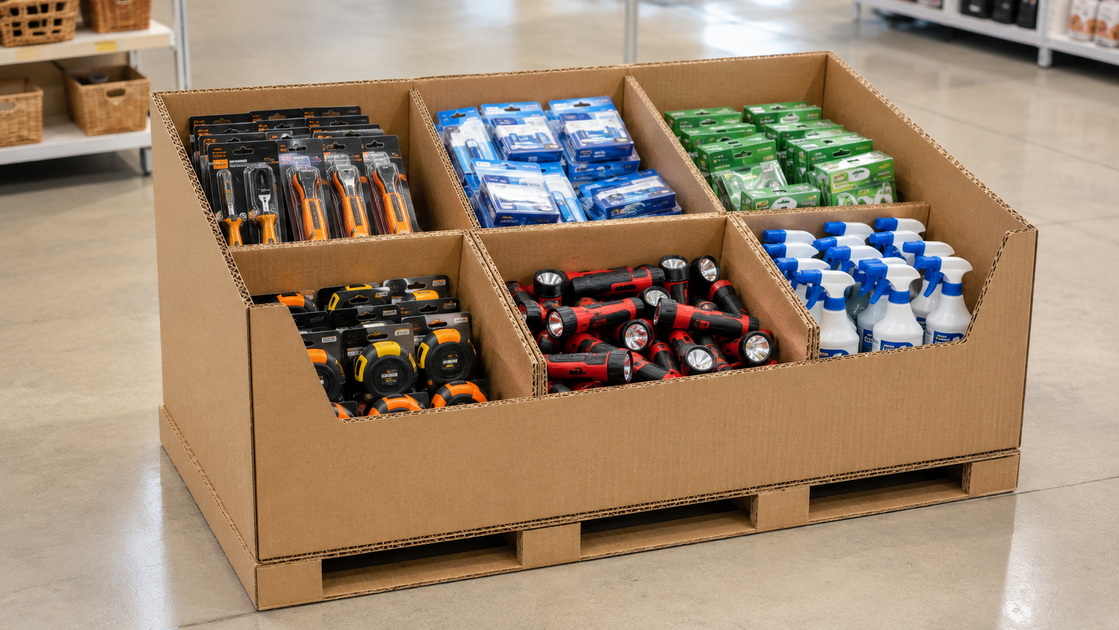
Dividers are one of the most underrated features in cardboard dump bin display design. They help organize SKUs, separate product families, and prevent the everything-tossed-together effect that makes a display look cheap.
Dividers also make shopping easier. When customers can quickly scan categories, they spend less time searching and more time buying. Color-coded dividers or printed headers can strengthen this effect even more.
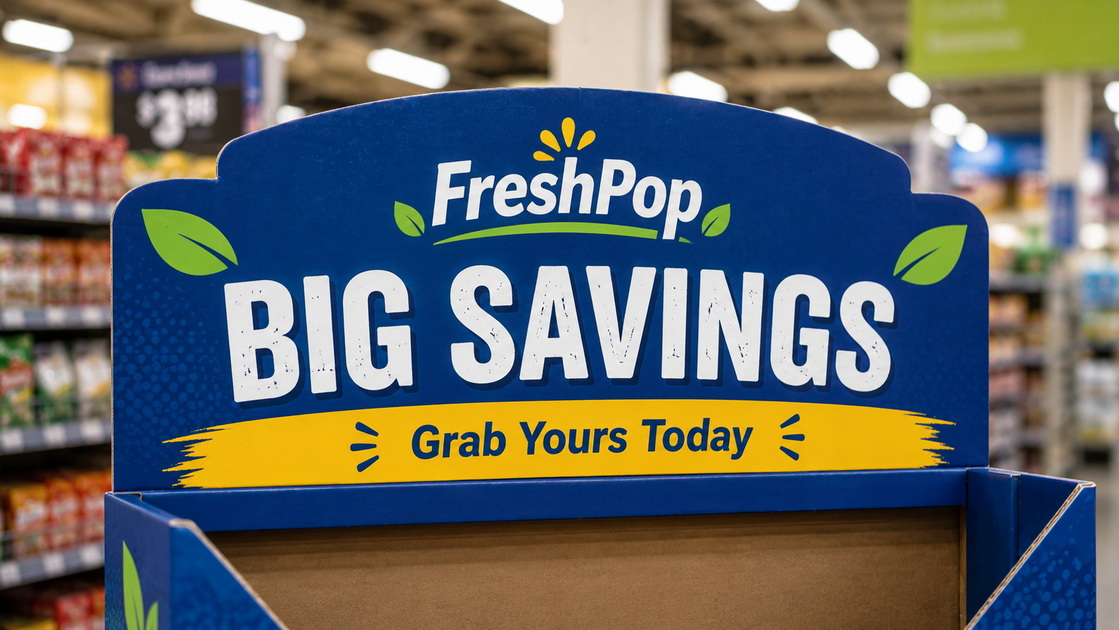
The header panel is your highest-value branding space. It should immediately answer three questions: what is this product, why should I care, and what should I do next?
Keep the message short and bold. Use one core claim, one support point, and one action trigger. For example, a seasonal promotion headline, a product benefit, or a limited-time offer can outperform a long paragraph every time.
A retail display is judged from several distances: across the aisle, near the shelf, and directly at the bin. That means the artwork needs a clear hierarchy. The headline should read quickly from far away, while product details should support decision-making up close.
A simple rule works well:
- Far distance: brand and offer.
- Mid distance: product category and benefit.
- Close distance: details, pack size, or action message.
This layered approach improves readability without cluttering the design.
Shoppers rarely stop to read dense copy in a store. They respond faster to simple, specific, benefit-driven language.
That means you should avoid:
- Too many fonts.
- Too many messages.
- Too many graphics.
- Too many competing offers.
Instead, focus on one strong idea. Specificity makes the display feel more relevant and more trustworthy.
A good cardboard dump bin display is not just a box. It is a merchandising tool. So the structure should support how store staff will fill, restock, and maintain it over time.
Consider:
- Product depth.
- Accessibility for restocking.
- Stability on the shop floor.
- Durability during transport and repeated use.
- Easy assembly for store teams.
If a display looks great in a render but is difficult to maintain in-store, it will underperform.
One of the strongest uses of a dump bin is time-sensitive selling. Seasonal graphics, holiday themes, countdown language, and limited-time promotional messages can make the display feel more actionable.
This works especially well for end-of-season stock, event tie-ins, back-to-school launches, or bundled gift items. The key is to connect the display to a purchase moment shoppers already understand.
Before mass production, prototype the structure and test it in a real retail setting whenever possible. This helps you evaluate visibility, product fit, shopper interaction, and store staff feedback.
Testing often reveals practical problems that design files cannot show, such as:
- Product tipping.
- Weak shelf loading.
- Poor readability at distance.
- Messy refill behavior.
- Brand message overload.
A small test run can save a large production mistake.
Recent POP design guidance increasingly emphasizes three priorities: simplicity, shopper behavior, and trial before rollout. Industry guidance also highlights QR codes, interactive elements, and seasonal relevance as ways to improve engagement in modern retail environments.
For cardboard dump bin displays, this means the best designs now combine visual speed with practical retail function. In other words, the display should help a shopper understand the offer in seconds and help a store staff member keep it looking good for weeks.
Use this workflow when planning a custom cardboard dump bin display:
1. Define the sales objective.
2. Identify the right product assortment.
3. Decide whether dividers are needed.
4. Write a short headline and supporting message.
5. Choose the display shape and capacity.
6. Create the artwork with brand hierarchy.
7. Build a prototype.
8. Test in-store.
9. Refine before mass production.
This workflow helps align marketing goals with manufacturing reality, which is especially important for export-focused brands and multi-store retail rollouts.
Long Win Display positions itself as a China POP display manufacturer focused on cardboard display stand design, customization, production, and preloading, with more than 20 years of experience and a digital workflow that supports fast sampling and controlled production.
That matters because effective dump bin design is not only about creativity. It is also about turning a concept into a stable, printable, retail-ready structure that can be produced on time and shipped efficiently.
A well-designed cardboard dump bin display should do three things: catch attention, simplify shopping, and support sales. When you start with the product, keep the message focused, and plan the structure around real retail behavior, the display becomes much more than a container.
For brands and retailers, the strongest results usually come from combining clear goals, clean structure, concise copy, and real-world testing. That is how a simple corrugated bin becomes a high-performing retail asset.
Dump bins work best for small, loose, seasonal, bundled, clearance, or impulse-buy items that shoppers can pick up quickly.
Yes, if you want better organization, clearer SKU separation, and a cleaner shopping experience. Dividers also help staff restock the bin more efficiently.
Use a short headline, a clear product benefit, and a simple promotional message. The header should be readable from a distance.
Keep the design simple, align it with the product, use strong branding, add urgency where appropriate, and test the display before full rollout.
Yes. It can be customized in size, graphics, structure, divider layout, and promotional message to fit different retail channels and regional requirements.
1. Long-Win Display. "China Display Stand, Cardboard POP Displays, Creative Package Box Manufacturer." [https://www.longwindisplay.com/]
2. BPKC. "Cardboard Dump Bin Display Design Tips." [https://bpkc.com/blogs/blog/cardboard-dump-bin-display-design-tips]
3. MVP Design. "Make it POP: 10 Best Practices for Point of Purchase Displays." [https://mvpdesign.com/blog/make-it-pop-10-best-practices-for-point-of-purchase-displays/]
4. Frank Mayer. "Guidelines for the Design Process of a POP Display Project." [https://www.frankmayer.com/blog/guidelines-for-the-design-process-of-a-pop-display-project/]
5. Packwins. "Cardboard Dump Bins Display the Complete Guide." [https://packwins.com/cardboard-dump-bins-display-the-complete-guide/]
6. Bling Bling Packaging. "Key Considerations in Designing Your POP Display." [https://blingblingpackaging.com/about-us/key-considerations-in-designing-your-pop-display/]
7. Manifestly. "Boost Retail Sales: Top Point-of-Purchase Display Checklist." [https://www.manifest.ly/use-cases/retail/point-of-purchase-display-checklist]
8. Color Reflections. "The Complete Guide to Point-of-Purchase Displays for Retail Stores." [https://colorreflections.com/digital-printing-news/the-complete-guide-to-point-of-purchase-displays-for-retail-stores/]


