
Views: 222 Author: Long Win Display Publish Time: 2026-05-24 Origin: Site


Designing award‑worthy retail displays is no longer a "nice to have" – it directly affects how quickly products move off the shelf, how shoppers remember your brand, and how retailers judge your professionalism. As a China‑based POP display manufacturer specializing in custom cardboard display stands, I've seen brands double, and sometimes triple, their in‑store sell‑through simply by upgrading their display strategy. [longwindisplay]
In this guide, I'll walk you through 12 practical strategies we use at Long Win Display when we design, engineer, and pre‑pack cardboard retail displays for global brands entering major retail chains. You'll get clear steps, real‑world examples, and expert tips to help you create store‑ready displays that win attention, win awards, and most importantly, win sales. [kdmpop]
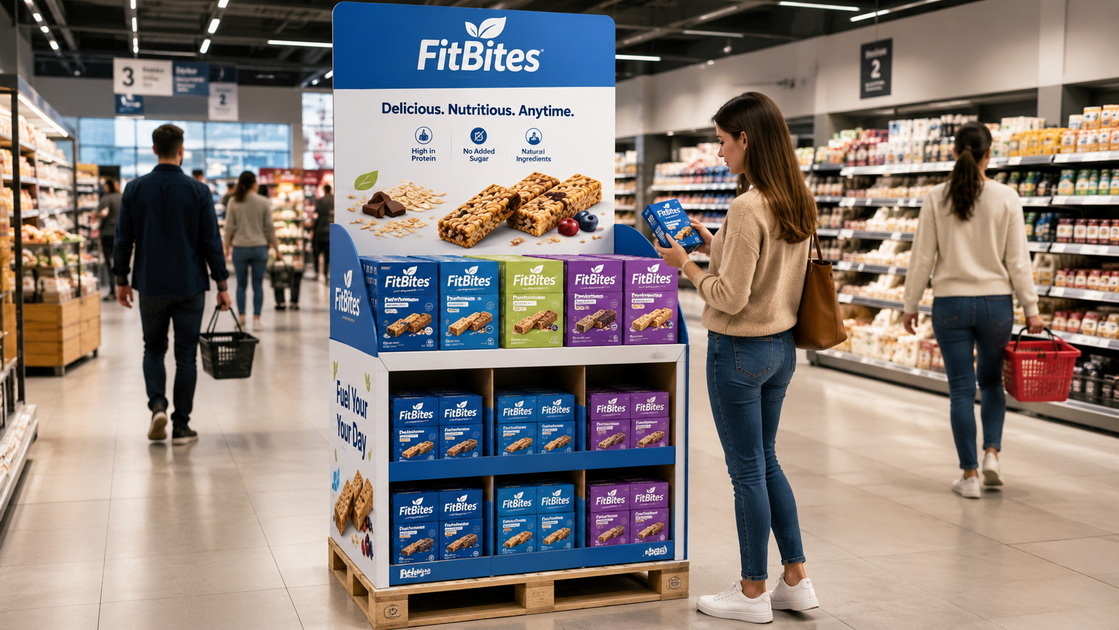
Before jumping into tactics, it helps to define what "award‑winning" actually means in today's retail context. [blog.bindy]
An award‑level display typically scores high in four areas:
- Shopper impact: It stops traffic, communicates value in seconds, and drives impulse purchases. [dandreavisual]
- Brand consistency: It translates your brand story, colors, and tone into a three‑dimensional, in‑store experience. [kdmpop]
- Retailer compliance: It meets (or exceeds) retailer guidelines on size, safety, graphics, and merchandising. [blog.bindy]
- Operational excellence: It is easy to assemble, durable in store, and cost‑efficient to ship and restock. [kdmpop]
As a POP manufacturer, those four pillars drive all our design decisions, from the first dieline to the last pallet loading plan. [longwindisplay]
The original article rightly starts with "define your goals," but in practice many brands keep this step vague. We always push clients to turn abstract ideas into measurable objectives. [kdmpop]
Ask and write down:
1. What exactly should this display achieve in 90 days – sell‑through, trial, awareness, or all three? [dandreavisual]
2. Which product(s) and which SKUs are priority?
3. Which retail channels – club stores, supermarkets, drugstores, convenience, or specialty retailers? [faire]
A strong display strategy statement might look like this:
"Launch a quarter‑pallet cardboard display in 500 club stores to increase trial of our new 12‑pack SKU by 40% vs control stores over 12 weeks, while collecting scan data for promo optimization."
With that specific goal, every design choice — footprint, messaging, graphics, and load capacity — becomes easier and more objective. [kdmpop]
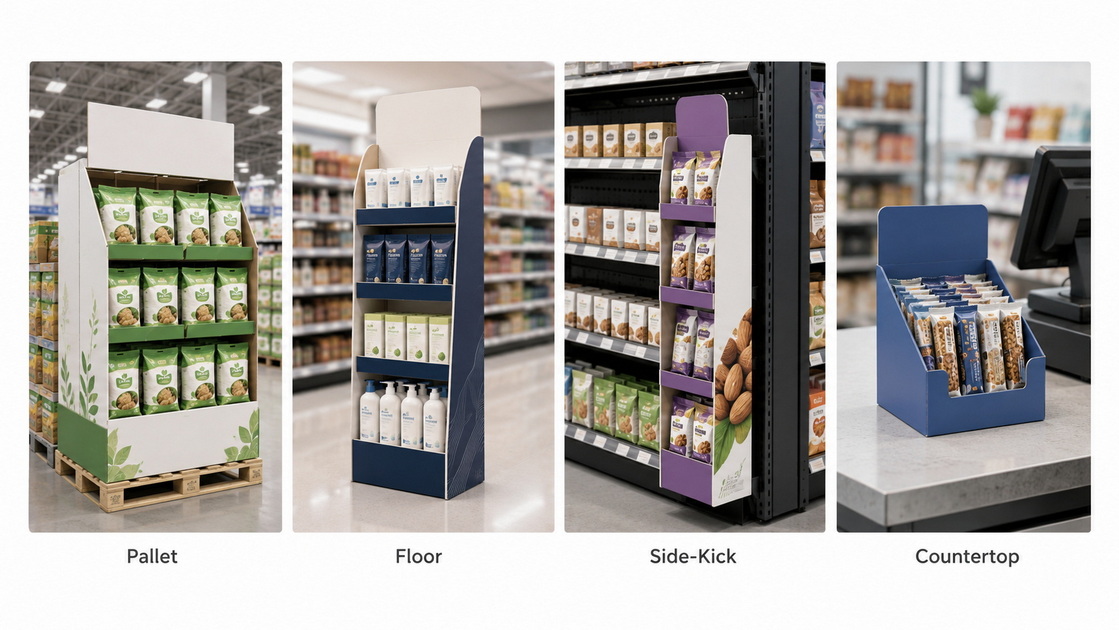
The source article mentions pallet vs floor displays, but doesn't go into enough detail on how to choose among today's formats. From our experience manufacturing thousands of displays, these are the most practical cardboard POS formats for retailers:
- Pallet display (full, half, quarter): Ideal for club stores, high‑volume promotions, and seasonal campaigns. Best when you need maximum inventory on the floor. [kdmpop]
- Floor display / dump bin: Great for impulse or mixed‑SKU assortments near traffic corridors and power aisles. [faire]
- Side‑kick / power wing: Mounted on endcaps or fixture sides, perfect for cross‑merchandising (e.g., snacks near beverages). [dandreavisual]
- Countertop display: Small footprint, high impulse purchase power at checkout and service counters. [dandreavisual]
When we consult with brands, we always align three factors:
- SKU count and volume: More SKUs and higher weight call for stronger corrugated grades and larger footprints.
- Retailer space availability: Some chains only accept quarter pallet or specific side‑kick dimensions; ignoring this can kill execution. [blog.bindy]
- Replenishment frequency: If stores restock once per week, your display must hold enough inventory to avoid "empty box" syndrome. [faire]
Getting this right at the start prevents costly redesigns and retailer rejections later.
One of the biggest gaps we see in many online articles: they under‑estimate the importance of structural engineering for POP displays. A design can look stunning in 3D renders, yet collapse at store level if the structure isn't properly tested. [kdmpop]
Key engineering principles we apply:
- Tested load capacity: Each shelf or bin must be designed to handle the maximum product weight plus safety margin.
- Material selection: Heavier products or long‑run campaigns often require stronger corrugated board (e.g., double‑wall or reinforced inserts). [dandreavisual]
- Tool‑less or minimal‑tool assembly: Displays that snap, fold, or lock together without tools are executed more consistently and quickly by store staff. [blog.bindy]
As a manufacturer, we prototype and sometimes pre‑assemble displays to validate performance under real‑world loading and handling — not just on screen. In our experience, assembly simplicity directly correlates with retailer compliance and on‑time launch. [longwindisplay]
Shoppers move quickly, so your display has about three seconds to earn attention in a busy aisle. The original article talks about color and "stopping power"; we take that a step further with a structured visual hierarchy: [faire]
1. Hero brand block: Large, high‑contrast logo and primary color at the top or center of the display to anchor recognition.
2. Primary benefit line: A short, bold statement (5–7 words) that answers "why should I care?" in clear language. [kdmpop]
3. Secondary details: Short bullets or icons highlighting key features, flavors, pack sizes, or price points.
A simple example for a beverage brand:
- Hero: "BRAND X ENERGY"
- Benefit line: "Clean energy that actually tastes good"
- Secondary: "Zero sugar - Natural caffeine - 12‑pack value"
We also recommend using bold, legible fonts and high‑resolution product imagery, especially on side panels visible from the aisle. For cardboard displays, print quality and color management are critical — poor reproduction can make even a strong design look cheap. [faire]
The original article correctly highlights multi‑sensory engagement, but many brands still build purely visual displays. Where possible, integrate sensory cues:
- Touch: Accessible product samples or textured printed finishes that invite shoppers to reach out. [faire]
- Smell: For food, cosmetics, or home care, consider testers or fragrance strips near the display.
- Sound: Small, motion‑activated audio modules for key campaign messages (used sparingly to avoid annoyance). [youtube]
- Taste: In‑store sampling anchored by a branded display, especially for new flavors or premium lines. [faire]
The key is to create a physical experience that e‑commerce cannot offer, while still keeping the display structurally safe and retailer‑approved. [dandreavisual]
The human brain responds strongly to narrative and context. Instead of just stacking products, think about the storyline that connects your display to shoppers' real‑life moments: [faire]
- Sports events ("Game‑day snacks station")
- Holidays ("Gift‑ready sets for last‑minute shoppers")
- Lifestyle goals ("Healthy breakfast corner in under 5 minutes")
The source article mentions sports and vineyard themes; we encourage brands to localize these concepts to each retail environment. For example, a cardboard floor stand in a coastal region might emphasize "weekend beach essentials," while the same product in a downtown location focuses on "on‑the‑go city snacks." [faire]
Graphic themes should align tightly with your broader campaign — packaging, digital ads, and social media — so the shopper feels continuity from screen to shelf. [dandreavisual]
One of the most powerful shifts in POP manufacturing over the last decade is cost‑efficient digital printing for corrugated displays. This technology allows: [kdmpop]
- Short runs and rapid prototyping: Test multiple design versions across small store sets without the heavy plate costs of traditional printing.
- Localized messaging: Tailor copy or visuals by retailer, region, or promotion without changing the base structure.
- Faster time‑to‑market: Reduce lead times for urgent or seasonal campaigns.
For example, we often keep a single structural dieline for a quarter‑pallet display but print different graphic "skins" for different retail chains or languages. That keeps tooling costs low while maximizing brand agility at retail. [longwindisplay]
Display success is not only about design; location inside the store is just as decisive. When we discuss new projects with brands, we always ask: [dandreavisual]
- Will the display sit on a pallet in the main aisle, as a side‑kick on an endcap, or near complementary categories? [faire]
- Is there a digital or social campaign that drives shoppers to find this display in store?
- How will store staff move around the display when restocking or cleaning?
Good practice is to walk a typical shopper path (front door → power aisle → primary category → checkout) and identify where your display can intercept them at a high‑intent moment. A baby food display near diapers performs differently from one buried in a general grocery aisle, even with identical design and pricing. [dandreavisual]
One of the most common reasons displays never reach the sales floor is simple: they don't comply with retailer guidelines. These can include rules for: [blog.bindy]
- Maximum height, width, and depth
- Safety requirements and tipping tests
- Use of retailer logos and brand colors
- Carton labeling, pallet patterns, and barcoding
Instead of designing a dream display and hoping it passes, we start with retailer style guides and technical specs and design within those constraints. This saves costly redesign time and avoids late‑stage rejections. [blog.bindy]
For brands expanding into multiple international retailers, we often create a modular display system: one base structure that can be adjusted slightly (e.g., header height, shelf counts) to fit different rules while preserving a consistent brand look. [longwindisplay]
A brilliant display that is painful to assemble or ship will never scale. This is where manufacturing expertise becomes a real competitive advantage. [blog.bindy]
Practical steps we recommend:
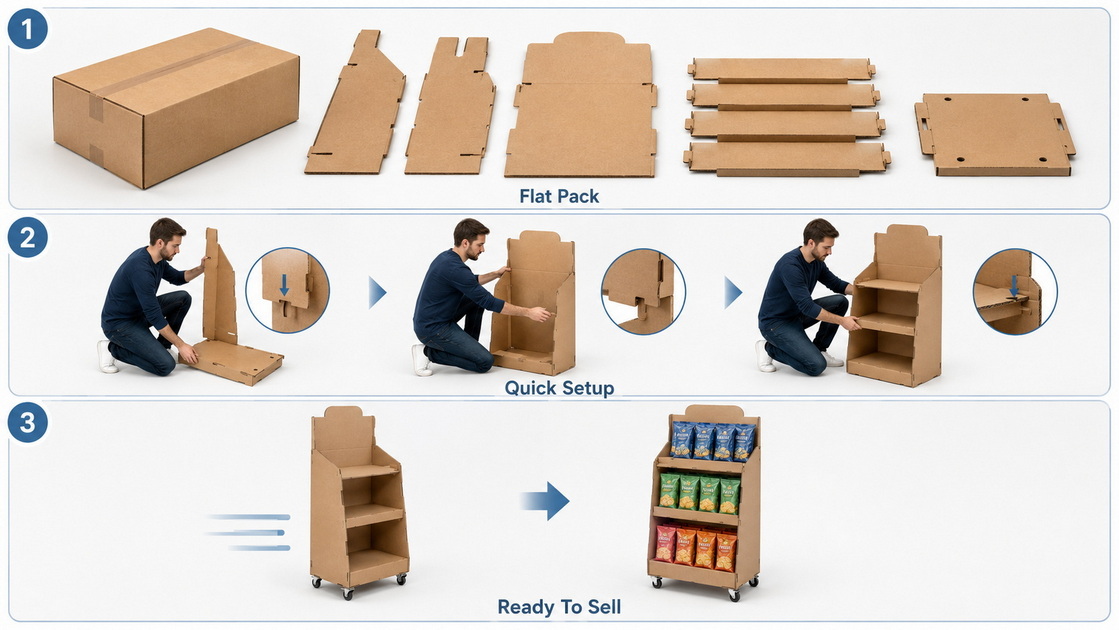
- Pre‑assembly and pre‑packing: Where budgets and retailer guidelines allow, ship displays already erected and pre‑loaded with product so store staff only need to remove outer cartons and roll the display onto the floor. [kdmpop]
- Clear, visual instructions: Include simple diagrams or QR‑linked videos on the shipper carton to guide quick and correct assembly.
- Optimized palletization: Design displays and master cartons to maximize container and pallet usage, reducing logistics costs per unit. [longwindisplay]
In some long‑running programs, brands also work with us to map out rolling production schedules and inventory buffers, ensuring displays arrive in waves aligned with promotional calendars. [kdmpop]
The original article correctly emphasizes maintenance, but this is often left entirely to retailers. If you want award‑level performance, you need a maintenance plan:
- Agree on who is responsible for restocking and tidying (store staff vs third‑party merchandisers). [blog.bindy]
- Provide simple checklists: "Always keep top shelf full," "Remove damaged cartons immediately," "Face brand logo front."
- Schedule audits: Random store checks or photo reports to ensure display execution matches the intent. [blog.bindy]
A dusty, half‑empty display can hurt brand perception more than having no display at all. Treat your display like a living asset that needs daily care. [faire]
Truly award‑winning programs are iterative. Instead of treating retail displays as one‑off art projects, treat them as test‑and‑learn experiments. [dandreavisual]
Key metrics we look at with clients:
- Sell‑through vs control stores or vs prior periods
- Incremental units per store per week
- Execution rate: Percentage of stores where the display was executed as planned and on time [blog.bindy]
- Shopper feedback: Photo reviews, comments, or qualitative insights from store managers
We then adjust structure, graphics, copy, and placement based on this data in the next production run. Digital printing and modular design make it practical to refine displays without restarting from zero each time. [kdmpop]
One crucial piece missing from most articles is how to work effectively with your POP manufacturer. A clear brief can save weeks and thousands of dollars.
When brands approach Long Win Display or any experienced manufacturer, we recommend sharing:
- Product specs: Pack dimensions, weight, SKU mix, and unit count per display. [longwindisplay]
- Retailer targets: Names of chains, countries, and any existing style guides or constraints. [blog.bindy]
- Marketing assets: Brand guidelines, logo files, pack artwork, and campaign concept if available.
- Commercial goals: Expected volume, promotional calendar, and budget range per display.
A good manufacturing partner will then propose feasible structures, materials, and printing methods, along with cost breakdowns and lead times. At Long Win Display, we also advise on pre‑packing, container loading, and documentation for smooth export to your markets. [longwindisplay]
Sustainability has shifted from "nice‑to‑have" to a key buying criterion for retailers and shoppers. Cardboard displays already have an advantage here, but brands can go further: [dandreavisual]
- Use responsibly sourced and recyclable corrugated materials where possible.
- Optimize designs to minimize wasteboard without compromising strength.
- Communicate disposal instructions or recycling icons clearly on the display.
Many retailers now prioritize suppliers that align with their environmental goals, making eco‑designed cardboard POP a strategic lever rather than just a compliance requirement. We increasingly see brands combining sustainability messaging on packaging with sustainable POP structures to create a consistent story. [dandreavisual]
If you're planning your next retail campaign, you don't need to tackle structure, graphics, compliance, and logistics alone. Working with a specialist cardboard POP display manufacturer can dramatically shorten your learning curve and avoid costly mistakes at retail. [dandreavisual]
At Long Win Display, we:
- Design and engineer custom cardboard display stands tailored to your products and retailers. [longwindisplay]
- Provide structural prototyping, digital print options, and pre‑packing services to streamline your rollouts.
- Support global brands with export‑ready packaging, documentation, and long‑term program planning. [longwindisplay]
If you'd like expert help creating award‑worthy displays for your next launch, reach out to our team with your product details and retail targets. We can turn your in‑store vision into a practical, scalable POP solution.
1. What is the ideal lead time for a custom cardboard retail display project?
Most brands should plan 6–10 weeks from brief to in‑store delivery, depending on complexity, volume, and retailer approvals. Proto‑typing and digital printing can shorten this for urgent campaigns. [kdmpop]
2. How do I choose between a pallet display and a floor stand?
Use pallet displays when you need high inventory on the floor (club stores, hypermarkets) and floor stands or side‑kicks for smaller spaces, cross‑merchandising, or seasonal placements. [faire]
3. Are cardboard displays strong enough for heavy products?
Yes, if engineered correctly with the right corrugated grade, reinforcement, and load‑tested structures, cardboard displays can safely carry even heavy bottles, cans, or electronics accessories. [kdmpop]
4. How can I make sure my display is retailer‑compliant?
Ask your retailer contact for their latest display guidelines and share them with your POP manufacturer at the very start of the project so structure and graphics are designed within those parameters. [blog.bindy]
5. How do I measure whether my retail display is successful?
Track units sold per store per week, compare to control stores or prior baselines, monitor execution rates, and collect qualitative feedback from store teams and shoppers to refine future waves. [dandreavisual]
1. Bennett Packaging, "12 Tips For Creating Award Winning Retail Displays" (original article used as a conceptual base, deeply restructured here). [faire]
2. Long‑Win Display, "Custom Cardboard Display, Display Stand, Gift & Packaging Solutions."[longwindisplay]
3. D'Andrea Visual Communications, "The Ultimate Guide to Point of Purchase Displays."[dandreavisual]
4. KDM POP, "7 Expert Tips for Creating Winning Retail Displays."[kdmpop]
5. Bindy, "8 Tips for Creating and Executing Winning Retail Displays."[blog.bindy]
6. Faire, "Creative retail display ideas to try in your store." [faire]
7. Google Search Central, "Search Engine Optimization (SEO) Starter Guide."[developers.google]
8. YouTube, "5 Expert Tips For Point Of Purchase Displays."[youtube]


