
Views: 222 Author: Long Win Display Publish Time: 2026-05-19 Origin: Site


After spending more than a decade helping brands roll out cardboard display stands and POP programs across major retailers, I have seen the same mistake over and over: teams rush into buying a stock retail display without checking if it truly fits their product, brand, and retail requirements. Stock displays can be fast and inexpensive, but when they are mismatched, they hurt sell‑through, damage relationships with retailers, and waste marketing budget. [americanretailsupply]

A stock retail display is a pre‑engineered fixture—often made of metal, wood, or cardboard—sold in standard sizes and configurations. A custom cardboard display stand, by contrast, is designed and produced around your product dimensions, brand identity, and retailer guidelines, which is the approach manufacturers like Long Win Display specialize in. [longwindisplay]
For B2B buyers, the real question is not "stock vs custom," but "which display type will generate the highest sales per square foot in my target retailers at an acceptable cost and lead time." That is the lens we will use throughout this guide. [theimaginegroup]
To align with how professional buyers search, this guide is optimized around:
- Primary keyword: stock retail display
- Supporting keywords: cardboard display stand, POP display stand, custom retail display, stock display fixtures, in store display solutions, retail merchandising display, cardboard POP display. [longwindisplay]
These terms appear naturally in headings and key sections to support search visibility while maintaining a human, expert tone. [gushwork]
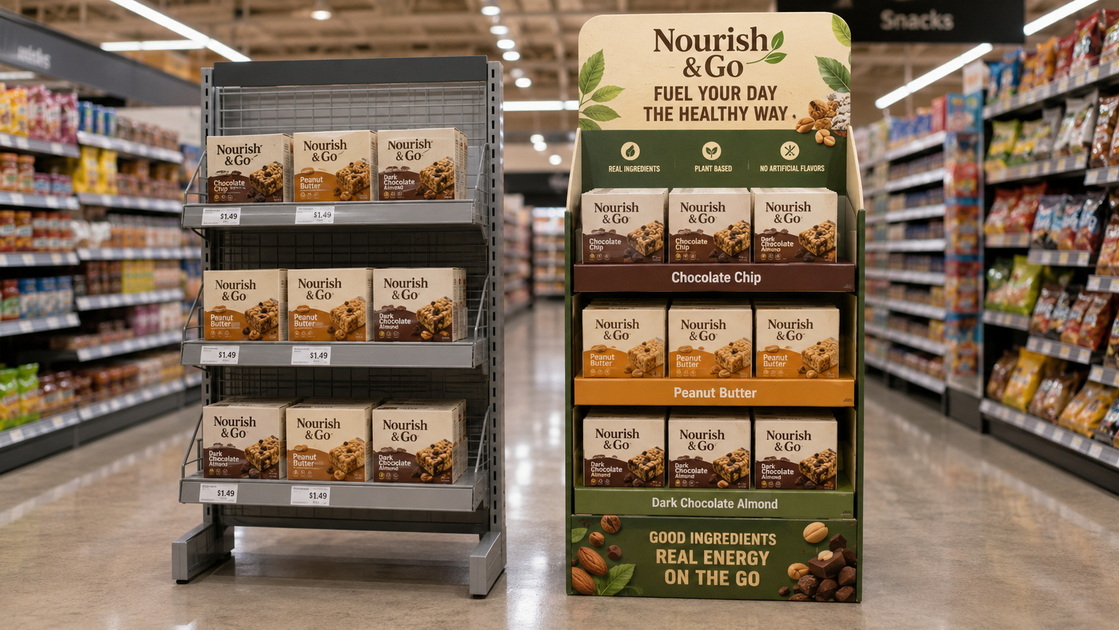
The first and most important factor is product fit. Many teams only look at the overall dimensions listed by the vendor, but that is not enough. [displays2go]
When evaluating stock displays, always check:
- Whether shelf dimensions are inside or outside measurements. [agilityretail]
- The vertical distance between shelves or hooks.
- Product overhang and stability when fully stocked. [americanretailsupply]
As a manufacturer of cardboard display stands, we routinely see projects where a "cheap and quick" stock display ends up needing last‑minute modifications because the product simply does not fit safely or attractively. [longwindisplay]
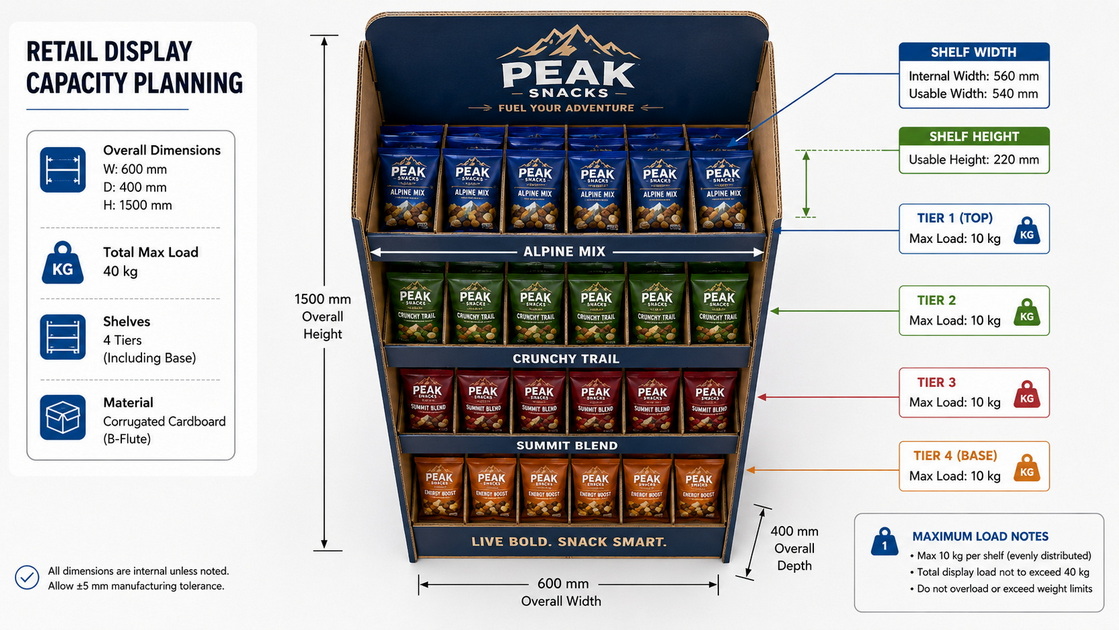
Capacity has two dimensions: merchandising capacity (how many units the display holds) and load capacity (how much weight it can safely carry). [displays2go]
Questions to ask before you approve any stock retail display:
- Will the display hold enough inventory to support your forecast and reduce restocking trips? [indeed]
- Is the load capacity sufficient for your heaviest SKUs, especially for liquids, hardware, or bulk items? [agilityretail]
- Does the display allow you to merchandise profitable unit counts, not just "what fits." [americanretailsupply]
If capacity is too low, even a low‑cost stock display becomes expensive because it cannot drive the volume you need.
Retailers think in sales per square foot, and you should too. The footprint of your stock retail display is a major factor in getting approvals. [theimaginegroup]
When comparing stock or custom displays, evaluate:
- Floor space versus projected weekly or monthly sales.
- Whether the footprint is realistic for the retailers you are targeting (especially for high‑traffic aisles and checkout zones). [shoppopdisplays]
- How easily the display fits into planograms and can be moved by store staff. [theimaginegroup]
Smaller, smarter cardboard POP displays often win placements over larger, generic fixtures simply because they deliver better productivity per square foot. [longwindisplay]
A common misconception is that stock retail displays are completely fixed. In reality, many suppliers offer limited customization options such as custom headers, side panels, or color. [agilityretail]
However, the degree of customization is usually constrained:
- Structural changes (extra shelves, new angles, deeper trays) can be difficult or impossible.
- Branding is often limited to add‑on graphics instead of fully integrated printing. [agilityretail]
- You may not be able to adapt the display for multiple product ranges over time.
If your brand identity, campaign story, or category positioning is important, a custom cardboard display stand tailored to your artwork and structural needs can deliver much stronger impact. [artisancolour]
Configurability is a powerful—but often overlooked—decision factor. A configurable stock retail display allows you to adjust shelves, hooks, or accessories as SKUs change. [dimensionaldesign]
From a long‑term ROI perspective:
- Modular fixtures let you swap out components instead of buying entirely new displays. [dimensionaldesign]
- Configurable systems support seasonal rotations and line extensions.
- Custom cardboard displays can also be engineered with interchangeable headers or trays for different campaigns. [longwindisplay]
In my experience, brands that think beyond a single promotion and plan for configurability tend to achieve better lifecycle value from both stock and custom displays.
Many stock retail display guides focus on dimensions and cost but underplay visual merchandising and shopper psychology. Yet, this is often where your display either stops traffic or gets ignored. [extension.psu]
Effective displays share key visual traits:
- A clear focal point that draws the eye from a distance. [thelookcompany]
- Strong color contrast and hierarchy between product, messaging, and background. [extension.psu]
- Clean, simple layouts that avoid visual clutter. [artisancolour]
Stock retail displays with generic graphics rarely deliver this level of refinement. Custom printed cardboard display stands, designed with your creative assets, let you control the shopper experience from the first glance to the final grab. [thelookcompany]
Every retailer has its own expectations for display dimensions, safety, and branding. When you buy a stock retail display, it is your responsibility to ensure it meets those requirements. [bunzlservices]
Key compliance areas include:
- Height limits and sight‑line rules in specific departments. [shoppopdisplays]
- Stability standards, especially for freestanding cardboard displays in high‑traffic zones. [extension.psu]
- Fire safety, material regulations, and any mandated labeling or RFID integration. [bunzlservices]
A display manufacturer familiar with big‑box and chain retailer standards can engineer compliance into your cardboard display stand from the start, instead of retrofitting later. [longwindisplay]
Stock retail displays often look attractive because of their low unit price, but the total cost picture is more complex. [dimensionaldesign]
Beyond the base price, consider:
- Assembly time and labor, both at your co‑packer and in stores.
- Shipping efficiency, including how flat‑packed the display is and how many units fit per pallet. [displays2go]
- Durability: how many weeks or months the display can stay in the field before it needs replacement. [theimaginegroup]
In some cases, a slightly more expensive custom cardboard POP display with better durability and fixture efficiency ends up cheaper over the full campaign.
Lead time is another critical factor when comparing stock and custom solutions. [agilityretail]
- Stock retail displays can sometimes ship immediately from inventory, but customization (branded headers, accessories) still adds time.
- Custom cardboard display stands require design, sampling, and production, yet experienced POP manufacturers can move quickly when briefed properly. [longwindisplay]
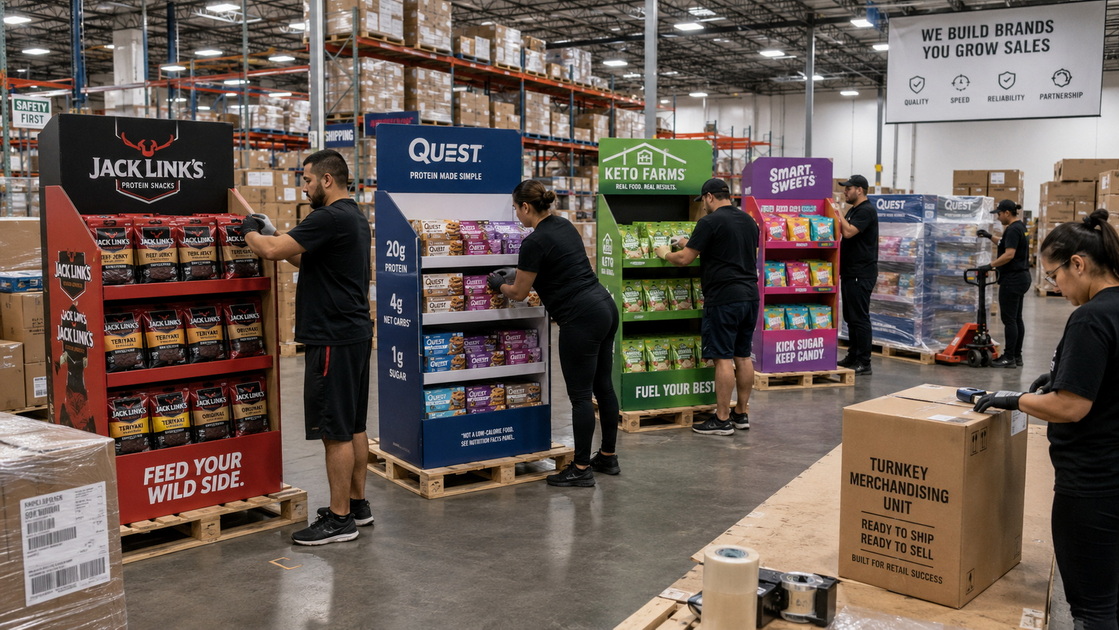
- Pre packing (packing products into displays at the factory) can save major time and labor in your supply chain. [longwindisplay]
For export‑oriented brands, partnering with a China‑based manufacturer that designs, produces, and pre packs displays enables direct‑to‑store shipping with minimal handling.
There is no one‑size‑fits‑all answer, but you can use a simple decision lens.
Choose a stock retail display when:
- You need a very fast solution for a small test or short promotion. [americanretailsupply]
- Visual branding is secondary, and you can live with generic structure and limited customization.
- Your product dimensions and weight fall neatly within the stock specs.
Choose a custom cardboard display stand when:
- You want strong brand blocking and differentiated in store presence. [artisancolour]
- You have specific retailer, structural, or capacity requirements.
- You plan to reuse the display concept for multiple campaigns or markets and need long‑term flexibility. [displays2go]
Recent industry analysis shows that in‑store displays remain one of the most cost‑effective ways to influence purchase at the shelf, even as e‑commerce grows. Retailers and brands continue investing in temporary and semi‑permanent displays to support new product launches, seasonal events, and cross‑merchandising. [shoppopdisplays]
Within this, corrugated cardboard displays are widely adopted because they are lightweight, printable, and easier to recycle than many rigid solutions. This aligns with retailer and consumer expectations for more sustainable merchandising, especially in grocery, beauty, and FMCG categories. [bunzlservices]
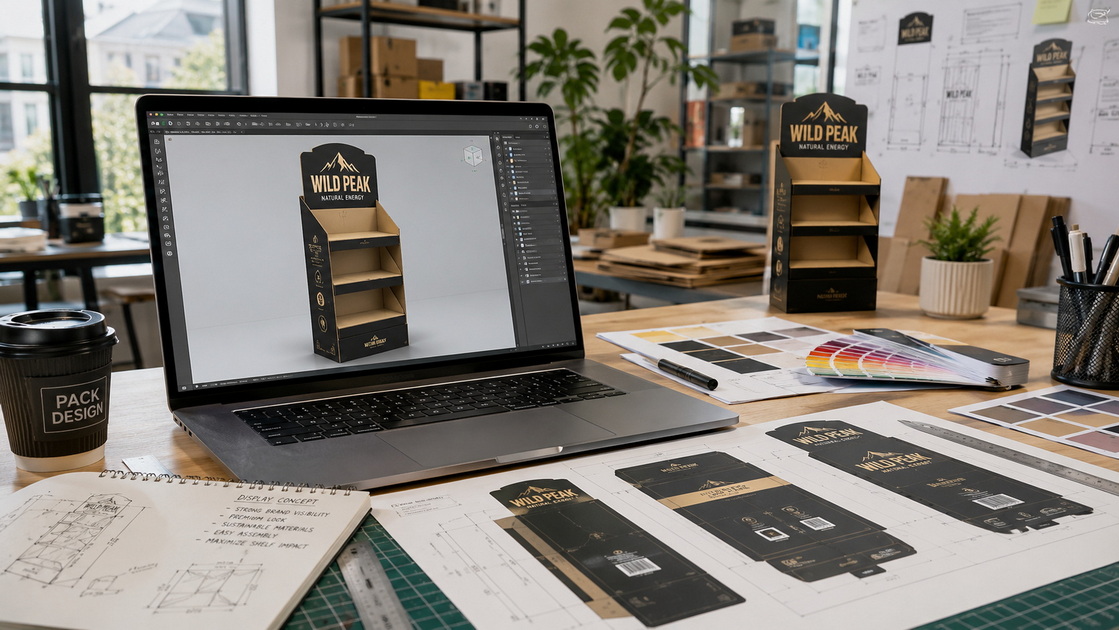
To improve decision quality, I recommend using a simple scored evaluation whenever you compare stock and custom options.
Score each option (1–5) on:
- Product fit and capacity.
- Brand visibility and shopper engagement.
- Retailer compliance and ease of placement.
- Total cost over the campaign period.
- Sustainability and ease of recycling.
By turning qualitative impressions into structured scores, your team can make more objective choices, and your cardboard display partner can clearly see where a custom solution would generate the most value. [dimensionaldesign]
As a China‑based POP display manufacturer, Long Win Display works daily with brands navigating these choices. In many cases, the best answer is a hybrid: we start from proven structural libraries (similar to stock retail displays) and then engineer custom cardboard display stands and packaging that are tuned to your exact products and retailers. [longwindisplay]
Typical support includes:
- Reviewing your SKUs, retail targets, and launch calendar.
- Recommending whether stock, semi‑custom, or fully custom displays make the most sense.
- Designing and producing displays, gift boxes, and packaging, and pre packing where required. [longwindisplay]
This expert, collaborative approach aligns with modern retailer expectations and reduces time‑to‑shelf for your programs.
| Factor | Stock retail display | Custom cardboard display stand |
|---|---|---|
| Speed | Often faster if in stock. (agilityretail) | Requires design and production lead time. (longwindisplay) |
| Product fit | Limited to preset dimensions. (agilityretail) | Engineered around your SKUs. (americanretailsupply) |
| Branding | Limited customization (stickers, headers). (agilityretail) | Full surface printing, on brand structure. (theimaginegroup) |
| Capacity and load | Fixed; may not match ideal unit counts. (agilityretail) | Optimized for target inventory and weight. (americanretailsupply) |
| Retailer compliance | Must be checked manually. (agilityretail) | Can be designed to specific retailer specs. (theimaginegroup) |
| Total campaign cost | Lower upfront, variable lifecycle value. (agilityretail) | Higher design input, often better long‑term ROI. (longwindisplay) |
| Sustainability and recycling | Varies by material and design. (displays2go) | Corrugated cardboard, widely recyclable. (longwindisplay) |
Before you commit to any stock retail display, talk to a display engineer who understands both retailer realities and manufacturing constraints. At Long Win Display, our team reviews your products, retail channels, and timelines, then helps you decide whether a stock fixture, a semi‑custom solution, or a fully custom cardboard display stand will deliver better results. [theimaginegroup]
Share your SKU list, target retailers, and launch schedule, and we will propose a practical display plan—complete with structural concepts, estimated capacities, and logistics options—so your next POP program is engineered for performance from day one. [displays2go]
1. Are stock retail displays always cheaper than custom cardboard displays?
Stock retail displays often have lower upfront unit prices, but they can become more expensive if product fit, capacity, or durability is poor. Custom cardboard displays may cost more initially but can deliver better ROI over a full campaign. [americanretailsupply]
2. How do I know if a stock display will fit my products?
Check inside dimensions, shelf spacing, and load capacity, and test with physical samples whenever possible. A display manufacturer can also review drawings and advise whether a stock fixture is suitable. [agilityretail]
3. What are the advantages of cardboard display stands over metal or wood stock displays?
Cardboard displays are lightweight, printable, and typically easier to recycle, which reduces shipping and environmental impact. They are also easier to customize structurally and visually for specific campaigns. [artisancolour]
4. How far in advance should I plan a custom display project?
Lead time depends on complexity, but you should plan for design, sampling, production, and shipping phases. Aligning your display schedule with product and packaging timelines reduces last‑minute compromises. [bunzlservices]
5. Can I start with stock displays and later migrate to custom cardboard displays?
Yes. Many brands begin with stock fixtures to test markets or retailers, then move to custom cardboard POP displays once the concept is proven. Working with one POP partner across both phases ensures smoother transitions. [dimensionaldesign]
1. Agility Retail. "10 Things to Consider Before Buying a Stock Retail Display – Part I." [Link] [agilityretail]
2. Agility Retail. "10 Things to Consider Before Buying a Stock Retail Display – Part II." [Link] [agilityretail]
3. Imagine. "How to Choose the Right In-Store Displays." [Link] [theimaginegroup]
4. Penn State Extension. "Creating Effective Displays." [Link] [extension.psu]
5. American Retail Supply. "What Factors to Consider When Choosing Retail Display Fixtures." [Link] [americanretailsupply]
6. Artisan Colour. "Retail Displays: 10 Print & Visual Merchandising Best Practices." [Link] [artisancolour]
7. Long-Win Display. "Customized Cardboard Display Manufacturer & Factory." [Link] [longwindisplay]
8. Long-Win Display. "Custom Cardboard Display, Display Stand, Gift Boxes and Packaging." [Link] [longwindisplay]
9. Displays2Go. "Cardboard Displays Offer Inexpensive Merchandising Solutions." [Link] [displays2go]
10. Dimensional Design. "Stock vs. Custom Point-of-Purchase Displays: How to Evaluate Your Options." [Link] [dimensionaldesign]
11. Bunzl Services. "Creating a Shopper-Friendly Retail Environment: A Guide to Display Tables." [Link] [bunzlservices]


