
Views: 222 Author: Long Win Display Publish Time: 2026-04-26 Origin: Site


An effective retail store layout is not just about where you place shelves; it is a strategic tool that shapes customer flow, boosts conversion, and turns every square meter into profit. When you align the right layout type with your brand, product mix, and in‑store displays like cardboard display stands, you can measurably increase dwell time and basket size. [sergiomannino]
From my experience working with brand teams and POP display manufacturers, I treat store layout as the "silent salesperson" of the store. It controls how shoppers move, what they see, and how many purchase decisions they make without ever talking to staff. [forbes]
A strong layout should:
- Guide shoppers along an intentional path.
- Maximize visibility of high‑margin and promotional products.
- Support a consistent brand story from entrance to checkout.
- Integrate flexible POP and cardboard display stands that can be updated quickly. [fohlio]
In 2026, retailers face shrinking margins, omnichannel pressure, and rapidly changing shopper expectations. Layouts that were "good enough" five years ago now leave money on the table if they are not optimized with data, modular fixtures, and clear visual storytelling. [pygmalios]
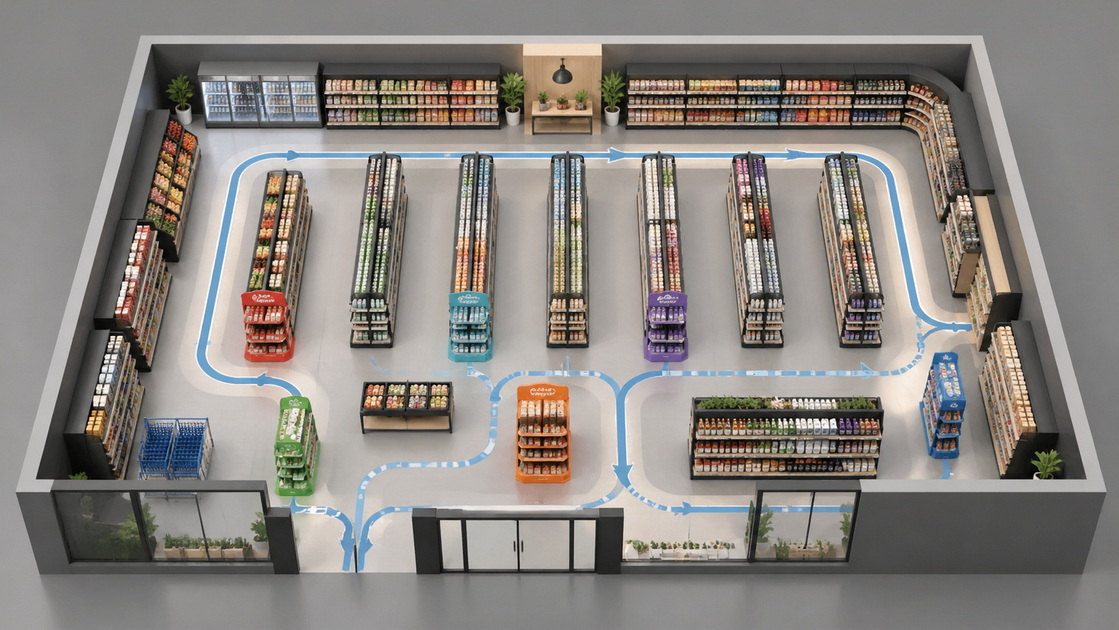
Different layout types work for different store sizes, product categories, and shopper behaviors. Instead of copying competitors, you want to choose and customize a layout that matches your store goals and supports your merchandising and display strategy. [interfacesystems]
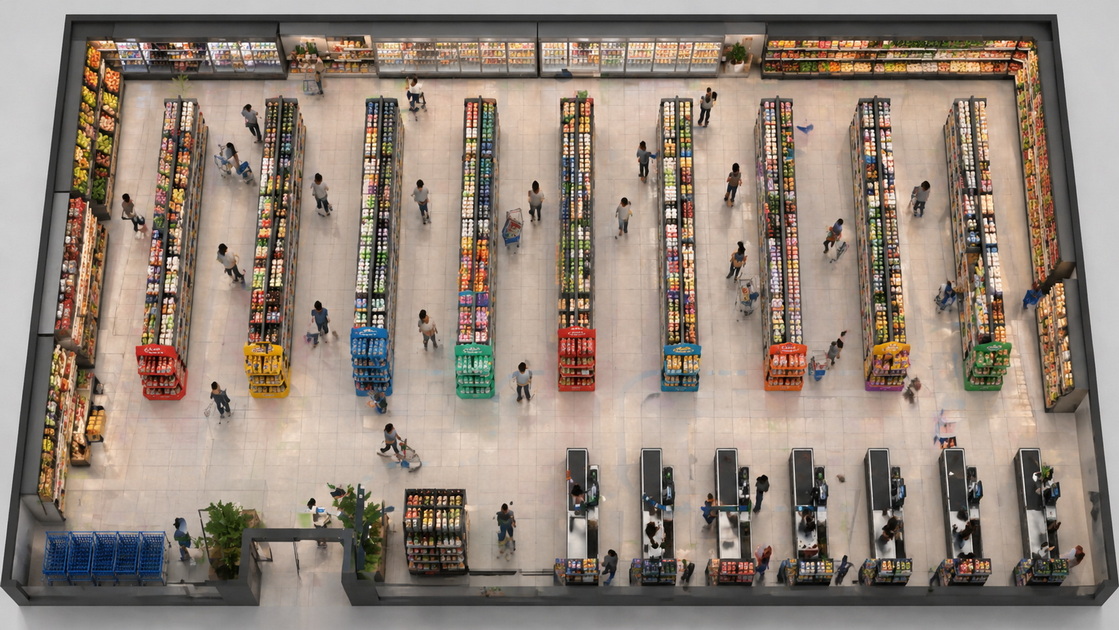
The grid layout uses long, parallel aisles—think supermarkets and pharmacies. It is designed for efficiency, high SKU density, and fast navigation for mission‑driven shoppers. [moduspace.co]
Key benefits:
- Maximizes shelf space and product variety.
- Easy to understand and quick to shop.
- Ideal for everyday purchases and large assortments.
Ideal uses:
- Grocery, convenience, drugstores, and value retailers.
- Areas where shoppers follow a shopping list.
UX and POP tip: Place end‑cap cardboard display stands at the end of high‑traffic aisles to feature new launches or impulse items without disrupting the core flow. [packwins]
The loop, or racetrack, guides shoppers along a defined circuit around the store, often used by big-box and showroom-style retailers. It creates a storytelling journey where shoppers experience curated zones in a fixed sequence. [fohlio]
Key benefits:
- Encourages exploration and browsing.
- Ideal for cross‑merchandising and lifestyle storytelling.
- Positions impulse and add‑on items along the path. [interfacesystems]
Ideal uses:
- Furniture, homeware, large fashion and lifestyle stores.
- Brands that want to tell a story through connected zones.
UX and POP tip: Use hero cardboard displays as anchors along the main path to introduce each zone—e.g., seasonal collections or brand collaborations. [acrylicdesign]
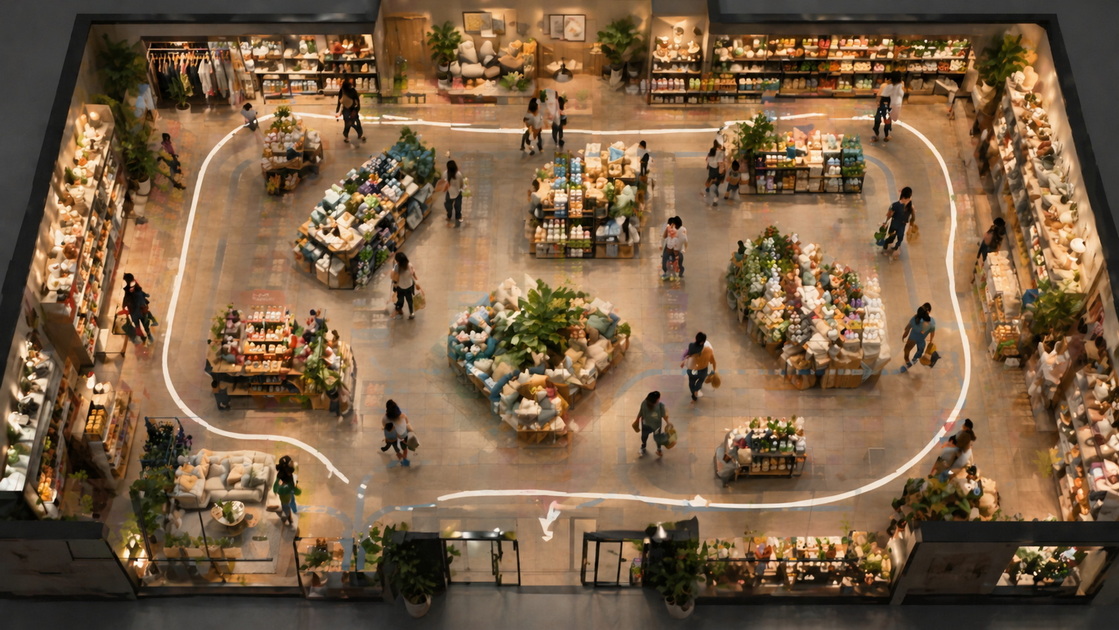
A free‑flow layout removes strict aisles and uses flexible fixtures and focal points. It's often used by upscale and experiential retailers to create a relaxed, discovery‑based environment. [sergiomannino]
Key benefits:
- Encourages slower browsing and exploration.
- Supports creative vignettes and storytelling.
- Works well for smaller boutiques and lifestyle concepts.
Ideal uses:
- Fashion boutiques, cosmetics, concept stores, specialty shops.
UX and POP tip: Combine modular cardboard displays with varied heights to create "micro‑experiences" around the store without blocking sightlines. [packwins]
Diagonal layouts angle aisles to improve sightlines and create a more dynamic visual effect, while angular layouts rely on curved fixtures and corners to highlight products. Both are powerful when you want to break the monotony of straight aisles and direct attention to specific categories. [trurating]
Key benefits:
- More product exposure compared to strict grid.
- Strong visual interest and modern feel.
- Helpful for smaller stores wanting better flow. [moduspace.co]
Ideal uses:
- Electronics, specialty fashion, mid‑size stores looking for a premium feel.
UX and POP tip: Place angled floor‑standing displays near the natural turning points; they catch attention as shoppers reorient themselves. [packwins]
In practice, most high‑performing stores use a hybrid layout that mixes grid, loop, and free‑flow elements. This reflects real shopper behavior: people don't move in perfectly predictable lines; they switch between mission shopping and browsing. [sergiomannino]
A hybrid layout might:
- Use a loop path around the perimeter.
- Apply grid shelves in high‑density replenishment areas.
- Create free‑flow islands for promotions or seasonal storytelling.
UX and POP tip: Design modular cardboard displays that can be re‑configured across grid, loop, and free‑flow zones so the same investment works across multiple layouts and campaigns. [pygmalios]
Layout type | Best for | Main strengths | Common risks |
Grid (Straight) | Grocery, drugstores, value retail (fohlio) | High SKU density, fast navigation (fohlio) | Can feel boring; low discovery (fohlio) |
Loop (Racetrack) | Large showrooms, home & furniture (fohlio) | Strong storytelling, high exposure (fohlio) | Congestion if path is too narrow (interfacesystems) |
Free‑Flow | Fashion, lifestyle, premium boutiques (fohlio) | Creative displays, relaxed browsing (fohlio) | Risk of confusion without clear cues (fohlio) |
Diagonal / Angular | Electronics, specialty stores (moduspace.co) | Dynamic visuals, better sightlines (moduspace.co) | More complex planning and build cost (moduspace.co) |
Mixed / Hybrid | Most modern retailers (sergiomannino) | Flexible, customizable, future‑proof (sergiomannino) | Harder to design coherently (interfacesystems) |
Modern layout design is grounded in behavioral science and data. A good floor plan doesn't just look neat; it intentionally directs attention, controls pace, and supports specific purchase decisions. [forbes]
Key psychological triggers:
- Pace control: Narrowing aisles or using focal displays slows shoppers at high‑value zones. [interfacesystems]
- Anchors: Strong visual anchors—hero displays, dominant categories—help orient shoppers and establish a mental map. [sergiomannino]
- Hierarchy: Clear zoning between essentials, exploration areas, and impulse zones avoids decision fatigue. [fohlio]
- First impressions: Many shoppers turn right upon entry; placing a power wall and branded display stands on this side can significantly improve exposure. [fohlio]
Cardboard and corrugated POP displays are powerful tools in this psychological toolkit. They act as flexible attention anchors that you can move, update, and A/B test without rebuilding fixtures. [acrylicdesign]
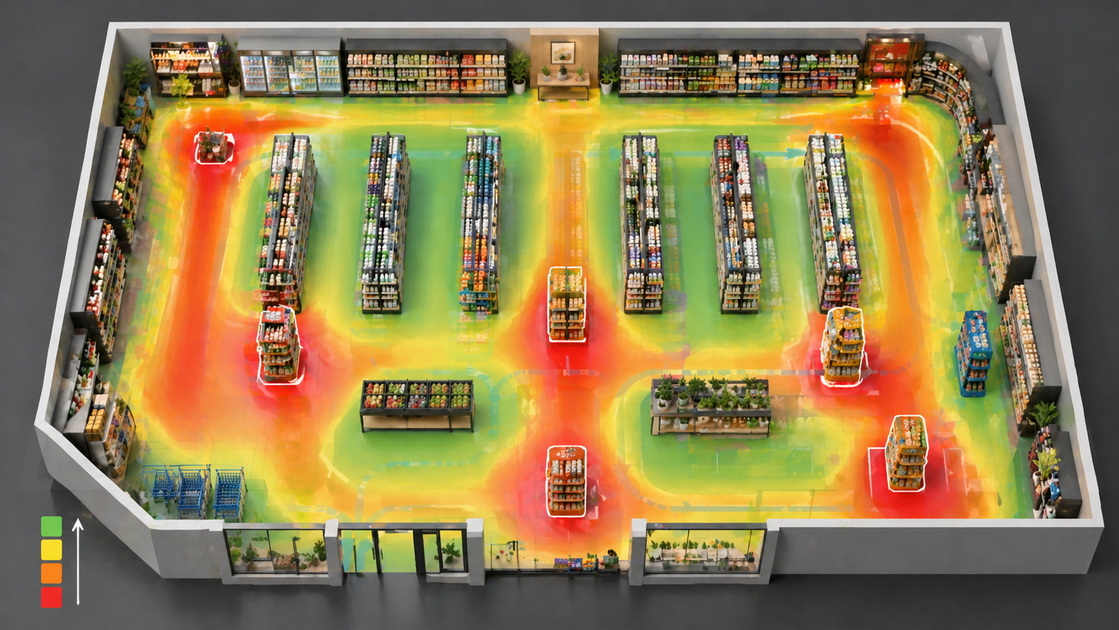
As an industry, we've moved beyond gut‑feel floor plans. Leading retailers now use AI analytics and heatmaps to track how shoppers move and where they stop, then adjust layouts and displays for maximum product visibility and revenue. [arxiv]
Modern tools and methods:
- Video analytics and sensors generate real‑time heatmaps showing high‑traffic pathways and dead zones. [pygmalios]
- Optimization algorithms can assign product categories to locations to maximize exposure based on customer flow patterns. [optimization-online]
- Modular fixtures and display systems allow quick layout changes in response to data, without major construction. [acrylicdesign]
For POP and cardboard display strategies:
- Use heatmap data to place temporary promotional stands in the top 10% of traffic zones.
- Rotate display locations regularly and compare sales uplift to find the highest‑performing positions.
- Treat each campaign as an experiment and document results to inform future layout tweaks. [arxiv]
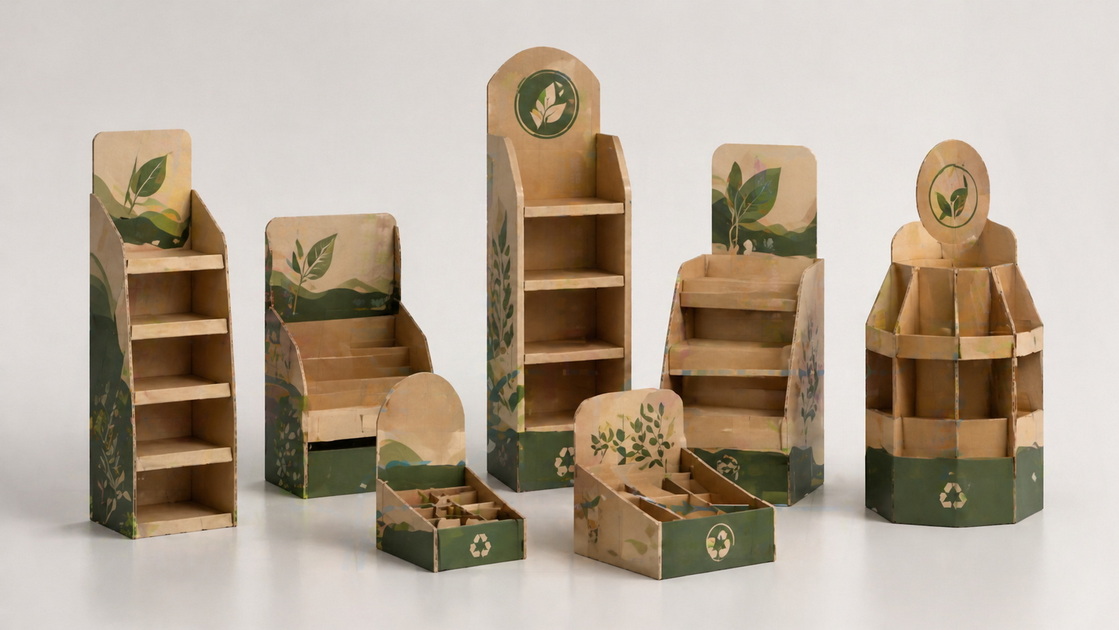
As a manufacturer like Long Win Display, we see first‑hand how well‑designed cardboard displays can transform an existing store layout without expensive fixture changes. Corrugated and cardboard stands are lightweight, sustainable, and highly customizable, making them perfect for retailers who need to refresh layouts frequently. [packwins]
Strategic benefits:
- Brand storytelling: Printed graphics and shaped structures reinforce brand identity and campaigns across different layout types. [acrylicdesign]
- Flexibility: Displays can be resized, reconfigured, or replaced seasonally without heavy capital investment. [pygmalios]
- Sustainability: Corrugated materials support eco‑friendly positioning and are easy to recycle, which matters more to today's shoppers. [packwins]
Best practices by layout:
- Grid: Use end‑cap and side‑kick displays to interrupt linear aisles.
- Loop: Place tall hero towers at key transitions between zones.
- Free‑flow: Design "islands" that create natural stopping points without blocking sightlines.
- Hybrid: Standardize a set of modular components that can work in multiple locations and store formats. [interfacesystems]
From a practical UX and operations perspective, retailers often struggle not with theory but with execution. The most successful projects follow a clear, repeatable process rather than ad‑hoc fixture placements. [trurating]
Start with clarity:
- What is the store's primary role: discovery, replenishment, or brand flagship?
- What KPIs matter most: basket size, conversion rate, dwell time, or new product adoption?
- What constraints exist: lease terms, existing fixtures, budget, or brand guidelines? [trurating]
Use qualitative observation and quantitative data:
- Identify typical entry points and natural turning directions.
- Map "must‑pass" routes and blind spots.
- Note where shoppers frequently stop or hesitate—these are prime locations for educational or promotional displays. [trurating]
Based on journeys and constraints:
- Choose a primary layout (grid, loop, free‑flow, diagonal, or hybrid).
- Plan clear zones: entry impression, core assortment, discovery, impulse, and checkout.
- Draft multiple versions and evaluate them against your KPIs before committing. [moduspace.co]
Treat displays as part of the architecture:
- Align each display with a specific objective (launch awareness, cross‑sell, upsell, education).
- Ensure heights and positions do not block sightlines or exits.
- Standardize footprints so displays can be moved between stores without re‑engineering. [acrylicdesign]
Continuous improvement is where top retailers pull ahead:
- Use POS data, traffic analytics, and shopper feedback to measure performance after each change. [arxiv]
- Run time‑bound experiments: for example, move a promotional display from the front right to the middle loop and compare uplift.
- Plan quarterly or seasonal layout refreshes combining new cardboard display campaigns with updated product adjacencies. [pygmalios]
Smaller retailers often assume layout theory only applies to big box stores. In reality, small stores benefit the most from smart layouts because every square meter carries more revenue pressure. [shopify]
Actionable tips:
- Leverage vertical space: Use tall, secure shelving and stackable displays to expand assortment without narrowing walkways. Keep high‑margin items at eye level. [shopify]
- Adopt an open plan: Remove unnecessary partitions and keep at least three feet between pathways to improve comfort and ADA compliance. [shopify]
- Optimize underused corners and endcaps: Turn dead corners and short walls into compact cardboard display zones for accessories and add‑ons. [shopify]
- Keep the path intuitive: Even in a free‑flow space, use flooring, lighting, and focal displays to subtly indicate a logical path from entrance to checkout. [fohlio]
To stay competitive, brands and retailers need to anticipate where store design is heading. Several macro‑trends are reshaping how layouts and POP displays are planned and executed. [thelookcompany]
Key trends:
- Flexible modular systems: Retailers increasingly invest in modular fixtures and displays that can be reconfigured quickly for new collections or pop‑ups. [thelookcompany]
- Sustainability and reuse: Display programs emphasize recyclable materials, reduced waste, and re‑skinning structures rather than rebuilding them. [packwins]
- Phygital integration: QR codes, digital screens, and interactive elements are woven into physical displays, connecting store layouts to online journeys. [thelookcompany]
- Smaller, more efficient footprints: Many brands downsize physical stores but raise their quality, relying on smarter layouts and displays to maintain sales per square meter. [thelookcompany]
For a manufacturer like Long Win Display, this means designing modular, sustainable cardboard solutions that integrate seamlessly with data‑driven, flexible layouts across global retail chains. [pygmalios]
If you are planning a new store or refreshing an existing one, your layout and POP strategy are where design, psychology, and operations meet. By choosing the right layout type, using data to fine‑tune it, and integrating smart cardboard display stands, you can turn your store into a high‑performing, testable "selling machine." [arxiv]
As a dedicated cardboard display and POP manufacturer, Long Win Display can:
- Help you translate your brand and assortment into a practical, data‑friendly layout concept.
- Design and produce custom cardboard display stands that fit your chosen layout and campaign goals.
- Pre‑assemble and ship displays ready‑to‑install, so your teams can focus on selling, not construction.
If you are ready to transform your floor plan into a measurable growth engine, contact Long Win Display to discuss your next retail layout and display project.
1. Which retail store layout is best for boosting sales?
There is no single "best" layout; results depend on your category, store size, and shopper behavior. Grid layouts work well for high‑volume, list‑driven shopping, while loop and free‑flow layouts are better for discovery and cross‑selling. Most modern retailers succeed with a hybrid layout tailored to their goals and constraints. [moduspace.co]
2. How often should I change my store layout or displays?
Minor adjustments such as moving cardboard displays or re‑facing endcaps can be done monthly or seasonally, while major layout changes typically happen annually or during renovations. The key is to align changes with data and campaigns, not just the calendar, and to test the impact on sales and traffic before and after. [interfacesystems]
3. Are cardboard display stands durable enough for busy stores?
High‑quality corrugated and cardboard displays are engineered for busy retail environments and can support significant product weight when designed correctly. They are widely used by leading brands because they balance durability, sustainability, print quality, and cost‑effectiveness. [acrylicdesign]
4. How can small retailers optimize layout with limited budget?
Small retailers should start by improving flow, sightlines, and product visibility using existing fixtures, then add targeted cardboard displays for promotions and cross‑selling. Low‑cost wins include opening up pathways, using vertical shelving, activating endcaps and corners, and rotating a few key POP displays based on sales data. [shopify]
5. What role does technology play in layout optimization today?
Technology enables you to go beyond intuition by providing heatmaps, traffic analytics, and category performance by location. AI‑driven tools and video analytics help retailers discover hidden patterns in customer movement and test layout and display changes with more confidence and higher ROI. [arxiv]
1. Sergio Mannino Studio – "Retail Store Layouts: A Definitive Guide to Designing Flow, Attention, and Sales"
https://www.sergiomannino.com/insights/retail-store-layouts-a-definitive-guide-to-designing-flow-attention-and-sales [sergiomannino]
2. Forbes Business Council – "The Psychology Of Retail: How Store Layout Impacts Sales"
https://www.forbes.com/councils/forbesbusinesscouncil/2025/01/03/the-psychology-of-retail-how-store-layout-impacts-sales/ [forbes]
3. Arxiv / Optimization‑Online – "Retail Store Layout Optimization for Maximum Product Visibility"
https://arxiv.org/abs/2105.09299
https://optimization-online.org/wp-content/uploads/2021/05/8402.pdf [optimization-online]
4. Fohlio – "The Psychology of Interior Design, Part 2: Retail Store Layouts"
https://www.fohlio.com/blog/psychology-of-interior-design-retail-store-layouts [fohlio]
5. Shopify – "21 Small Store Design Ideas to Increase Sales in 2026"
https://www.shopify.com/il/blog/design-for-small-store [shopify]
6. Packwins – "5 Inspiring Case Studies of Retail Displays Done Right"
https://packwins.com/5-inspiring-case-studies-of-retail-displays-done-right/ [packwins]
7. Google – "SEO Starter Guide"
https://developers.google.com/search/docs/fundamentals/seo-starter-guide [developers.google]
8. Interface Systems – "Retail Store Layout Optimization with Video Analytics"
https://interfacesystems.com/blog/retail-store-layout/ [interfacesystems]
9. Pygmalios – "Best Tools for Optimizing Store Layouts (2026 Guide)"
https://www.pygmalios.com/insights/best-store-layout-optimization-tools [pygmalios]
10. Acrylic Design – "Six Retail Display Trends That Will Shape 2026"
https://www.acrylicdesign.com/blogs-news/six-retail-display-trends-to-watch-in-2026 [acrylicdesign]
11. Moduspace – "The Essential Guide to Retail Store Layouts – Types of Store Layouts"
https://www.moduspace.co.nz/blog/the-essential-guide-to-retail-store-layouts-types-of-store-layouts/ [moduspace.co]
12. The Look Company – "2026 Retail Design Trends"
https://thelookcompany.com/blog/2026-retail-design-trends [thelookcompany]
13. TruRating – "Retail Store Design Guide – Layout, Ideas & Strategies"
https://trurating.com/blog/how-to-design-a-retail-store-layout/ [trurating]


