
Views: 222 Author: Amanda Publish Time: 2026-02-18 Origin: Site


Content Menu
● What Are LCD and LED Screens?
● How LCD Screen Technology Works
● How LED Screen Technology Works
● LED vs LCD Screens: Feature-by-Feature Comparison
● LED vs LCD Image Quality: What Viewers Actually See
● Energy Efficiency: LED vs LCD Power Consumption
● Viewing Distance, Pixel Pitch, and Use Cases
>> When LCD Is Usually the Better Choice
>> When LED Is Usually the Better Choice
● Practical Buying Checklist: LED vs LCD Screens
● 2025–2026 Trends in LED and LCD Displays
● Case Study: Choosing the Right Display for Retail and Exhibitions
● Installation, Maintenance, and Total Cost of Ownership
● Take the Next Step with a Tailored LED or LCD Display Solution
>> 1. Are LED screens better than LCD screens?
>> 2. Is an LED TV just an LCD TV?
>> 3. Which is more energy-efficient, LED or LCD?
>> 4. What should I choose for outdoor digital signage?
>> 5. Which is better for close-up reading and detailed content?
Choosing between LED and LCD screens is no longer just a technical question — it directly affects image quality, energy bills, sustainability, and how your content performs in retail, trade show, and digital signage environments.
LCD (Liquid Crystal Display) panels use liquid crystals and a backlight to create images, most commonly using modern LED backlights in today's displays.
LED (Light Emitting Diode) displays either describe LCD panels lit by LED backlights or, in professional signage, direct-view LED where each pixel is an LED that emits its own light.
- LCD: Liquid crystals control how much light passes through from a separate backlight.
- LED-backlit LCD: Same LCD panel, but uses LEDs instead of older backlights, improving efficiency and contrast.
- Direct-view LED: The image is formed by individual LEDs as pixels, delivering extreme brightness and large, seamless displays.

LCD screens are built from two polarized glass layers with liquid crystals in between; the crystals twist under voltage to let more or less light through.
Because liquid crystals do not emit light, they require a separate backlight, which is now largely provided by LEDs in most modern LCD displays.
- Sub-pixels: Each pixel has red, green, and blue sub-pixels that combine to produce full-color images.
- Backlight diffusion: Light is spread evenly across the panel using diffusers and optical films.
- Result: Good resolution, color, and consistent brightness for indoor environments at relatively low cost.
In LED-backlit LCD screens, LEDs sit around the edges or behind the panel, providing brighter, more efficient, and more controllable light than older backlight technologies.
In direct-view LED screens, hundreds or thousands of red, green, and blue LEDs act as individual pixels, each emitting its own light.
- Pixels: Groups of RGB LEDs form each pixel or sub-pixel, especially in large-format walls.
- Brightness: Direct-view LED can reach very high brightness levels, ideal for high ambient light environments and outdoor signage.
- Flexibility: LED technology enables ultra-thin, curved, and large seamless display walls.
Aspect | LCD Screens | LED Screens (LED-backlit LCD & Direct-view LED) |
Core technology | Liquid crystals with a backlight. | LEDs used as a backlight or as self-emissive pixels. |
Brightness | Good for indoor use, suitable for typical retail and office lighting. | Very high brightness, ideal for outdoor and window displays. |
Contrast & blacks | Good contrast; improves with local dimming technologies. | Excellent contrast and deeper blacks in many installations. |
Energy efficiency | Good efficiency in modern LED-backlit LCD panels. | Often significantly more efficient, especially in larger signage formats. |
Thickness | Generally slim, but limited compared with modular LED walls. | Very slim panels; LED walls can be extremely low-profile. |
Viewing distance | Best for close-up use due to higher pixel density. | Ideal at moderate to long viewing distances; pixel pitch is critical. |
Viewing angle | Wide viewing angles, typically suitable for indoor audiences. | Very wide viewing angles, often wider than LCD. |
Lifespan | Solid lifespan depending on backlight quality and usage. | Long lifespan; LEDs degrade slowly over time. |
Cost | Lower upfront cost; ideal when budget is tight. | Higher upfront cost, but can be more cost-effective long term in signage. |
From a viewer's perspective, both LED and LCD can deliver sharp, vibrant images, but they excel in different contexts.
- LCD strengths: Higher pixel density, excellent detail at close viewing distances, and very good color accuracy for retail shelves, counters, and indoor kiosks.
- LED strengths: Exceptional brightness, superior contrast, and immersive large formats, ideal for atriums, shop windows, outdoor facades, and stage backdrops.
For close-range product displays or price signage, LCD often feels more printed-like and crisp. For big, bold branding or long-distance viewing, LED walls tend to dominate attention.
Energy efficiency has become a key decision factor for screen buyers, especially in 24/7 signage and retail environments.
Modern LED displays can deliver substantial energy savings compared with older display technologies, particularly in larger, always-on installations.
- Directional light: LEDs convert electrical energy into light more efficiently, with less wasted heat.
- Dynamic brightness: LED brightness can be adjusted content-by-content, reducing power in darker scenes.
- Lifecycle savings: Lower power draw plus longer lifespan means reduced total cost of ownership over years.
If your display runs for many hours per day, LED-based solutions are generally more sustainable and cost-effective than legacy alternatives.
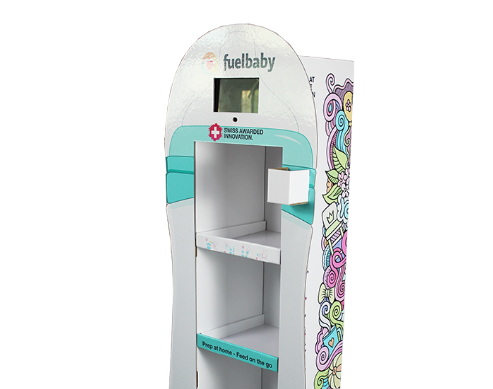
For digital signage, exhibitions, and retail fixtures, the right choice is often determined by viewing distance and message type, not just “LED vs LCD” in isolation.
- Viewers stand very close, for example 0.5–2 meters, to read text and pricing.
- You need high pixel density in smaller screens such as tabletop units, end-cap displays, and menu boards.
- Budget is limited but you still need professional-grade visuals for indoor environments.
- The screen is large and viewed from several meters or more away.
- The environment is bright, such as glass storefronts, outdoor plazas, and atriums.
- Branding, motion graphics, and visual impact are more important than small text.
Use this quick checklist when deciding between LED and LCD for a new project.
- Where will the display be installed?
Indoor, controlled light often suits LCD or LED-backlit LCD screens. Outdoor or high ambient light environments usually favor direct-view LED.
- How far away is the typical viewer?
Under 2 meters generally points to LCD. From 3 to 10 meters can work with either, while 10 meters or more is where LED often shines.
- What content will you show?
Detailed pricing, fine text, and charts work better on LCD. Brand videos, animations, and bold headlines are ideal for LED.
- What is your power and maintenance budget?
If you need low running costs and long life, LED can offer strong advantages in energy usage and lifespan.
- What is your installation flexibility?
Standard sizes and plug-and-play setups typically favor LCD, while custom sizes, curves, and large walls point to modular LED systems.
Display technology has evolved rapidly, and recent trends change how businesses should think about LED vs LCD screens.
- Local dimming and mini-LED backlights have significantly improved LCD contrast and reduced energy use.
- Direct-view LED has become more common indoors as pixel pitch shrinks, making close-viewing LED walls more practical.
- Sustainability and energy regulations are pushing buyers toward more efficient LED systems in large and always-on deployments.
For many new commercial projects in 2026, the real question is often which LED-based solution to choose rather than whether to adopt LED at all.
Consider a retail brand planning a storefront window display plus smaller in-store product information screens.
- In the window: A direct-view LED wall provides high brightness to compete with daylight, showing motion graphics and seasonal campaigns.
- In the aisles: LCD shelf talkers and small digital posters deliver pricing, QR codes, and detailed messaging close to shoppers.
At a trade show, the same brand might pair a large LED wall as a backdrop with LCD counter screens on podiums, showcasing product specifications or interactive demos.
This hybrid strategy maximizes the strengths of each technology and creates a consistent, high-impact experience across all touchpoints.
Beyond image quality, installation and long-term maintenance often decide the real return on investment of LED vs LCD screens.
- LCD: Typically simpler and cheaper to purchase, install, and replace as individual units.
- LED: Higher initial cost, but modular design makes it easier to service specific sections, and the longer lifespan can offset the investment.
Energy savings combined with fewer replacements over time can make LED more economical over a multi-year lifecycle, especially for large or mission-critical displays.
When planning a project, evaluate purchase price, power consumption, serviceability, downtime, and scalability instead of focusing on hardware cost alone.
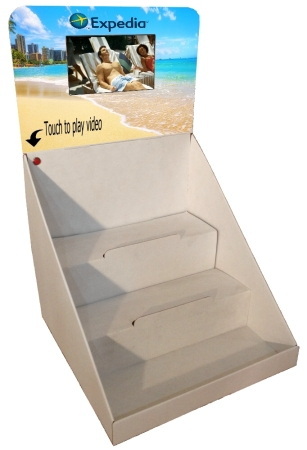
If you are planning new retail displays, trade show booths, or in-store brand activations, now is the ideal time to define the right mix of LED and LCD screens for your project. Clarify your viewing distances, installation environment, content types, and budget, then work with a professional display partner who can integrate digital screens with your physical fixtures such as cardboard stands, counter displays, and packaging. Reach out today for a customized LED vs LCD recommendation and a complete display solution quote designed to maximize impact, efficiency, and brand consistency.
Contact us to get more information!
LED screens are generally brighter, more energy-efficient, and offer better contrast, while LCD screens remain more cost-effective and ideal for close-range, detailed viewing.
Most “LED TVs” on the consumer market are actually LCD TVs that use LED backlighting instead of older backlights, which improves efficiency and image quality.
LED technology usually consumes significantly less power than older display systems, especially in large-format and always-on setups.
Direct-view LED is usually the best option for outdoor or window-front signage because it can reach much higher brightness and maintain visibility in sunlight.
LCD displays, particularly modern LED-backlit LCD monitors and panels, are often preferred for close viewing because of their high pixel density and sharpness.
1. https://www.hp.com/us-en/shop/tech-takes/differences-between-led-display-and-lcd-monitor
2. https://www.ptcled.com/academy/what-are-the-differences-between-led-screens-and-lcd-screens.html
3. https://electronics.howstuffworks.com/difference-between-lcd-and-led.htm
4. https://www.praevar.com/blog/ledvslcd-digitalsignagedisplaycomparison/
5. https://www.lenovo.com/us/en/glossary/lcd-vs-led/
6. https://www.ledscreenparts.com/energy-efficient-displays-lcd-vs-led/
7. https://www.ledman.com/news/led-or-lcd-display-which-one-is-more-energy-saving.html
8. https://pmc.ncbi.nlm.nih.gov/articles/PMC6060049/
9. https://www.oreateai.com/blog/led-vs-lcd-tvs-understanding-the-upgrade-in-2025/7a0be17ced9795bd5f484f969fb9483d
10. https://www.rackfinity.com/blog/lcd-vs-led-which-style-monitor-best-fits-your-tech-firms-needs-74e839/
11. https://aichiplink.com/blog/OLED-vs-LED-Which-Display-Technology-Is-Better-in-2025_681
12. https://www.matteoled.com/2024/08/13/the-marvels-of-led-displays-energy-efficiency-and-longevity/
13. https://portworld-solu.com/led-vs-lcd-digital-signage-display-a-comparison/
14. https://www.eagerled.com/lcd-vs-led-which-type-of-display-is-better-for-you/


