
Views: 222 Author: Long Win Display Publish Time: 2026-04-21 Origin: Site


After years of helping retailers and brands design custom cardboard displays for fresh produce, I've learned that how you merchandise fruits and vegetables can be just as important as their quality. A well‑planned fresh produce display not only makes the department look abundant and healthy, it also reduces waste, increases basket size, and strengthens your brand image. [spaceplanning]
In this guide, I'll walk you through proven strategies to showcase fresh produce in retail using practical layout tips and custom cardboard display stands that support both sales and food safety.
Fresh produce is often the first department shoppers see when they enter a supermarket or grocery store. It sets the tone for the entire shopping experience: [gadsby.co]
- A bright, full, and organized display signals freshness and quality.
- A sparse, messy, or damaged display raises doubts about the whole store.
From a business perspective, a strong fresh produce display strategy helps you: [theglobaldisplaysolution]
- Increase conversion rates on high‑margin fruits and vegetables
- Reduce shrink by improving rotation and handling
- Encourage cross‑selling with recipe‑based and complementary groupings
- Differentiate your store with a "market‑style" experience rather than a purely functional layout
Custom corrugated display bins, tiered stands, and branded cardboard crates are powerful tools to achieve this while remaining flexible and cost‑efficient. [displays2go]

Color is one of your strongest merchandising tools. [marcocompany]
Best practices:
- Apply color blocking – group produce by similar colors to create bold blocks and gradients.
- Mix contrasting colors (e.g., red tomatoes next to green cucumbers) to break up large green areas. [spaceplanning]
- Use warm colors like oranges and reds in prominent positions to stimulate appetite and energy. [creativedisplaysnow]
You can support this strategy with simple, neutral cardboard crates or bins so the produce colors stand out instead of competing with loud fixtures. [unitedcontainer]
Shoppers should be able to find items quickly and understand the offer at a glance. [theglobaldisplaysolution]
Practical tips:
- Group products by type and usage: salad items together, roasting vegetables together, smoothie fruits together.
- Use tiered cardboard display stands to bring more items into the shopper's direct line of sight. [creativedisplaysnow]
- Keep pathways clear and avoid displays that force sudden stops or bottlenecks. [theglobaldisplaysolution]
No display concept will succeed if the produce doesn't look fresh. [gadsby.co]
Key practices:
- Remove damaged items quickly so they don't influence perception of the whole display. [gadsby.co]
- Rotate stock with FIFO (first in, first out) – older produce at the front or top, newer at the back or bottom. [marcocompany]
- Keep produce at least 6 inches above the floor using risers or display plinths for hygiene and better visibility. [gadsby.co]
- Use moisture‑resistant or lined cardboard bins for products with higher condensation risk. [displays2go]
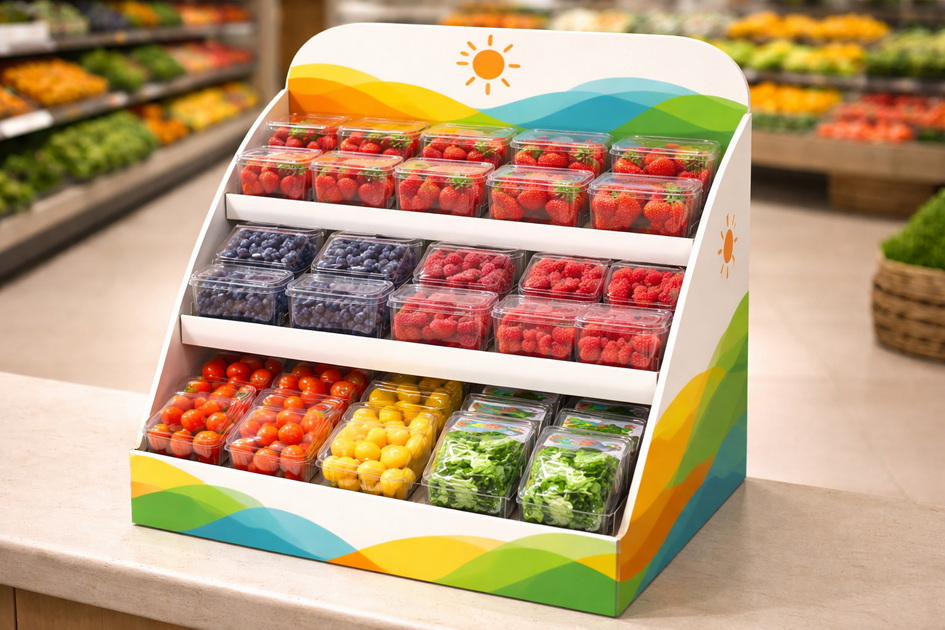
As a POP manufacturer, we see more retailers adopting custom cardboard display stands in their produce departments because they are lightweight, brandable, and easy to replace. [creativedisplaysnow]
Common structures for fruits and vegetables include: [displays2go]
- Cardboard produce bins – large, sturdy bins for melons, pumpkins, or bulk items.
- Tiered floor stands – multi‑shelf displays for packaged salads, berries, or snack fruits.
- Cardboard crates and trays – smaller units that can sit on tables or shelves, giving a "farm‑to‑market" look.
- Endcap displays – branded structures at the end of aisles for seasonal or promotional produce.
These can be customized with your logo, colors, and product messaging while maintaining natural, earthy tones that fit the category.
The star of a produce display should always be the fruit or vegetable, not the fixture. Effective branding on cardboard stands uses: [creativedisplaysnow]
- Neutral backgrounds (kraft, white, or soft green)
- Small, clean logos on the header and side panels
- Simple icons for "Organic", "Local", or "New" rather than long sentences
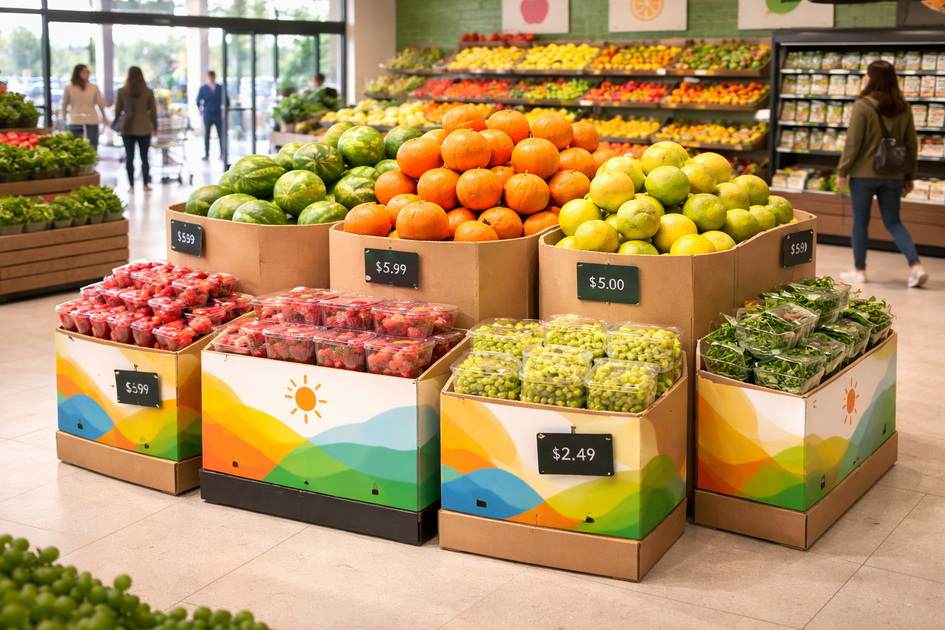
Most guides recommend placing fresh produce near the store entrance to create an immediate sense of freshness and health. [unitedcontainer]
You can:
- Use cardboard crates or low bins to frame the entrance with colorful fruit.
- Highlight local or organic items with small, branded cardboard risers and signage.
- Keep pathways wide so the area feels open and inviting.
Your biggest opportunity for incremental sales often lies in seasonal and promotional displays. [theglobaldisplaysolution]
Recommended tactics:
- Create seasonal "islands" with cardboard bins and stands showcasing in‑season produce (e.g., citrus in winter, berries in summer).
- Use endcaps to feature high‑margin or limited‑time items with recipes or meal suggestions. [spaceplanning]
- Support promotions with clear price markers and simple benefits (e.g., "Sweet and Juicy", "Perfect for Grilling"). [marcocompany]
Cross‑merchandising fresh produce with related items can significantly increase basket size. [spaceplanning]
Ideas:
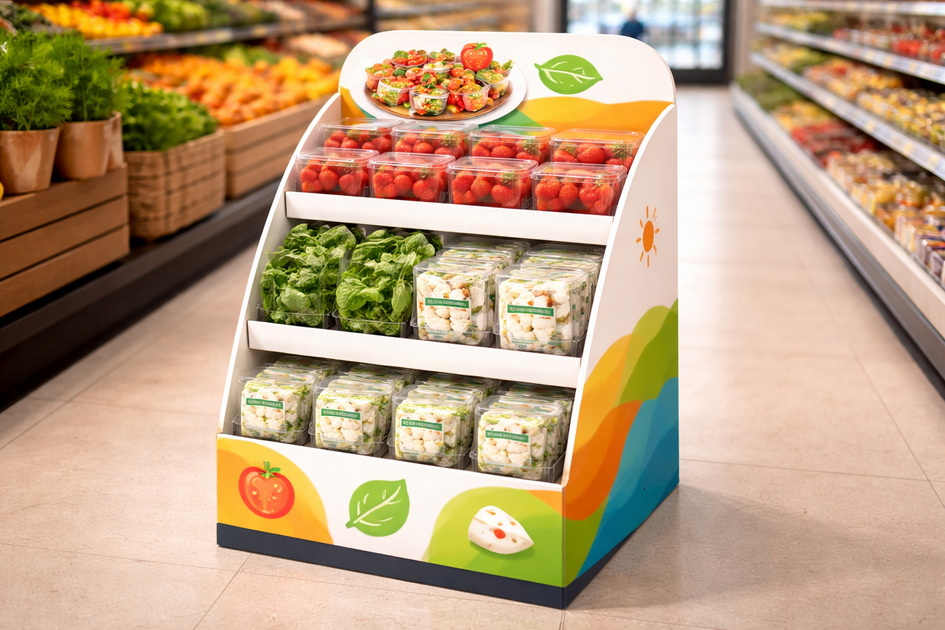
- Place tomatoes, basil, and mozzarella together, supported by a small recipe visual.
- Pair avocados, limes, and tortilla chips using a shared cardboard stand.
- Combine berries with yogurt or granola near breakfast aisles.
Custom cardboard stands are ideal here because they are easy to relocate and can be branded for themed meal solutions.
Shoppers rely on signage to make quick, confident decisions. [creativedisplaysnow]
Good labels on your produce displays should:
- Clearly show product name and variety
- Identify origin ("Local", country name, region)
- Flag attributes ("Organic", "No GMO", "Fair Trade") where relevant
- Use legible fonts and high contrast for older shoppers
Clarity here reduces staff questions and reinforces your store's credibility and transparency.
One of the most effective ways to increase produce sales is to show shoppers how to use what they see. [theglobaldisplaysolution]
You can:
- Add short recipe cards attached to cardboard displays (e.g., "5‑Minute Smoothie", "Roast Vegetables Tray").
- Use small photos of finished dishes rather than text‑heavy posters. [creativedisplaysnow]
- Integrate simple QR codes that link to recipes or nutrition content on your website. [theglobaldisplaysolution]
To minimize shrink while keeping displays looking full: [unitedcontainer]
- Refill little and often rather than dumping large quantities at once.
- Use smaller baskets or crates when stock is low so displays still look abundant. [gadsby.co]
- Place older items on top or in front; newer items at the back or bottom.
Not all fruits and vegetables can be stacked the same way.
Use:
- Shallower trays for delicate berries or stone fruits.
- Deeper bins for sturdy items like potatoes, onions, or apples. [marcocompany]
- Dividers within cardboard bins to separate varieties and avoid bruising.
Well‑designed cardboard structures spread weight evenly and reduce pressure points, which translates directly into lower damage rates. [creativedisplaysnow]
To treat your fresh produce displays as a strategic asset, track a few basic performance metrics: [spaceplanning]
| KPI | What It Shows | Why It Matters |
|---|---|---|
| Daily Sales Per SKU | Volume sold from specific displays | Identifies winning layouts and items |
| Shrink Rate | % of produce discarded vs received | Measures freshness and handling quality |
| Sell‑Through Time | Days to sell a full display | Helps plan replenishment and reorder |
| Conversion Of Promotions | Uplift during promo vs normal weeks | Evaluates promo and display effectiveness |
Even simple before/after comparisons when you introduce new cardboard stands or layouts can reveal which ideas are worth scaling.
Use this practical checklist whenever you install a new produce display:
1. Plan Your Objective
- Highlight seasonal, clear stock, support a promotion, or test a new item?
2. Choose The Right Fixture
- Bulk bins, tiered stands, crates, or a branded cardboard endcap based on product and location. [displays2go]
3. Map Color And Product Flow
- Decide where color blocks, contrasts, and hero items will sit. [marcocompany]
4. Prepare Signage And Labels
- Print clear labels and any simple recipe or "local" indicators in advance. [creativedisplaysnow]
5. Load And Rotate Carefully
- Place older stock first, avoid overfilling, and check from shopper eye level.
6. Walk The Shopper Path
- Stand back, walk past as a shopper would, and adjust height, angle, or signage if something feels confusing.
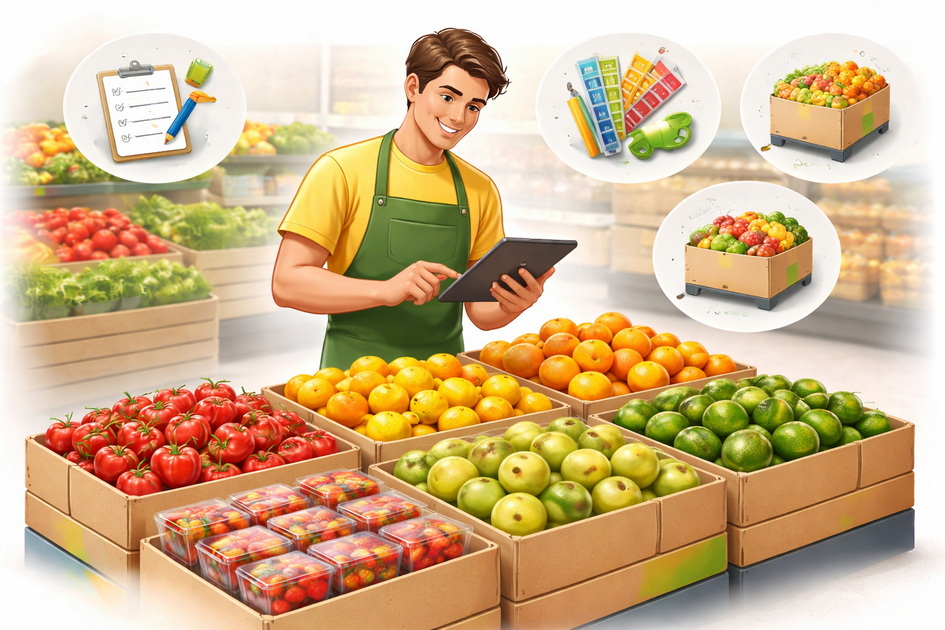
If you're ready to upgrade how your store showcases fruits and vegetables, you don't have to solve the structural and design challenges alone.
As a specialized POP display manufacturer, Long Win Display can:
- Design custom cardboard produce bins, tiered stands, and endcaps tailored to your SKUs
- Engineer structures for strength, hygiene, and easy replenishment
- Pre‑pack and ship ready‑to‑install displays to simplify in‑store execution
Want your fresh produce section to look like a farmer's market and sell like a promotion every day?
Contact Long Win Display for a free consultation on custom fresh produce display solutions for your retail stores.
1. Are cardboard displays suitable for fresh produce?
Yes. With the right board grade, liners, and internal supports, cardboard produce displays are strong, hygienic, and cost‑effective for fruits and vegetables. They are widely used for bins, crates, and tiered stands. [creativedisplaysnow]
2. How often should I refresh my fresh produce displays?
Visually, you should straighten and refill displays throughout the day, removing any damaged items as soon as possible. Layout changes can follow seasonal cycles, major promotions, or category reviews. [gadsby.co]
3. Where is the best place to position fresh produce in a store?
Most retailers place fresh produce near the entrance to create an immediate sense of freshness and health. Seasonal and promotional items often work well on islands and endcaps. [unitedcontainer]
4. How can I make my produce displays look full without increasing waste?
Use appropriately sized crates and baskets so smaller quantities still look abundant, and refill more frequently instead of over‑stacking. Smart rotation using FIFO reduces shrink. [gadsby.co]
5. What information should my produce signage include?
Effective signage shows product name, origin, price, and key attributes such as "Organic" or "Local". Clear labels build trust and help shoppers decide quickly. [creativedisplaysnow]
1. Creative Displays Now – Creative Ways to Showcase Fresh Produce in Your Retail Displayhttps://www.creativedisplaysnow.com/how-to-display-fresh-produce/
2. Gadsby – How To Display Fresh Produce Effectivelyhttps://www.gadsby.co.uk/retail-display-guides/how-to-display-fresh-produce-effectively
3. SpacePlanning Global – Mastering the Merchandising Maze of Fresh Producehttps://spaceplanning.global/blog/artfully-arranged-fresh-produce/
4. The Global Display Solution – Six Supermarket Produce Display Ideas That Enhance Shopping Experiencehttps://www.theglobaldisplaysolution.com/blog/six-supermarket-produce-display-ideas-that-enhance-shopping-experience/
5. Marco Company – 5 Amazing Produce Display Tricks That Will Impress Customers and Increase Saleshttps://marcocompany.com/blogs/news/5-amazing-produce-display-tricks-that-will-impress-customers-and-increase-sales
6. Displays2go – Cardboard Displays Offer Inexpensive Merchandising Solutionshttps://www.displays2go.com/C-754/Cardboard-Displays-Offer-Inexpensive-Merchandising-Solutions
7. Creative Displays Now – Custom Food Display & Produce Binshttps://www.creativedisplaysnow.com/display/food/
8. United Container – 8 Ways To Make Your Grocery Store's Produce Area Betterhttps://unitedcontainer.com/8-ways-to-make-your-grocery-stores-produce-area-better


