
Views: 222 Author: Long Win Display Publish Time: 2026-04-15 Origin: Site


As someone who has spent years helping global brands design and manufacture custom cardboard display stands and dump bin displays for retail, I've seen first‑hand how the right POP display can turn "maybe later" into "add to cart now." When you treat dump bin retail displays as strategic, data‑driven tools—not just containers—you unlock higher impulse sales, stronger branding, and better use of every square meter of floor space. [creativedisplaysnow]
Dump bin retail displays are open, high‑capacity floor displays—often made from corrugated cardboard—designed to hold bulk or promotional items in high‑traffic areas. They are widely used for FMCG, seasonal promotions, and price‑sensitive items where "grab and go" behavior is key. [mcintyredisplays]
Typical use cases include: [virtualpackaging]
- Discounted or clearance products
- Seasonal goods (holiday candy, themed snacks, small gifts)
- Trial‑size or travel‑size products
- Add‑on items near checkout (batteries, lip balm, snacks)
From a manufacturer's perspective, dump bins are one of the most cost‑effective POP formats, because they combine low material cost with high merchandising impact and easy customization. [bpkc]

Impulse buying accounts for a growing share of in‑store spending, and retailers use dump bins to deliberately activate this behavior. When shoppers see an open bin full of accessible, low‑risk items, they feel invited to reach in, touch products, and add "just one more thing." [diformainstore]
Key psychological triggers: [creativedisplaysnow]
- Accessibility: No doors, no hooks—just reach and grab.
- Perceived deal: Graphics often emphasize savings or limited‑time offers.
- Social proof: A partially filled bin signals popularity and movement.
From my experience, dump bins near checkout lines consistently outperform shelf facings for small, unplanned add‑ons such as candy, small toys, and personal‑care items.
Simple copy like "Last Chance," "Limited Time," or "While Supplies Last" on the bin walls adds a layer of scarcity that nudges customers to act now instead of waiting. When combined with price callouts, this can substantially lift unit velocity during promotions. [bpkc]
Retailers position dump bins in "decision hotspots" such as checkouts, end caps, and power aisles to capture last‑minute purchases. The open, bulk presentation encourages browsing and quick decisions, especially for low‑ticket items. [shoppopdisplays]
Practical examples: [shoppopdisplays]
- Lip balm or hand warmers in winter by the checkout
- Cold drinks near a grab‑and‑go food fridge
- Small electronics accessories near tech aisles
In controlled merchandising tests, shifting small impulse lines from regular shelves into dump bins near checkout frequently leads to double‑digit percentage lifts in units sold during the promotional window. [marketing]
Dump bins offer a high product‑to‑footprint ratio, turning underutilized corners or aisle breaks into active selling space. A single well‑planned bin can: [diformainstore]
- Consolidate multiple facings of the same SKU
- Free up shelf space for premium or new items
- Create a dedicated "promo zone" without expensive fixtures [marketing]
For brands working with limited in‑store real estate, cardboard dump bins are especially attractive because they are lightweight, easy to move, and can be tailored to fit specific floor plans. [packwins]
Because dump bins often sit away from crowded shelves and at shopper eye‑ or waist‑level, they automatically increase product visibility. Custom graphics and structural design turn them into mini billboards that reinforce your brand story. [cefbox]
Effective branding elements include: [packwins]
- Bold brand colors and large logos on all visible panels
- Simple, benefit‑driven copy ("Hydration on the go," "Snack smarter today")
- Lifestyle imagery aligned with the target audience
When your off‑shelf dump bins echo the same visual language as your primary shelving and digital campaigns, you build recognition and trust throughout the shopper journey. [shoppopdisplays]
In physical retail, shoppers form impressions of a brand in seconds based on the quality and clarity of its displays. Clean, structurally solid dump bins with premium printing communicate reliability; flimsy, damaged bins do the opposite. [cefbox]
From an expert manufacturing standpoint, this means:
- Choosing the right flute and board strength for the product weight
- Using high‑quality printing (flexo, offset, or digital) with vivid colors
- Ensuring easy assembly to avoid in‑store mistakes [reddit]
Drawing on years of POP manufacturing, here are the non‑negotiable design principles I recommend to every brand.
Before you sketch a single panel, define what success looks like for the display. [packwins]
Clarify: [cefbox]
- Primary goal: clearance, trial, upsell, seasonal visibility?
- Target shopper: value‑driven, premium‑seeker, family buyer, etc.
- Key message: price, convenience, novelty, sustainability, or brand story?
When we receive a detailed design brief that covers objectives, timing, and budget, we can often reduce iterations and deliver a more aligned, conversion‑ready structure on the first round. [cefbox]
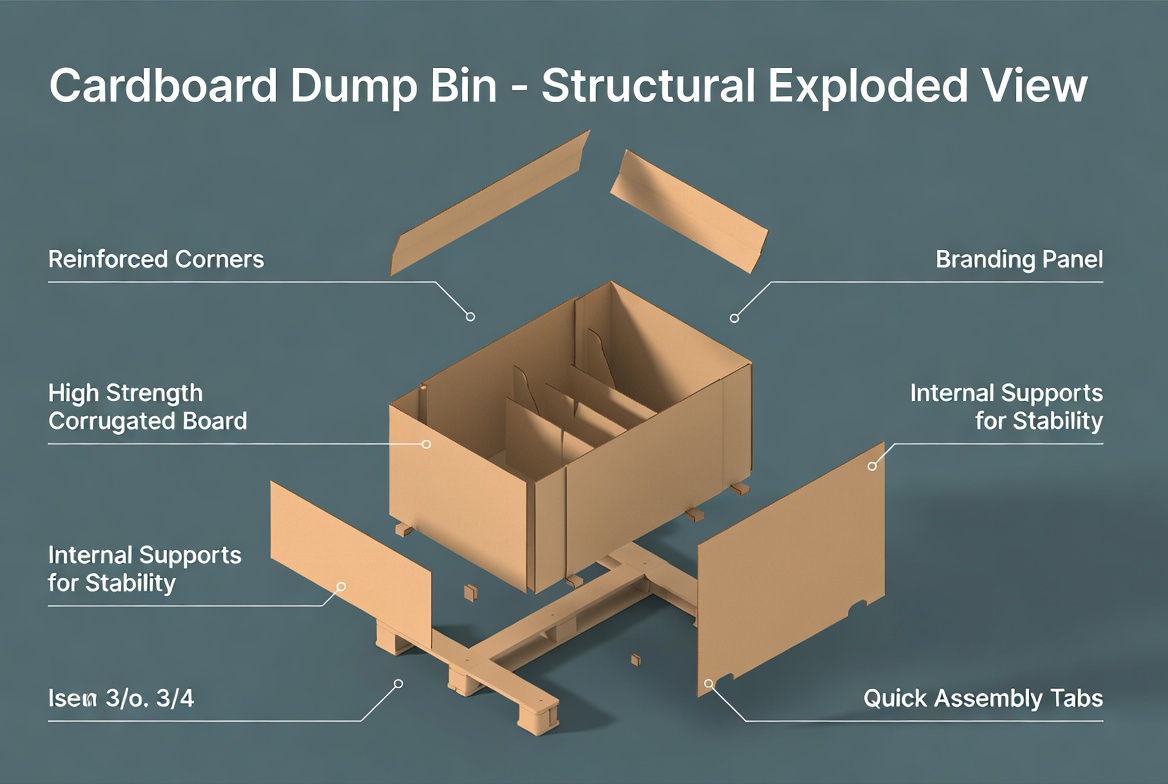
Not all cardboard is equal. For dump bins, material selection directly affects safety, durability, and perceived quality. [reddit]
Important technical factors: [reddit]
- Flute type: B, C, or EB flute are common choices, balancing strength and printability.
- Burst strength / ECT: Must match total load (including shoppers' handling).
- Reinforcement: Inserts or double walls for heavy or tall bins.
An under‑engineered display may bow or fail under load; an over‑engineered one wastes budget and materials. Experienced POP engineers model weight, transport stress, and shopper interaction before finalizing specs. [packwins]
Graphics should guide the eye and simplify decisions—not overwhelm. [shoppopdisplays]
Best practices: [creativedisplaysnow]
- Put the core benefit at the top panel, where it is visible from a distance.
- Keep text concise; prioritize one main message and one support point.
- Ensure high contrast between text and background for readability.
- Reserve one side for regulatory or detailed information if needed.
From countless projects, we've learned that removing clutter from bin graphics often increases engagement and conversion, because shoppers instantly understand what's being offered.
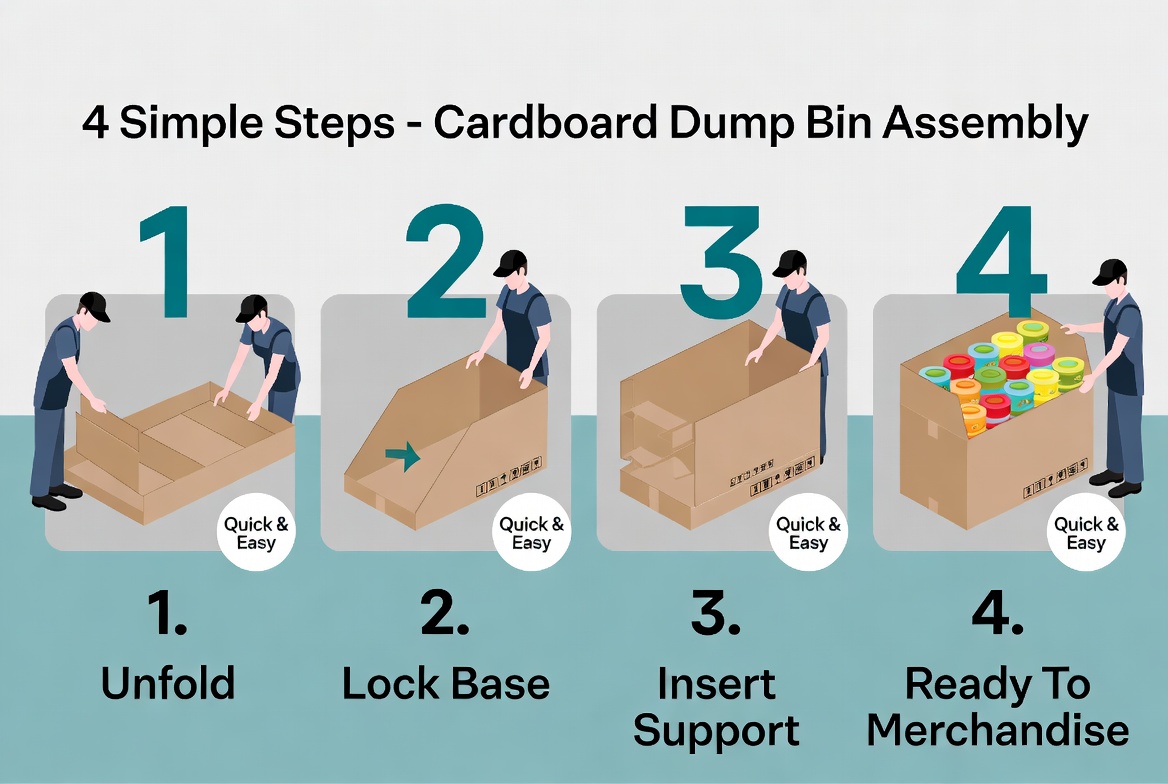
Even the best design fails if staff cannot assemble it quickly. [packwins]
To support flawless execution: [cefbox]
- Design intuitive locking systems and pre‑glued sections
- Provide printed or video instructions with step‑by‑step visuals
- Consider pre‑packed solutions where displays arrive already filled
Some of the most successful programs we've seen use pre‑filled dump bins delivered directly to stores, reducing labor and ensuring consistent brand presentation across hundreds of locations. [packwins]
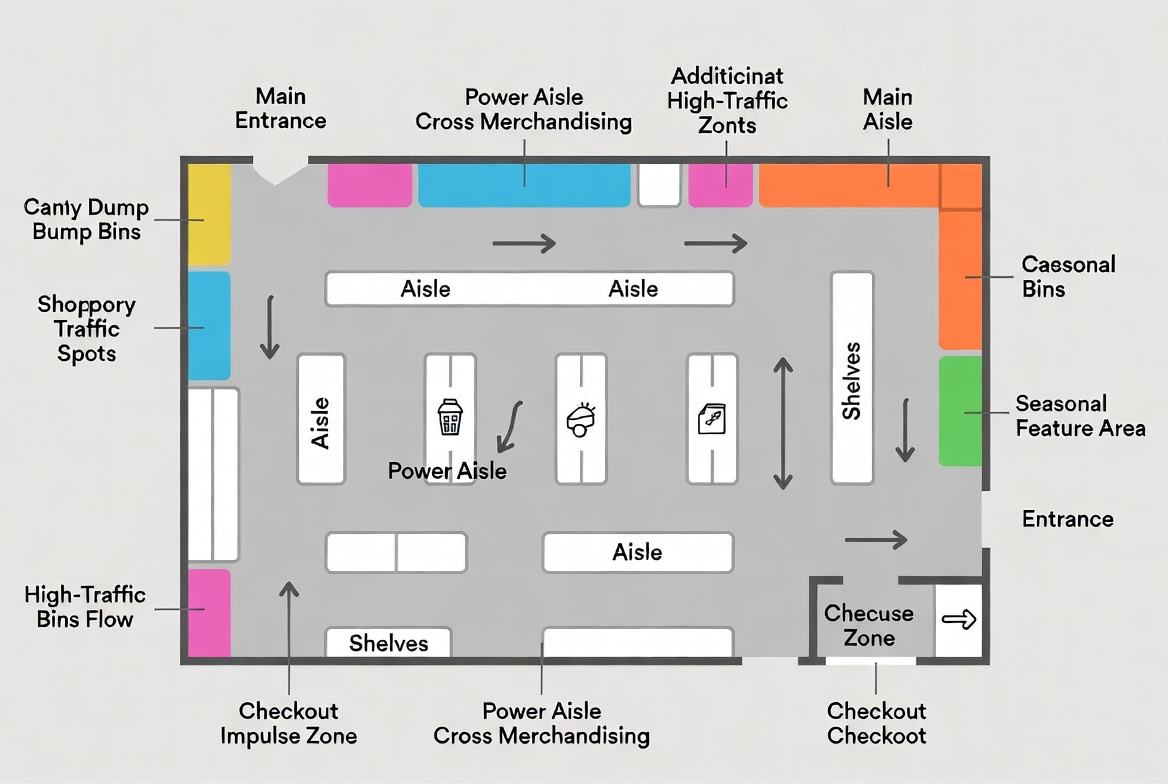
Placement can make or break dump bin performance. [shoppopdisplays]
High‑performing locations include: [virtualpackaging]
- Checkout and queuing areas (classic impulse zone)
- Main aisle intersections and power aisles
- Near complementary categories (chips with soft drinks, batteries with toys)
- Seasonal zones at store entrances
Retailers increasingly use traffic analytics and heat‑mapping to refine placement of POP displays, including dump bins, to align with evolving shopper paths in 2025–2026. [benchmarcretail]
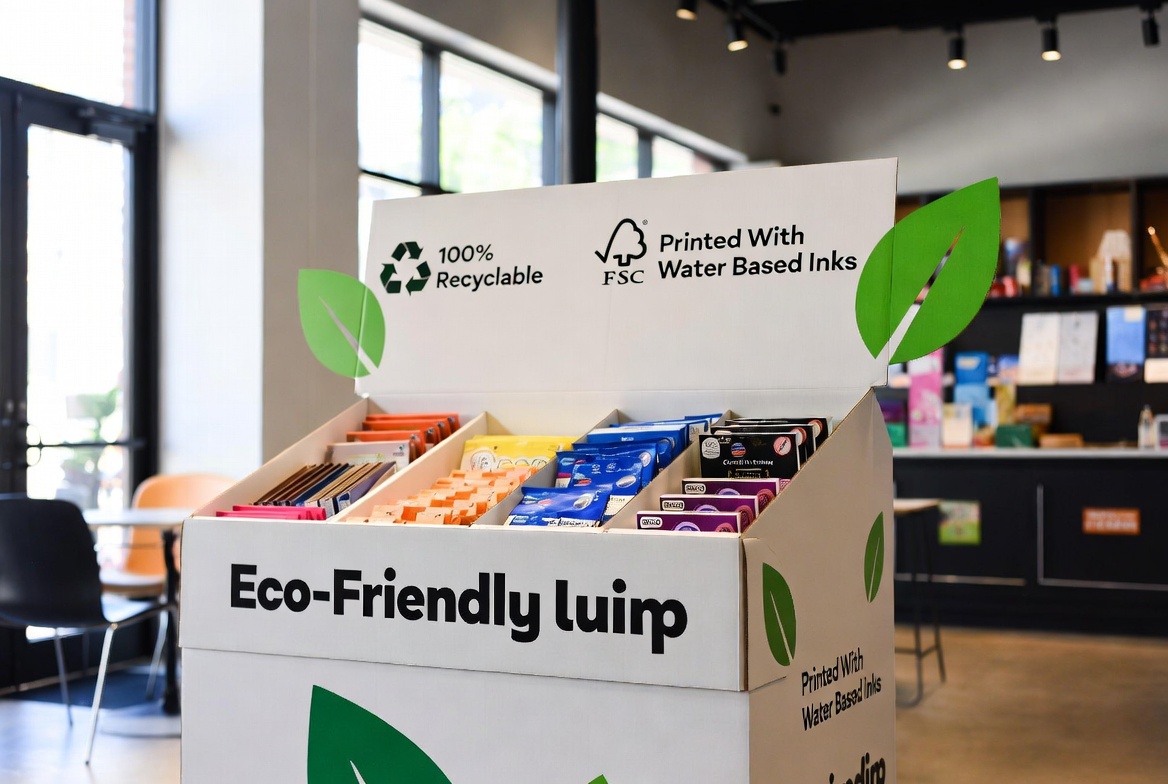
Sustainability has moved from "nice‑to‑have" to purchase driver, and POP displays are part of that conversation. Cardboard dump bins made from recycled and recyclable materials help brands align with retailer and consumer expectations around environmental responsibility. [holidaypac]
Brands are increasingly requesting: [holidaypac]
- FSC‑certified board and soy‑based inks
- Designs that minimize offcut waste
- Modular, reusable bases with replaceable graphic wraps
In my experience, showcasing sustainability credentials directly on the bin ("100% recyclable display," "Printed with water‑based inks") can subtly reinforce brand values without distracting from the sales message.
Modern dump bins are starting to bridge the gap between physical and digital retail. [benchmarcretail]
Examples of smart integration: [benchmarcretail]
- QR codes leading to product demos or quick recipes
- Links to loyalty sign‑ups or limited‑time digital coupons
- AR experiences that visualize product use in context
For brands with strong online traffic, adding these low‑friction digital touchpoints on cardboard dump bins turns a simple display into part of a broader omnichannel funnel. [marketing]
From a practitioner's viewpoint, a high‑performing dump bin program follows a disciplined process.
Step 1 – Align objectives and KPIs [marketing]
- Define target uplift in units or revenue.
- Set time frame and participating stores.
Step 2 – Brief your display partner [cefbox]
- Share brand guidelines, product weights, pack formats, and logistics constraints.
- Provide placement plans (checkout vs. aisle, etc.).
Step 3 – Co‑develop structure and graphics [reddit]
- Review 3D renders and keyline files.
- Validate capacity, stability, and visibility.
Step 4 – Prototype and test [reddit]
- Build physical samples and conduct load and handling tests.
- Collect store staff feedback on assembly and positioning.
Step 5 – Roll out and optimize [benchmarcretail]
- Monitor sell‑through and compliance with planograms.
- Adjust replenishment, messaging, or placement in future waves.
This structured approach is exactly how experienced POP manufacturers and retail teams reduce risk and maximize ROI.
| Aspect | Dump Bin Retail Displays | Standard Shelf Displays |
|---|---|---|
| Primary role | Impulse, promotion, bulk (creativedisplaysnow) | Planned purchases, core range (virtualpackaging) |
| Visibility | High, off‑shelf, 360° access (creativedisplaysnow) | Depends on shelf level and adjacency (marketing) |
| Flexibility | Highly customizable structure/graphics (bpkc) | Limited to shelf labels and small fixtures (marketing) |
| Setup/teardown | Temporary, campaign‑based (diformainstore) | Long‑term, fixed infrastructure (marketing) |
| Cost per unit | Low–medium, often corrugated (packwins) | High (permanent fixtures) (marketing) |
| Sustainability potential | High with recyclable board (packwins) | Varies by material (metal, plastic, wood) (shoppopdisplays) |
From a user‑experience perspective, a dump bin should feel inviting, not chaotic.
Design and UX guidelines: [mcintyredisplays]
- Keep bin height comfortable so shoppers do not need to stoop or reach excessively.
- Avoid overfilling; maintain visual order and clear product access.
- Use clear price communication—ideally at least one large price point facing the main traffic flow.
- Ensure bins don't obstruct sightlines to key store sections or exit paths.
In real‑world rollouts, we often see the biggest wins when brands coordinate with store teams to maintain a "golden standard" photo of how the bin should look and be stocked.
Beyond classic FMCG, more categories are successfully adopting custom cardboard dump bins and floor displays. [benchmarcretail]
High‑potential categories include: [mcintyredisplays]
- Beauty and personal care (trial packs, travel kits)
- Pet care (treats, toys)
- Home improvement (small tools, accessories)
- Consumer electronics accessories (cables, chargers, earphones)
For global brands entering new retail chains, partnering with a specialized cardboard display manufacturer allows you to adapt to different store formats and regulations while maintaining consistent brand experience.
If you want to turn more shoppers into buyers, start treating dump bin retail displays as strategic assets rather than generic containers. Define your objectives, work with an expert cardboard display partner, and test one focused campaign in a high‑traffic area before scaling nationwide. [diformainstore]
For brands looking to enter or expand in global retail channels, collaborating with a specialist in custom cardboard display stands and pre‑packed POP solutions can accelerate launch timelines, protect budgets, and lift in‑store conversion.
1. What products are best suited for dump bin displays?
Dump bins perform best with small, low‑risk items such as snacks, confectionery, travel‑size personal care, low‑priced toys, and accessories that shoppers can grab quickly. [virtualpackaging]
2. How many SKUs should I include in one dump bin?
For clarity, most brands see better results with a tight range—often a single hero SKU or a small family—rather than many unrelated items that create visual noise. [bpkc]
3. How long should a dump bin campaign run?
Typical campaigns run from 4 to 12 weeks, depending on seasonality, inventory, and promotional calendars; seasonal or event‑based programs may be shorter but more intensive. [diformainstore]
4. Are cardboard dump bins strong enough for heavy products?
With the right flute type, board grade, and structural reinforcement, cardboard dump bins can safely hold surprisingly heavy items, but engineering must be tailored to product weight and handling conditions. [reddit]
5. How can I measure the ROI of dump bin displays?
Track uplift by comparing sales in stores with and without the dump bin over the same period, adjusting for promotions and seasonality, and factor in production and logistics costs to calculate net return. [diformainstore]
1. Creative Displays Now – "Benefits of Dump Bin Retail Displays"
<https://www.creativedisplaysnow.com/benefits-of-dump-bin-retail-displays/> [creativedisplaysnow]
2. shopPOPdisplays – "Benefits of Retail Dump Bin Displays"
<https://www.shoppopdisplays.com/blog/2024/04/29/benefits-of-retail-dump-bin-displays/> [shoppopdisplays]
3. McIntyre Displays – "4 Benefits of Dump Bin Displays in Retail Spaces"
<https://mcintyredisplays.com/blog/retail-dump-bin-display-benefits/> [mcintyredisplays]
4. Bennett Packaging – "8 Benefits Of Dump Bin Displays"
<https://bpkc.com/blogs/blog/8-benefits-of-dump-bin-displays> [bpkc]
5. Diforma In‑Store – "5 Key Advantages of Dump Bin Displays in Retail Environment"
<https://diformainstore.com/5-key-advantages-of-dump-bin-displays/> [diformainstore]
6. Packwins – "Designing and Using Cardboard Display Stands: Step‑by‑Step Guide"
<https://packwins.com/designing-and-using-cardboard-display-stands-a-step-by-step-guide/> [packwins]
7. Benchmark Retail – "10 Game‑Changing Trends Shaking Up POP Displays"
<https://www.benchmarcretail.com/post/10-game-changing-trends-shaking-up-pop-displays> [benchmarcretail]
8. CEF Box – "An Expert Guide to Designing and Assembling Cardboard Display Stands"
<https://www.cefbox.com/blog/knowledgeBase/An-Expert-Guide-to-Designing-and-Assembling-Cardboard-Display-Stands> [cefbox]
9. Marketing.com – "Driving Sales with Large‑Format POP Displays"
<https://marketing.com/blog/driving-sales-with-large-format-pop-displays/> [marketing]
10. OnePlus / HolidayPac – "Custom POS POP Cardboard Display Stands" and related content on cardboard POP trends
<https://www.holidaypac.com/zh-CN/floor-displays/custom-pos-pop-cardboard-display-stands.html> [holidaypac]
11. Reddit – "Cardboard display manufacturing, best practices in the industry"
<https://www.reddit.com/r/IndustrialDesign/comments/1iogwi7/cardboard_display_manufacturing_best_practices_in/> [reddit]
12. Retail display trends 2026 – "2026 Retail Display Trends: What's In and What's Out"
<https://www.shoppopdisplays.com/blog/2025/11/06/2026-retail-display-trends-whats-in-and-whats-out/> [shoppopdisplays]


