
Views: 222 Author: Amanda Publish Time: 2026-02-14 Origin: Site


Content Menu
● What Is a Direct View LED Display?
● How Direct View LED Technology Works
>> LED Pixels, Modules, and Cabinets
>> Pixel Pitch and Optimal Viewing Distance
● Key Advantages of Direct View LED Displays
>> 2. Outstanding Visibility in Direct Sunlight
>> 3. Flexibility, Modularity, and Creative Shapes
>> 4. Energy Efficiency and Eco Friendliness
>> 5. Durability, Serviceability, and Long Lifespan
● Practical Applications Across Industries
● How to Choose the Right Direct View LED Display
>> 1. Define Viewing Distance and Content Type
>> 2. Consider Environment: Indoor vs. Outdoor
>> 3. Budget, Maintenance, and Total Cost of Ownership
● Direct View LED Products and Possibilities
>> Large-Scale LED Poster Displays
● Emerging Trends in Direct View LED Signage
>> Ultra-Fine Pitch and Higher Resolutions
>> Immersive and Architectural LED
>> Sustainability-Driven Deployments
● Best Practices for Deploying Direct View LED Displays
● The Future Is Bright for Direct View LED
● Clear Call to Action: Elevate Your Digital Signage Strategy
● FAQs About Direct View LED Displays
>> FAQ 1: What is the main difference between direct view LED and LCD displays?
>> FAQ 2: How do I select the right pixel pitch for my space?
>> FAQ 3: Are direct view LED displays suitable for 24/7 operation?
>> FAQ 4: Can I repair only part of a damaged LED screen?
>> FAQ 5: Are outdoor LED displays weatherproof?
Direct view LED displays have rapidly become the go-to digital signage solution for brands that want immersive, high-brightness visuals in any environment, from retail stores to stadiums and landmark installations. This guide explains how direct view LED works, why it outperforms traditional display technologies, and how to choose the right solution for your space.

A direct view LED (DVLED) display is a screen made from a grid of light-emitting diodes that generate colored light directly, without the need for an LCD panel in front. Each visible pixel is formed by a cluster of red, green, and blue LED lamps that mix to create a wide spectrum of colors.
In traditional LCD systems, LEDs sit behind or at the edge of a glass panel and only provide white backlight, while the LCD layer tints that light to form images. By eliminating the LCD layer, DVLED screens achieve significantly higher brightness, deeper contrast, and wider color gamut, especially at large sizes.
Each pixel in a direct view LED display typically includes red, green, and blue LED lamps controlled by internal electronics to render images and video with fine color gradations. Pixels are grouped into modules, which are the building blocks that service technicians can remove and replace if needed. Modules are then mounted into larger cabinets that tile together to create displays ranging from desktop-sized panels to video walls spanning entire walls or building facades.
A common television or monitor might contain around 2 million pixels, but large DVLED installations can scale far beyond that, covering very large surfaces with seamless visual content.
Pixel pitch is the distance in millimeters from the center of one pixel to the center of the next. A smaller pixel pitch means pixels are more tightly packed, resulting in higher resolution and clearer images at close viewing distances.
A useful rule of thumb is:
- For every 1 mm of pixel pitch, the optimal viewing distance is about 5 feet.
For example:
- 1–2 mm pitch is ideal for retail, corporate lobbies, and trade shows where viewers stand close to the screen.
- Mid-range pitches are suitable for indoor environments where people are several meters away.
- Large pixel pitches are used for large outdoor boards and stadium displays where viewers are dozens or hundreds of feet away.
Choosing the right pixel pitch ensures your audience sees a smooth, sharp image instead of visible pixel structure.
Direct view LED displays deliver outstanding visual performance in brightness, contrast, and color fidelity, especially for large-format commercial applications. High contrast ratios push blacks deeper and highlights brighter so images appear more vivid and impactful.
Modern DVLED solutions can produce very fine gradients and a broad range of colors, enabling smooth animations, lifelike visuals, and premium brand presentations. For product launches, immersive brand experiences, and high-end in-store displays, this visual impact can significantly increase dwell time and engagement.
For outdoor signage and sun-exposed interiors, DVLED is often the most effective choice for clear visibility. LEDs generate inherently high brightness that can overpower intense ambient light and direct sunlight, helping content remain legible throughout the day.
These displays typically produce less heat than many older display types, reducing strain on enclosures and cooling systems. Outdoor LED displays are also built to withstand temperature extremes and weather conditions, making them ideal for stadiums, roadside signage, cruise ships, and other demanding environments where reliability is critical.
LED panels are usually lighter than comparable display technologies, which simplifies installation, reduces mounting requirements, and can lower shipping costs. Panels can be connected in many configurations without sacrificing performance, allowing designers to create unique visual canvases.
Common layout options include:
- Long horizontal ribbons for airport corridors, stadium concourses, and corporate lobbies.
- Large video walls for control rooms, showrooms, and performance venues.
- Curved, wrap-around, or circular shapes that contour to architectural surfaces.
This modularity allows businesses to scale from compact indoor displays to iconic large-scale installations using the same core technology.
Direct view LED signage generally consumes less power than many competing large-format display technologies, which benefits both operating budgets and sustainability goals. Lower power draw reduces energy costs for venues running displays for long hours every day.
Because LEDs operate efficiently, they produce less waste heat, easing the load on HVAC systems and reducing the need for active cooling in many installations. For trade show environments and mobile deployments, multiple LED displays can often run from a limited number of standard power circuits, simplifying setup.
LED panels offer strong resistance to shock and vibration, making them well suited for high-traffic public spaces where accidental impacts are common. Many LED displays are rated for long lifespans, supporting extended daily operation over many years.
If an area fails, technicians can usually replace individual modules or small sections rather than swapping out an entire display or video wall. This modular repair model reduces downtime, lowers maintenance costs, and cuts down on electronic waste compared to replacing complete units. LEDs also avoid certain hazardous materials found in older display technologies.
Direct view LED displays are versatile enough to support a wide range of digital signage strategies. They can be tailored to different viewing distances, environments, and content types, making them a strong fit for many industries.
Popular use cases include:
- Retail and shopping malls: Window displays, in-store feature walls, and end-cap screens that highlight promotions, new arrivals, and seasonal campaigns.
- Corporate environments: Lobby feature walls, executive briefing center video walls, and dynamic branding in reception areas and meeting spaces.
- Stadiums and arenas: Scoreboards, ribbon boards, concourse signage, and immersive fan-experience zones.
- Transportation hubs: Arrival and departure boards, wayfinding, and revenue-generating advertising surfaces.
- Museums and attractions: Narrative storytelling backdrops, interactive exhibits, and immersive digital environments.
Because DVLED can scale from small indoor signs to monumental façades, organizations can standardize on one technology across multiple locations and formats.
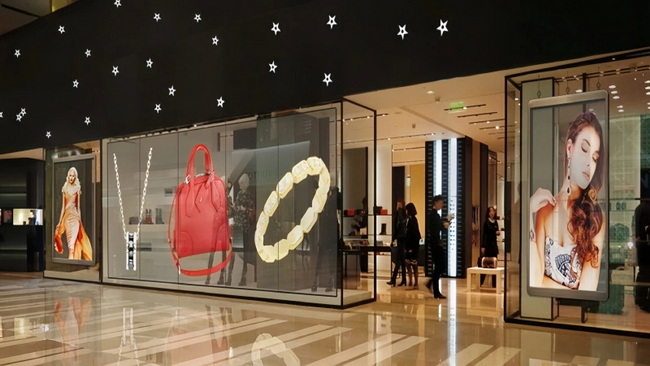
Start by mapping where your audience will stand or sit relative to the display. Viewing distance is one of the most important factors in determining pixel pitch and resolution.
- For close-up viewing, such as under 10–15 feet, choose a low pixel pitch for fine detail like text, product images, and interface elements.
- For mid-range viewing, a medium pixel pitch can balance clarity and cost for retail aisles, lobbies, and show floors.
- For long-distance viewing, higher pixel pitches are appropriate for stadiums and outdoor boards where viewers are far away.
If your content is text-heavy or includes detailed graphics and data visualizations, tighter pixel pitches and higher resolutions will help maintain clarity and readability.
Indoor and outdoor applications have very different technical requirements. Indoor LED displays prioritize fine pixel pitch, color accuracy, and comfortable brightness levels for spaces like malls, offices, and trade shows. They are designed to work with controlled lighting conditions and viewing distances.
Outdoor LED displays focus on extreme brightness, weather resistance, and robust enclosures designed for sun, rain, wind, and temperature fluctuations. When selecting outdoor solutions, it is vital to verify IP ratings, operating temperature ranges, and mounting hardware suitable for the installation site.
While the upfront cost of DVLED can exceed some traditional displays, the total cost of ownership often compares favorably due to long lifespans and reduced maintenance. Energy efficiency and modular serviceability further contribute to long-term savings.
When evaluating options, consider:
- Expected operating hours per day and per year.
- Energy usage relative to existing technologies in your venue.
- Service accessibility, including front or rear access to modules.
- Availability of replacement modules and service support.
Organizations that factor in energy savings, longer runtimes, and modular servicing typically see compelling long-term return on investment.
Outdoor LED displays provide high-impact visibility for storefronts, billboards, venue entrances, and open-air events. These weather-resistant panels are engineered to maintain brightness and legibility in daylight and at night, while withstanding environmental challenges.
Typical applications include building-mounted brand signage, roadside advertising boards, stadium entrance displays, and perimeter messaging. With the right content strategy, outdoor DVLED can transform exterior surfaces into dynamic media channels.
Indoor LED signage is ideal for retail stores, corporate offices, trade shows, museums, and other venues where dynamic digital content enhances the on-site experience. These displays help brands communicate more flexibly than static printed signage.
Use indoor DVLED to highlight new products and seasonal campaigns, reinforce brand identity in lobbies and reception areas, and create immersive backdrops for events, presentations, and experiential zones.
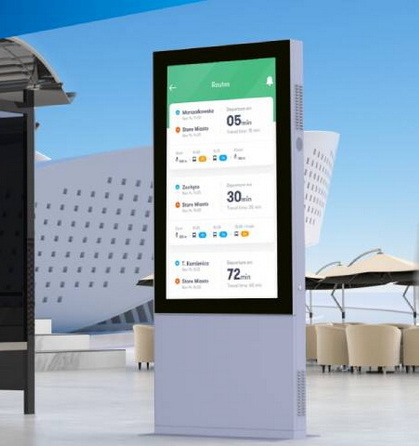
Daisy-chainable LED poster displays allow teams to easily adapt content based on context, location, or campaign phase. A single unit can function as a stand-alone attention-grabber, or multiple units can be combined into a seamless, large-scale canvas.
Common use cases include promotional zones in retail, portable backdrops at trade shows, and flexible signage in hospitality and event spaces. Because content can be updated digitally, LED posters reduce printing costs and turnaround time compared with traditional static signage.
As pixel pitches shrink, DVLED is increasingly used in control rooms, high-end corporate environments, and applications that previously relied on LCD video walls. Ultra-fine pitch displays support detailed dashboards, data visualizations, and broadcast-quality video in relatively compact spaces.
This shift enables seamless, bezel-free canvases that maintain clarity at close viewing distances, which is critical for mission-critical monitoring, command centers, and premium presentation environments.
Architects and experience designers are integrating DVLED into walls, ceilings, and curved surfaces to create fully immersive environments. From wrap-around lobby screens to dome-style structures, this trend blurs the line between architecture and digital media.
These creative installations allow brands and venues to tell stories across entire spaces, synchronizing content with lighting, sound, and interactive elements for a cohesive, multisensory experience.
With their long life and high efficiency, LED deployments increasingly support corporate sustainability initiatives. Reduced power usage, longer component lifespans, and modular repair strategies help organizations meet environmental targets while modernizing visual communication.
By replacing older, less efficient display technologies and minimizing the need for frequent replacements, DVLED can play a role in broader energy and waste reduction programs for venues of all sizes.
To maximize performance and longevity, it is important to follow a structured deployment approach. Careful planning and execution ensure that your investment delivers consistent results over time.
- Site assessment: Evaluate ambient light, viewing distances, available mounting surfaces, and wiring pathways before specifying hardware.
- Content strategy: Design motion graphics, text sizes, and animation speeds for your screen dimensions and viewing distance, ensuring legibility and avoiding visual fatigue.
- Calibrated installation: Use professional installers who can correctly align cabinets, perform color calibration, and configure brightness and contrast settings for the environment.
- Ongoing maintenance: Implement a regular inspection schedule to clean surfaces, verify module performance, and update firmware or control software as needed.
A disciplined rollout and maintenance plan helps your DVLED system continue delivering vibrant, reliable performance over many years of use.
Direct view LED is rapidly becoming the standard for digital signage, combining crisp graphics, smooth full-motion video, and intense colors that capture attention in any environment. From compact indoor posters to iconic outdoor landmarks, DVLED gives brands a scalable, high-impact way to tell their stories.
Organizations that embrace DVLED can create more memorable experiences, update messaging in real time, and align their visual communication with modern expectations. With thoughtful planning, the right partners, and a clear content strategy, direct view LED displays can become a powerful long-term asset for virtually any venue.
If you are ready to move beyond outdated screens and static signage, now is the time to explore direct view LED solutions that match your space, audience, and business goals. Review your key locations, define your content priorities, and consult with a trusted display provider to design a tailored DVLED system that delivers the brightness, flexibility, and impact your brand deserves. Take the next step today by planning your upgrade roadmap and turning your vision for high-impact digital signage into reality.
Contact us to get more information!
Direct view LED displays generate images by lighting individual LEDs on the screen surface, while LCDs rely on a backlight shining through a liquid crystal layer. This design difference allows DVLED to achieve higher peak brightness, deeper contrast, and seamless large-scale installations without bezels, which is especially valuable for impactful digital signage.
To select the right pixel pitch, estimate your typical viewing distance and match it to an appropriate pitch range. Closer viewing distances require smaller pitches for crisp text and fine detail, while longer viewing distances allow for larger pitches that reduce cost without sacrificing perceived image quality.
Many direct view LED systems are designed for extended runtimes and are suitable for 24/7 operation when installed correctly and kept within their specified environmental conditions. Proper ventilation, brightness settings, and scheduled maintenance help maximize lifespan and minimize the risk of premature component failure.
Yes, in most cases you can repair only the affected area of a DVLED display by replacing individual modules or localized sections. This modular approach limits downtime, reduces repair costs, and avoids the need to replace an entire video wall or large screen if only a small portion is damaged.
Outdoor LED displays are specifically engineered to be weather-resistant and are typically built with protective enclosures and appropriate IP ratings. When installed according to manufacturer guidelines, they can withstand rain, sunlight, temperature swings, and other environmental factors common in exterior applications.


